For everyday phone backup, choose a power bank whose connector and charging protocol suit your device, and assess capacity separately from charging speed. If you carry several devices or spend longer away from sockets, compare shared output and energy reserve; check the exact product and seller separately, since GOV.UK describes conformity markings as the manufacturer’s statement that requirements are met, not as independent certification.
Who these power banks suit
Everyday phone-backup buyers
You need a carryable reserve for commuting and errands, with a connector that fits your phone. Electrical Safety First notes that capacity affects how many times a device can be recharged before the bank itself needs recharging.
Several-device day-out buyers
You want ports and shared output suited to charging a phone alongside another device, or another person’s phone. Check the power available when multiple ports are in use, rather than relying on a single-port headline.
Long-outing or higher-power buyers
You need more energy reserve or backup charging for a compatible higher-power USB-C device. Compare capacity and output separately, and check that the device supports the charging protocol offered.
What to consider when buying
For daily travel, weigh device compatibility, usable energy, carrying comfort, shared output and product identity. Electrical Safety First explains that a bank’s capacity affects recharge frequency, while the device and charging arrangement determine which output features are relevant.
| Concern |
What to check when buying |
Who this matters to |
| Device compatibility and cables |
Match the connector and supported charging protocol to your device; check whether an integrated or separate cable is needed. |
If I rely on a USB-C phone, I want its charging mode and the bank’s cable to match rather than assume the connector alone is enough. Around 20% of consumers put device compatibility and cables first. |
| Usable energy reserve |
Compare capacity on a consistent energy basis and check the conditions behind any recharge-count claim. Cell mAh alone does not establish a precise number of device charges. |
For a longer day out, I want enough reserve without treating a cell-capacity figure as a guaranteed phone-charge count. Around 20% of consumers prioritise usable energy for extended outings. |
| Comfortable everyday carry |
Check published weight and dimensions, and whether an integrated cable suits your device and bag or pocket. |
When I carry a bank on a regular commute, its size and weight matter as well as its reserve. Around 20% of consumers put carrying comfort first. |
| Charging several devices together |
Check the USB-A and USB-C arrangement and the stated shared output. Belkin specifies that the BPB027hqWH provides up to 20W from one port and 15W total when both ports are used. |
If I need to charge a phone and another device together, I want to know how output is shared across the ports. Around 20% of consumers prioritise simultaneous charging. |
| Safety, seller confidence and recourse |
Check the seller and exact model against relevant product-safety notices; read conformity markings as the manufacturer’s statement, not independent certification. |
For a purchase I can identify and follow up, I want the seller and model to be clear and the applicable product information to be easy to check. Around 20% of consumers prioritise safety, seller confidence and recourse. |
Common buying pitfalls
-
Treating conformity markings as independent safety certification
A marking does not, by itself, establish that an independent laboratory tested the product. GOV.UK describes UKCA and CE markings as indicating that the manufacturer believes relevant requirements are met.
Check the seller and exact product identity, and consider applicable product requirements separately rather than treating a marking as a safety award.
-
Expecting maximum power from every port at once
Output can be shared when several devices are connected. Belkin specifies 15W total for the BPB027hqWH when both ports are in use, despite a higher single-port figure.
Read the simultaneous-output specification before choosing a bank for multiple devices.
-
Reading cell mAh as a guaranteed phone-charge count
Cell capacity and energy delivered to a device are not directly interchangeable: voltage conversion and charging losses affect the delivered amount.
Compare energy figures on a consistent basis and treat any recharge-count claim as conditional on the device and charging arrangement.
-
Assuming a faster bank makes your existing setup faster
The device’s charging protocol and the bank’s input requirements affect whether the charging arrangement suits your needs. A USB-C connector alone does not establish support for a particular fast-charging mode.
Check device compatibility and the bank’s requirements before deciding whether your cable or wall charger needs to change.
A suitable cable or wall charger may need to be purchased separately.
Relevant brands
Anker
The A1259 Nano is a relevant 10,000mAh example for everyday phone backup, with an integrated USB-C cable.
- Anker advertises 30W charging for the A1259; the A1259H11 is listed at 215g.
- Anker’s recall notice names models A1647, A1681 and A1689. That is a model-specific notice, not a conclusion about every Anker power bank.
Belkin
The BoostCharge BPB027 and BPB028 lines offer phone-focused 10K and 20K options with displays.
- Belkin lists two USB-C ports and one USB-A port for the BPB028, with a detachable USB-C cable included.
- Belkin specifies 15W shared output for the BPB027 when both ports are used and for the BPB028 when all ports are used.
UGREEN
The Nexode 20,000mAh 100W model is relevant when a compatible higher-power USB charging requirement goes beyond routine phone top-ups.
- UGREEN lists two USB-C ports and one USB-A port.
- The 100W headline is not an independent output allowance for every port. UGREEN’s runtime and recharge-time statements depend on conditions and are not guaranteed results for every device.
Samsung
The EB-P3400XUEGEU is a relevant 10,000mAh option where PD 3.0 PPS compatibility matters.
- Samsung specifies up to 25W Super Fast Charging and two USB-C ports for this model.
- Samsung states that the 25W specification applies with one connected device; actual charging speed depends on use and charging conditions.
Joybuy power bank choices
These choices cover everyday USB-C backup, compact portable charging, and higher-capacity banks for longer outings or compatible higher-power devices.
 No image available
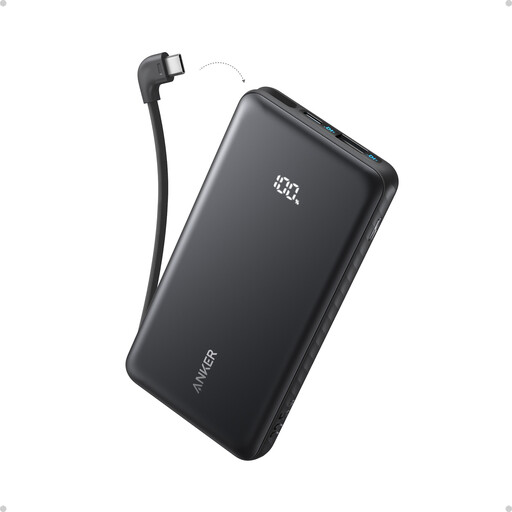
Anker Zolo Power Bank, 10,000mAh 22.5W with Built-in USB-C Cable
For USB-C phone backup when an integrated cable suits your device.
10,000mAh capacity and 22.5W are stated in the product name; the description also lists a USB-A port.
Joybuy
 No image available
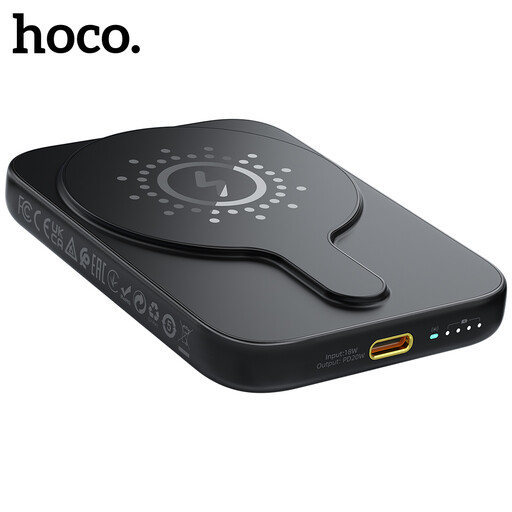
HOCO J117 Esteem 5,000mAh Magnetic Power Bank, Black
For a lower-capacity portable backup option when the magnetic charging feature suits your device.
5,000mAh capacity; the description lists magnetic wireless charging, wired USB-A and USB-C outputs, and a digital display. Magnetic charging is specified for MagSafe-compatible devices.
Joybuy
 No image available
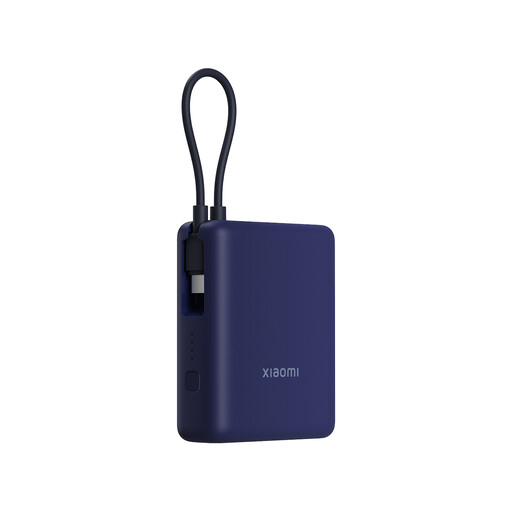
Xiaomi 33W Power Bank, 10,000mAh, Integrated Cable, Ice Blue
For everyday travel when a 10,000mAh bank with an integrated cable fits your charging setup.
The product name states 33W and 10,000mAh; the description lists USB-C output and a net weight of 0.21kg. The description advises avoiding water and extreme temperatures.
Joybuy
 No image available
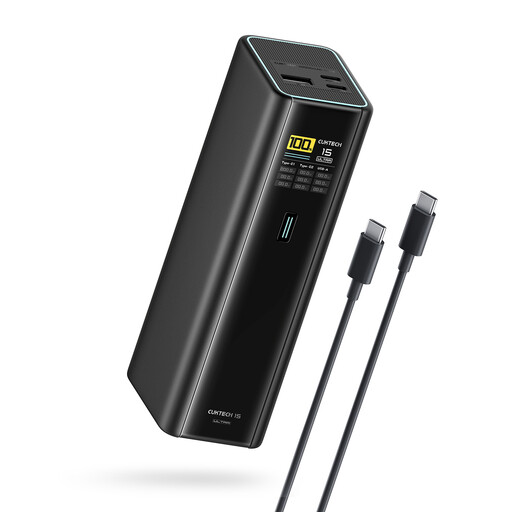
CUKTECH 15 Ultra Power Bank PB200U, 20,000mAh 140W, Black
For longer outings or a compatible higher-power device where the stated capacity and output suit your needs.
The product information specifies 20,000mAh, 140W, PD3.1 and a three-port arrangement. Its warning advises using certified high-wattage cables for 140W charging.
Joybuy
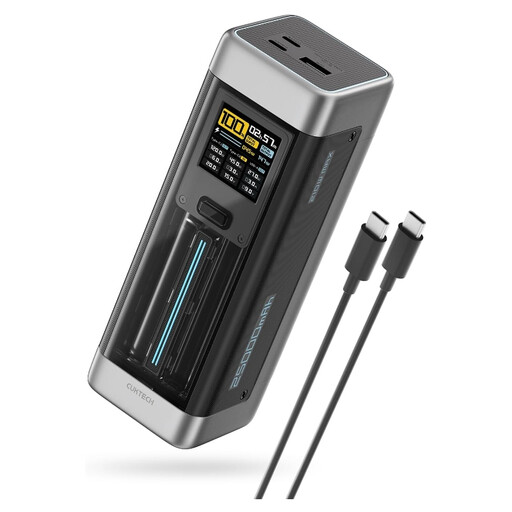 No image available
CUKTECH NO.20 Power Bank P23, 25,000mAh 140W, Grey
For a larger stated energy reserve and compatible high-power USB-C charging needs.
The product name specifies 25,000mAh, 140W USB-C output, three ports and PD3.1. Its warning advises keeping the unit ventilated and uncovered during high-speed operation.
Joybuy
FAQs
How should I compare a power bank’s usable capacity?
Compare stated energy on a consistent voltage basis rather than dividing cell mAh by your phone’s battery capacity. Anker explains that voltage conversion and losses affect delivered energy; its general examples are not measurements of every power bank.
Can a power bank charge several devices at full speed at once?
Not necessarily; check the exact model’s shared-output specification. Belkin specifies up to 20W from one port and 15W total from the BPB027hqWH when both ports are used, so its single-port figure does not apply to both ports simultaneously.
How should I charge and store a power bank at home?
Electrical Safety First advises charging in a ventilated, uncovered place, avoiding overnight or unattended charging, and keeping power banks away from heat, liquids and extreme temperatures. These are safety recommendations, not a stated consumer licensing requirement.
Does a CE or UKCA mark prove independent certification?
No. GOV.UK explains that these markings show the manufacturer believes the product meets relevant requirements; the marking alone does not establish an independent laboratory test.
Are the cited product-safety rules identical throughout the UK?
No. The cited electrical-equipment guidance applies to Great Britain, and its voltage scope is not a blanket certification framework for every USB power bank. Northern Ireland has separate product-safety arrangements; the General Product Safety Regulations 2005 there were superseded by Regulation (EU) 2023/988 on 13 December 2024.


