
24/7 Customer Support

Free returns

Same-day & Next-day Delivery

Quality Guaranteed

Unlock Your Welcome Offers: FREE Delivery | Up to 80% OFF | Free 30-day JoyPlus trial
Download the APP
There's little more frustrating than watching your phone's battery icon turn red when you're miles from a plug socket. Whether you're navigating with maps, on an important call or simply trying to stay connected, a dead battery can bring your day to a halt. A reliable power bank is no longer a gadget for tech enthusiasts; it's an essential accessory for modern life.
But with so many options on the market, choosing the right portable charger can feel overwhelming. This guide is designed to cut through the clutter, helping you understand the key features to look for and highlighting a few standout options to suit different needs and budgets across the UK.
Before you buy, consider these three key factors to ensure you get a device that truly fits your lifestyle.
The capacity of a power bank is measured in milliamp-hours (mAh). A higher number means more charging power. For example, a 10,000mAh power bank can typically recharge a standard smartphone two to three times. For those needing to power larger devices, a high capacity power bank of 20,000mAh or more is ideal.
However, higher capacity often means more weight and a larger size. Consider your daily routine. If you just need a quick top-up during your commute, a smaller, pocket-friendly 5,000mAh unit will suffice. For long trips or charging multiple devices, the extra bulk of a larger model is a worthwhile trade-off.
A large capacity is of little use if it takes all day to transfer power. Look for a fast charging power bank that supports modern standards like Power Delivery (PD). A USB C power bank with PD can charge compatible devices, including some laptops, significantly faster than a standard USB-A port.
For ultimate convenience, a wireless power bank eliminates the need for cables altogether. Many new models support the Qi wireless standard, and some offer magnetic alignment for compatible phones, such as a MagSafe power bank for recent iPhone models, ensuring a secure and efficient connection every time.
If you're a frequent flyer, you'll need a flight approved power bank. Civil aviation regulations restrict the size of lithium-ion batteries allowed on planes. The limit is typically 100 Watt-hours (Wh) per battery, which must be carried in your hand luggage, not checked in. Most power banks under 27,000mAh fall comfortably within this limit, but it's always wise to check the Wh rating printed on the device casing before you travel.
We've selected a few models that cater to distinct user needs, from the daily commuter to the digital nomad.
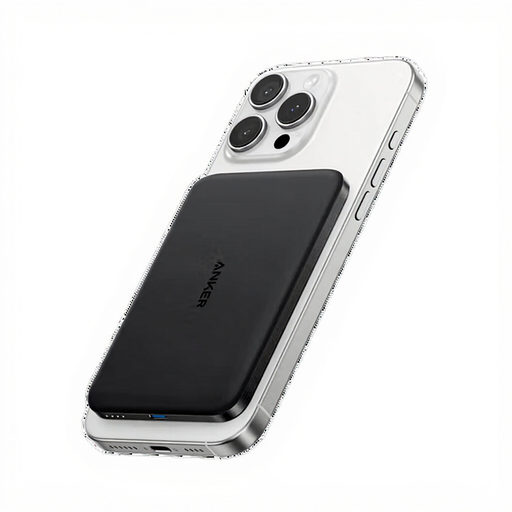
Why It Stands Out: This power bank is all about convenience and portability. Its compact, lightweight design and magnetic attachment system make it a seamless companion for MagSafe-compatible iPhones. It snaps securely to the back of your phone, providing a power boost without any dangling cables.
Pros:
Who is it for? This is an excellent choice for iPhone users who value convenience and a minimalist setup. It’s perfect for daily top-ups to get you through a long day, rather than for multi-day trips off-grid.
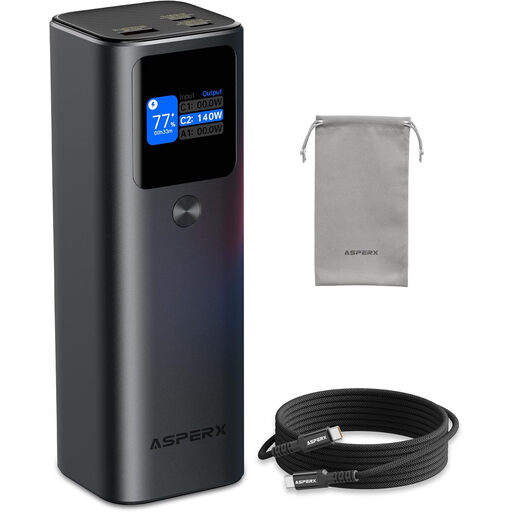
Why It Stands Out: For those who need serious power, this laptop power bank is a workhorse. With a massive capacity and a very high power output, it can charge not just your phone and tablet, but a high-powered laptop like a MacBook Pro. The durable aluminium body and informative TFT screen add a premium feel.
Pros:
Who is it for? This is built for professionals, students and travellers who rely on a laptop and other devices throughout the day. If you need to stay productive on a long flight or work remotely without access to a wall outlet, this is a compelling option.
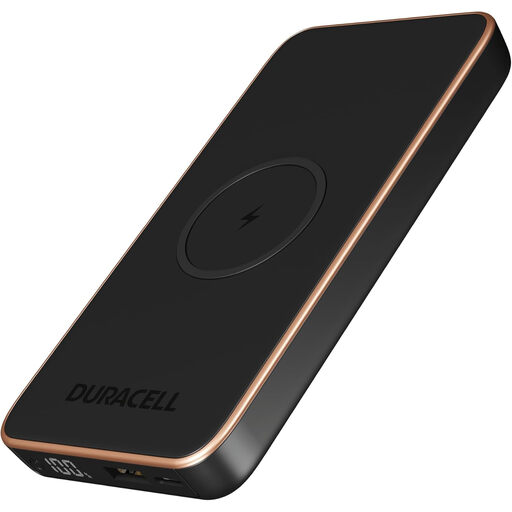
Why It Stands Out: This model from Duracell strikes an excellent balance between power, portability and versatility. It offers three ways to charge—USB-C, USB-A and wireless—allowing you to power up to three devices at once. It’s a reliable all-rounder from a brand known for power.
Pros:
Who is it for? This is the perfect everyday portable charger for the user with multiple gadgets. If you need to charge your phone, wireless earbuds and maybe a tablet throughout the day, the Core10’s flexibility makes it a very practical choice.
These recommendations cover some of the most common needs, but the world of portable power is vast. If you're looking for different capacities, features and form factors, you can find a device that's right for you.
For a wider selection, feel free to explore our full range of battery powered power banks.
1. How many times can a 10,000mAh power bank charge a phone? This depends on two things: your phone's battery size and the power bank's efficiency. Due to power conversion loss, a power bank's usable capacity is typically 60-70% of its stated rating. Therefore, a 10,000mAh power bank will deliver around 6,000-7,000mAh. For a typical smartphone with a 3,000-4,000mAh battery, you can expect about 1.5 to 2 full charges.
2. Are power banks allowed on flights in the UK? Yes, but with strict rules. Power banks must be carried in your hand luggage, not in checked baggage. The individual battery must not exceed 100Wh (Watt-hours). Most commercially available power banks, including high-capacity models up to 27,000mAh, fall under this limit. Always check the Wh rating on your device before flying.
3. What is the difference between a power bank and a portable charger? The terms are often used interchangeably to describe the same device. "Portable charger" is a general term for any device that can charge electronics on the go. A "power bank" specifically refers to a portable unit containing a rechargeable battery pack designed to power other gadgets via USB or wireless outputs. For all practical purposes, they mean the same thing.