For occasional top-ups, compare 5,000mAh portable chargers; if your phone must last through a longer day of tickets, navigation and messages, compare 10,000mAh options for more nominal reserve. Check the bank’s size as well as its capacity: the printed mAh figure does not guarantee a particular number of phone charges, and faster wired charging depends on your phone, power bank and cable working together.
Who needs which kind of charger?
Start with how much you rely on your phone during the journey, then consider what you are willing to carry every day.
Phone-dependent public-transport commuters
If your phone holds tickets or provides navigation and messages, an occasional top-up may not cover a longer day away from a socket. Compare 10,000mAh-class banks, then look for a usable-capacity or device-charge test before assuming how many charges you will get.
Light-pack commuters
If you mainly need to recover a little battery during a normal journey, a 5,000mAh-class bank is a starting point. UGREEN’s UK guidance describes that capacity as an occasional-top-up option; check the exact dimensions and weight if it needs to fit a pocket.
Commuters with a short charging window
If you can plug in only briefly, check the phone’s supported charging method, the bank’s wired USB-C output and the cable’s capability together. A USB-C connector or a high output figure on its own cannot establish the rate your phone will accept.
What should you check before buying?
Choose a capacity range for your journey first, then check carrying fit and the complete charging connection. An integrated lead or magnetic connection changes what you need to carry, but it still has to suit your phone.
| Priority |
What to check |
Your needs |
| Reserve power |
Compare 5,000mAh and 10,000mAh capacity classes against the length of your day. Look for a test that explains delivered energy or device charges; rated cell capacity is not a guaranteed phone-charge count. |
If I only need an occasional boost, a smaller reserve may suffice. For tickets, navigation and messages throughout a longer day, I would compare a larger reserve. |
| Daily carry |
Check the exact dimensions and weight, particularly for pocket use. Consider whether the bank, cable and phone can be carried together conveniently. |
It needs to fit the pocket or bag I actually take on the train or bus, not just look compact in a product photograph. |
| Charging speed |
Compare the bank’s wired USB-C output with the phone’s accepted charging standard and power. Check the cable rating too: the USB Implementers Forum says certified USB-C cable logos can identify 60W or 240W power capability. |
When I have little time to plug in, I want a connection my phone can use, rather than relying on the bank’s maximum wattage alone. |
| Phone connection |
Confirm that a built-in lead fits the phone. For a separate lead, check the available ports; for magnetic charging, confirm the exact phone and case combination. |
I may prefer an attached cable so I cannot leave a loose lead behind, but I still need a workable connection if that lead wears. |
| Condition and traceability |
Check who sells the bank and how to receive product or recall information. Inspect the casing, ports and attached cable; Electrical Safety First advises stopping use if a bank becomes too hot to handle. |
I want to recognise damage or excessive heat before putting the bank back in my bag or using it again. |
What can go wrong with the choice?
-
Counting full phone charges from the printed mAh figure
The rating describes the bank’s internal cell capacity, not an identical amount of energy delivered to a phone. Planning a long commute around a charge count inferred from the label could leave too little reserve.
Match the capacity class to your journey and starting phone charge. Where a charge count matters, compare reviews that explain their usable-capacity or device-charge test rather than treating unlike manufacturer claims as equivalent.
-
Assuming every USB-C connection charges at the listed maximum
The phone, bank and cable each affect the available charging rate. A bank’s maximum output does not mean every connected phone will accept it.
Check the exact phone’s charging requirements alongside the bank’s output and cable capability. The USB Implementers Forum’s certified cable markings can help identify stated cable power capability where relevant.
-
Choosing an attached lead without checking its connector
An integrated USB-C lead is convenient only when it fits the device you intend to charge. Wear to that lead can also remove the convenience you bought it for.
Confirm the phone connection and inspect whether the bank has another usable port for a separate cable. Do not assume a built-in USB-C connector fits a Lightning-equipped phone.
-
Ignoring damage or excessive heat
Electrical Safety First has recorded a power-bank recall following reports of fires and burns. It distinguishes ordinary warmth during use from a bank that becomes too hot to handle.
Inspect the bank and its cable regularly. If it becomes too hot to handle, stop using it, unplug it if it is charging and seek advice from the manufacturer, as Electrical Safety First advises.
Brand ranges worth comparing
These brand examples illustrate different connections and stated outputs; a brand’s range does not establish the delivered charge or speed of a particular model with your phone.
Anker
Anker’s UK range includes an integrated-cable Nano 10,000mAh model and a 10,000mAh MagGo magnetic model.
- Anker UK says its Nano model can recharge the bank to 50% in 45 minutes under its stated conditions; treat that as a brand claim, not a measured result for every setup.
- Anker lists Qi2 15W wireless charging and up to 27W USB-C output for its MagGo model. Check your phone’s compatibility and whether you would rather charge by cable.
Belkin
Belkin lists 10,000mAh banks with integrated-cable and multiple-port configurations.
- Belkin UK states up to 45W output and charging for up to three devices for its UltraCharge integrated-cable model.
- Its separate UltraCharge Pro 10K listing states up to 60W USB-C charging for compatible devices. Neither maximum establishes the charging rate of your own phone.
UGREEN
UGREEN’s UK guidance distinguishes 5,000mAh occasional-top-up models from 10,000mAh options for longer days away from a socket.
- UGREEN describes its MagFlow Air 10,000mAh model as 13.9mm thick, with an integrated USB-C cable and Qi2 15W magnetic charging.
- Its stated charging modes depend on a compatible device; check the phone and case before choosing the magnetic route.
INIU
INIU’s UK store lists several 10,000mAh wired power banks with different stated output ratings.
- Its listed Carry Slim, Multi and Pawsible variants state 22.5W, 30W and 45W respectively.
- Those listings provide specifications for comparing variants, not equivalent measurements of delivered capacity or charging time with a particular phone.
Portable chargers on Joybuy
These options cover integrated-cable banks for a longer day and 5,000mAh magnetic banks for occasional top-ups. Compare your phone connection and daily carrying space before choosing between them.
 No image available
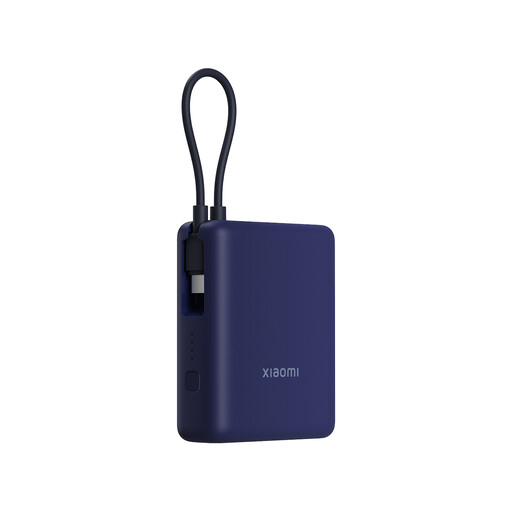
Xiaomi 33W 10,000mAh Power Bank with Integrated Cable, Ice Blue
Consider this integrated-cable option if a loose lead is easy to forget and you want to compare a 10,000mAh reserve for a longer commuting day.
Check that the attached connection fits your phone and that its charging requirements suit the stated 33W rating. The capacity label does not promise a particular number of phone charges.
View on Joybuy
 No image available
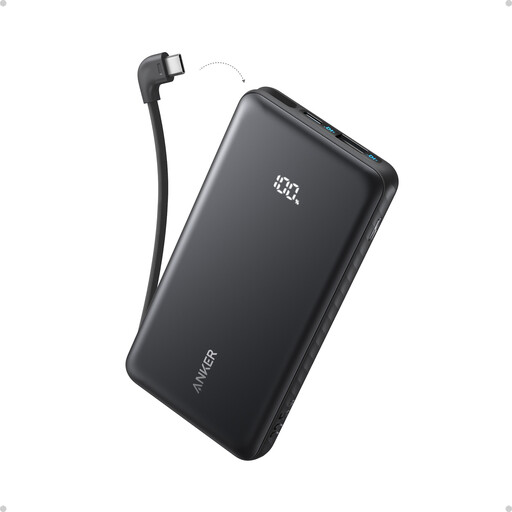
Anker Zolo 10,000mAh 22.5W Power Bank with Built-in USB-C Cable
The built-in USB-C cable suits a commute where carrying a separate lead is inconvenient, provided that connector fits your phone.
Confirm the port arrangement if you plan to connect another device: the descriptions give differing simultaneous-device counts. Check your phone’s accepted charging power rather than assuming it will draw 22.5W.
View on Joybuy
 No image available
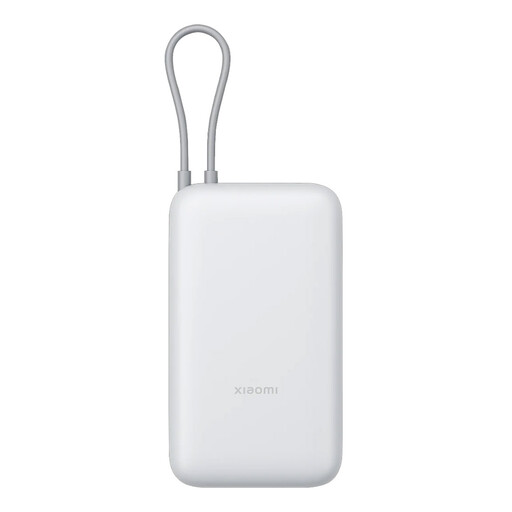
Xiaomi 20,000mAh Power Bank with Integrated Cable, GL Light Gray
This is a higher nominal-capacity option to consider when a long day away from a socket matters more than carrying the smallest possible bank.
Check its dimensions and weight against your daily bag, and confirm that the integrated connection suits your exact phone. Its 20,000mAh rating is not a guaranteed delivered charge.
View on Joybuy
 No image available
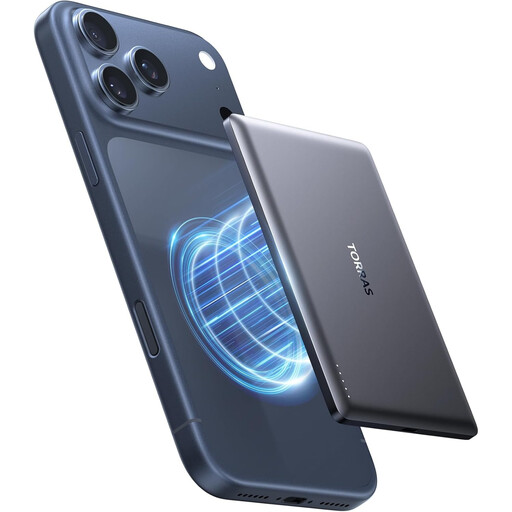
TORRAS MiniMag 5,000mAh MagSafe Power Bank with USB-C Cable, Gray Titan
Consider this smaller-capacity route for occasional top-ups if a magnetic connection appeals to you.
Confirm that your exact phone and case work with its magnetic charging, and check the USB-C connection you would use as an alternative. A 5,000mAh rating does not establish a full phone-charge count.
View on Joybuy
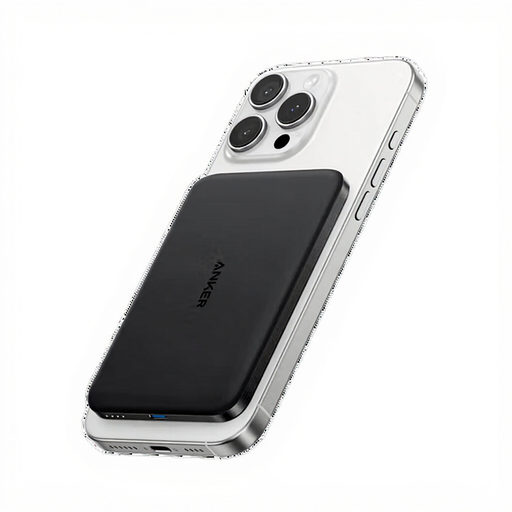 No image available
Anker Nano 5,000mAh 15W Magnetic Wireless Power Bank, Black
This magnetic option is worth considering for an occasional top-up when you want to avoid connecting a charging lead during the journey.
Confirm compatibility with your exact phone and case; the product information recommends a MagSafe-compatible case under 2.5mm thick. Check its carrying dimensions and any wired connection you need before buying.
View on Joybuy
Questions about commuting with a power bank
Is 5,000mAh or 10,000mAh more appropriate for my commute?
Compare 5,000mAh for occasional top-ups and 10,000mAh when your phone needs a larger reserve through a longer day; UGREEN’s UK guidance makes the same distinction between those uses. Neither printed capacity guarantees a particular number of full phone charges, so consider your starting battery level and look for a clearly explained device-charge test if that number matters.
Will any USB-C power bank fast-charge my phone?
No: check the phone’s supported charging method and power, the bank’s stated USB-C output and the cable’s capability together. The USB Implementers Forum says certified USB-C cable logos can identify 60W or 240W capability, but a cable marking does not establish the rate your phone will accept.
Should I choose a power bank with a built-in cable?
A built-in cable can remove the need to remember a separate lead if its connector fits your phone. Check for another usable port if you want a backup connection, since an attached cable can wear or become damaged.
What if my power bank becomes very hot?
Stop using it, unplug it from the charger if it is charging and seek advice from the manufacturer. Electrical Safety First says power banks can become warm during charging and use, but one that is too hot to handle should not remain in use.


