Commuters wanting a phone backup
If the main concern is a flat phone on the way home, a compact 5,000mAh model is a starting point. A built-in USB-C plug saves carrying a cable only if it fits both your phone’s connector and its case.


For an emergency phone top-up, start with a compact 5,000mAh power bank; around 10,000mAh gives a longer-day phone and accessories backup, while 20,000mAh is worth considering for repeated charging or a tablet. Capacity alone cannot tell you how many charges you will get: Which? tests with real devices because delivered power can differ from the headline figure. Check the connections, single-port and shared output, refill input and carrying weight against your own day.
If the main concern is a flat phone on the way home, a compact 5,000mAh model is a starting point. A built-in USB-C plug saves carrying a cable only if it fits both your phone’s connector and its case.
For a longer day involving a phone and small accessories, consider the 10,000mAh class. Check which ports can be used together and how much output is available when you connect more than one device.
If you expect repeated charging or plan to use a tablet alongside a phone, consider a 20,000mAh-class model. Compare its weight, refill input and USB-C output with the devices you intend to carry.
Start with the charging your day requires, then check whether the exact power bank can connect to your devices and be refilled before you next need it.
| Priority | What to check | Your needs |
|---|---|---|
| Usable charging | Use stated mAh to compare capacity classes, not to calculate an exact number of phone charges. Look for real-device charge results where available; Which? tests these because delivered power can differ from claims. | I need enough reserve to get through the outing, whether that means one emergency top-up or charging several times. |
| Connection and output | Check the device connector, cable and each port’s stated output. For USB Power Delivery (USB PD), check device compatibility; compare single-port wattage with the total available when ports are used together. | My phone or tablet needs to connect without an unexpected cable change, and I may want to charge another device at the same time. |
| Size and refill | Compare published dimensions and weight with what you carry. Check the power bank’s input wattage, the charger and cable needed to refill it, and any tested refill time. | A small backup matters more to me if it must fit in a pocket; for consecutive long days, being able to refill the bank between outings matters too. |
| Product information and disposal | Identify the exact model and its stated ports and ratings rather than relying on a general product description. Plan to use an appropriate battery or electrical-waste collection route when the bank is no longer wanted. | I want to check the equipment I am buying and know where to take it at the end of its life. GOV.UK warns that lithium-ion batteries can catch fire if put in rubbish, particularly when wet or damaged. |
The capacity printed on a power bank does not directly state how much charging reaches your phone. Which? reports differences between claimed power and charges delivered to real devices.
Choose a capacity class for your day, then compare real-device charging tests for the models you are considering where available.
A USB-C connector alone does not establish a device’s charging speed. The compatible charging protocol, cable and port limits matter, and output can change when several devices are connected.
Check the exact model’s input and output ratings, USB PD support where relevant, and its separate single-port and shared-output figures. Belkin, for example, states 20W maximum from one port but 15W total from both on its 10,000mAh display model.
A foldable USB-C connector is useful only if it reaches your device’s port. A phone case or a different connector can prevent the intended direct connection.
Check the phone connector and case clearance, plus whether the power bank has a separate port for a compatible cable.
If the built-in connector does not fit, you may need to carry a separate compatible cable.
GOV.UK warns that lithium-ion batteries can catch fire in rubbish, particularly if they become wet or damaged.
Use an appropriate battery or electrical-waste collection point rather than a household bin.
These examples show why specifications need checking by model and do not describe every product a brand makes.
Anker UK lists both compact connector-based models and higher-capacity power banks.
Belkin UK lists USB-C power banks across different capacities and output ratings.
UGREEN UK lists 10,000mAh models with different wired and magnetic charging arrangements.
These options cover compact phone backups, 10,000mAh everyday charging and a 20,000mAh option for a longer day. Match the connector and carrying size to your devices rather than choosing by capacity alone.
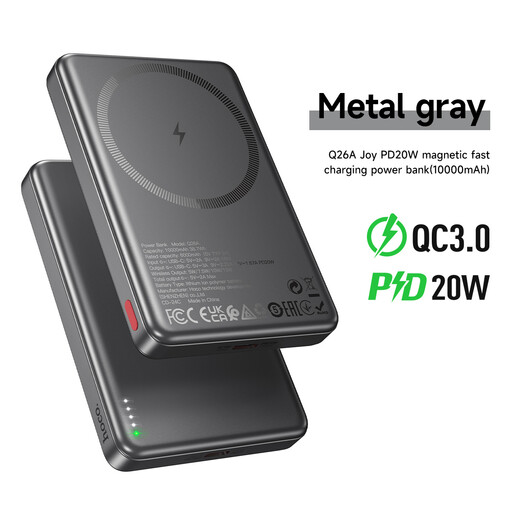 Image unavailable
A 10,000mAh option for an everyday phone backup when magnetic charging appeals. Check your phone and case compatibility before relying on magnetic attachment, and check shared output if you plan to charge two devices together.
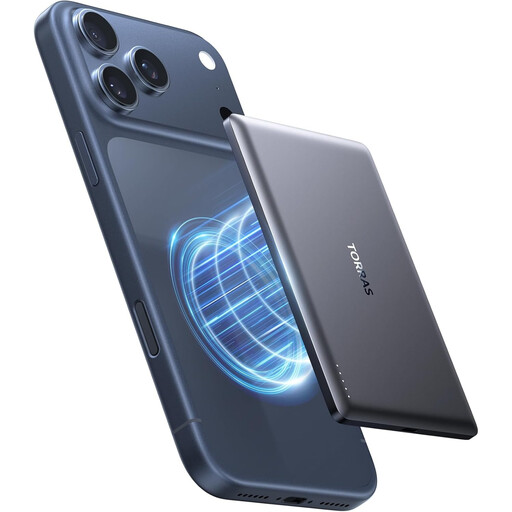 Image unavailable
A compact-capacity choice for an emergency phone top-up rather than repeated charging. Its name identifies a magnetic design and USB-C cable; check your phone’s magnetic compatibility and whether the available connection suits how you intend to charge.
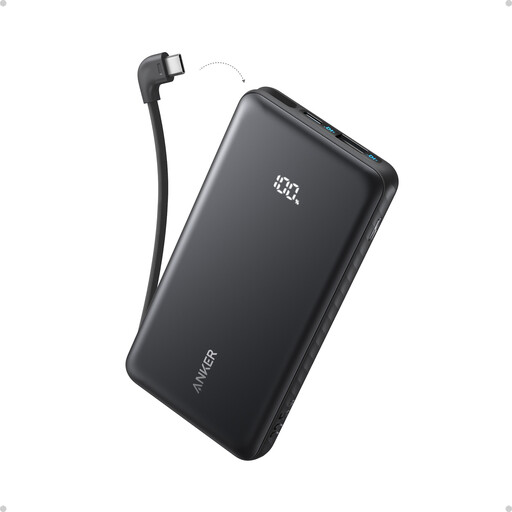 Image unavailable
The 10,000mAh capacity and built-in USB-C cable make this worth considering for a phone backup during a long day. Check your device’s charging requirements and the bank’s total output if you intend to connect accessories as well.
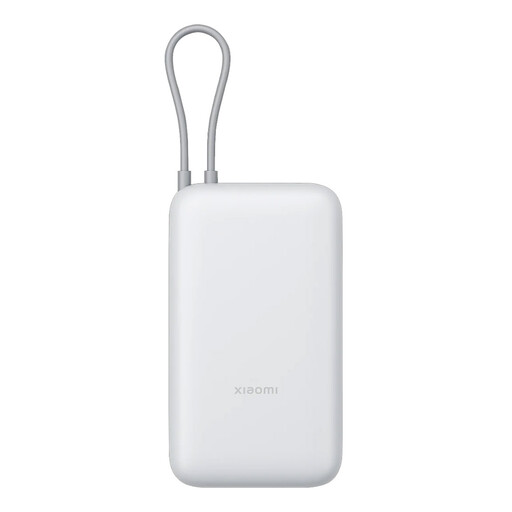 Image unavailable
Consider this higher-capacity option if you expect repeated charging away from sockets. Check its weight, the integrated cable’s fit with your devices and the relevant output ratings before deciding whether the extra capacity is worth carrying.
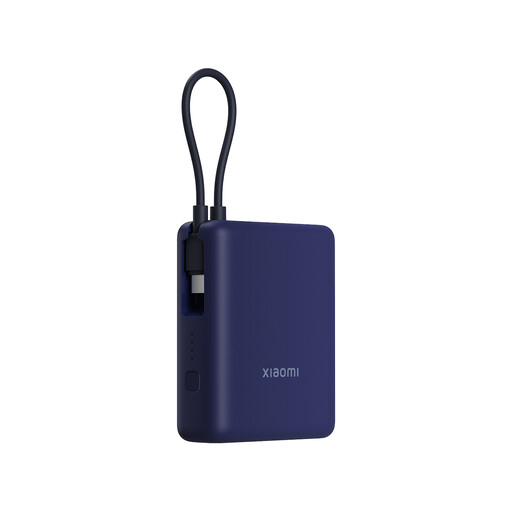 Image unavailable
This 10,000mAh option has an integrated cable for everyday charging away from sockets. Check that the cable fits your device and that your device supports the charging arrangement you need; the stated 33W rating does not by itself determine every device’s charging speed.
It can suit a single-phone emergency backup, but choose more capacity if you expect repeated charging or need to power several devices. Which? says small power banks tend to charge an average smartphone once from flat to full before needing to be refilled themselves; the result for your phone depends on the particular bank and charging conditions.
No exact charge count follows from the label alone. Which? tests with real devices because portable chargers do not always deliver as much power as their claims suggest; use independent results for a particular model where available and treat mAh as a starting point for comparing capacity classes.
Check the power bank’s output, your device’s supported input and the cable, as well as any limit when several ports are in use. The USB Implementers Forum describes USB Power Delivery as flexible power delivery over a cable, but a USB-C connector on its own does not establish a particular wattage.
Yes, if the particular bank has suitable connections and enough shared output for both devices. For example, Belkin states that its 10,000mAh display model offers up to 20W through one port but 15W total when both are used, so check the simultaneous-output rating rather than counting ports alone.
Check the bank’s stated input, the wall charger and cable you will use, and what comes with the product. UGREEN states 35W input for its 10,000mAh Nexode Pro; that rating is specific to the model, and a charger with a lower compatible output may take longer to refill it.