Who needs which type?
Start with the devices you will charge and how long you expect to be away from a socket; a larger capacity or an extra charging method is useful only if it meets that need.
Phone users carrying a daily backup
If you mainly need a phone top-up during a commute, event or day out, compare compact 5,000mAh and 10,000mAh models by weight, connector and stated output. Check whether a built-in cable fits your phone or whether you will need to carry another one.
People charging several devices
For a phone alongside earbuds, a tablet or someone else’s device, look at capacity, available connections and total output with devices plugged in together. Also check the bank’s weight if you will carry it all day.
Phone users considering magnetic charging
A magnetic bank may suit a compatible phone when attaching it without a cable matters to you. Check the exact phone and case, charging alignment and whether the model offers a wired USB-C option for other devices.
What should you check?
Choose enough capacity for the time away from mains power, then check how the bank connects to your devices and what it can supply when more than one is charging.
| Priority |
What to check |
Your needs |
| Capacity and weight |
Compare stated mAh and watt-hours (Wh) where available, alongside weight. Check whether the capacity information is consistent across the title, label and specifications. |
I want enough charging margin for my time away without carrying capacity I am unlikely to use. |
| Ports and output |
Check each port’s stated output, supported charging standards and the total output when several devices are connected. Match the cable and charging requirements to your phone, tablet or laptop. |
If I charge two devices together, I need to know what each connection can deliver—not just the largest wattage on the box. |
| Wired or magnetic |
For magnetic charging, check the exact phone, case and alignment. For wired charging, check connector type and cable suitability; USB-C alone does not establish a particular charging speed. |
Cable-free attachment appeals to me, but only if it works with my phone. Otherwise, I would rather use a suitable cable. |
| Condition and identity |
Identify the full model and check UK product recalls. Follow the maker’s charging instructions, and do not use a damaged, swollen or overheating bank. |
I want to be able to identify the unit I own and respond if a safety notice applies to that exact model. |
Brand and product-line references
These examples illustrate different charging arrangements; check the specifications and safety information for the exact model rather than applying one product’s features to a whole brand.
Anker
Anker’s Nano A1259 is a compact wired example with a built-in USB-C cable; Anker UK identifies it as a 10,000mAh, 30W model.
- A built-in cable may reduce what you need to carry if its connector suits your device.
- Check the full model number against UK recall notices: the Office for Product Safety and Standards recall names A1681, A1689 and A1647, not every Anker bank.
UGREEN
UGREEN’s Nexode 20,000mAh range includes wired USB-C models intended for charging more than one device.
- UGREEN lists three charging connections on its 20,000mAh 67W built-in-cable model.
- Check the exact variant’s weight, supported charging standards and output with multiple devices connected.
Belkin
Belkin lists Qi2 magnetic power banks in several capacities for phones compatible with the relevant model.
- Magnetic attachment offers a cable-free way to connect a compatible phone.
- On Belkin’s BoostCharge Pro Qi2 15W 10K model, Samsung compatibility is through USB-C; check phone, case and camera clearance before relying on wireless charging.
Joybuy power-bank options
These options cover phone-focused wired charging, extra capacity, multiple connections and magnetic charging. Compare each one with your devices and carry needs rather than treating the list order as a performance ranking.
 No image available
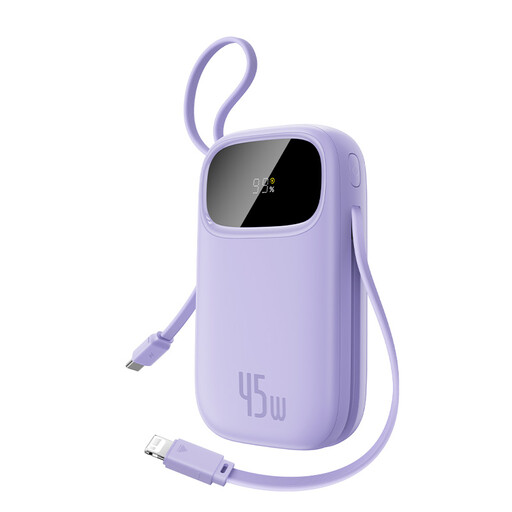
Baseus EnerFill FC31 Qpow 3, 10,000mAh 45W, Nebula Purple
Consider this model if you need built-in USB-C and Lightning cables for different devices. The title states 10,000mAh and 45W, but its capacity information is inconsistent, so confirm the rated mAh and Wh before choosing it. For simultaneous charging, check the stated combined-output limit rather than assuming each connection receives the headline wattage.
View on Joybuy
 No image available
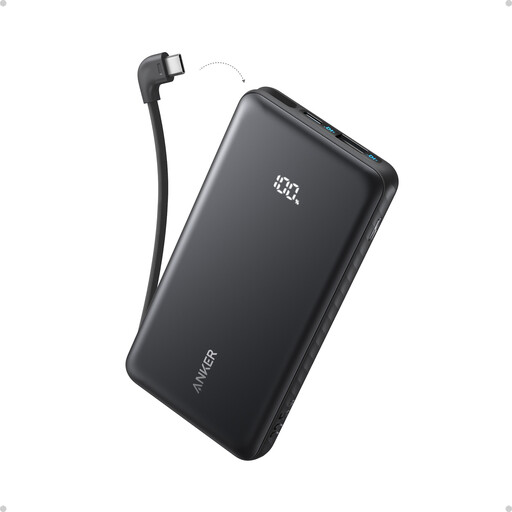
Anker Zolo Power Bank, 10,000mAh 22.5W, built-in USB-C cable
The built-in USB-C cable makes this a phone-focused option for a day away from a socket. Its title states 10,000mAh and 22.5W; check your phone’s charging requirements, the bank’s weight and its output when using multiple connections. Identify the exact model when checking UK recall notices.
View on Joybuy
 No image available
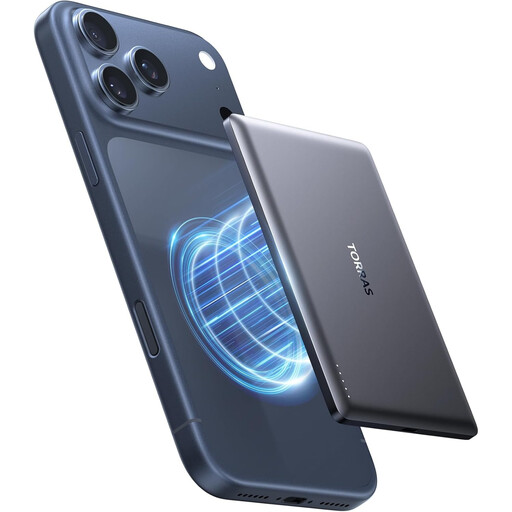
TORRAS MiniMag 5,000mAh MagSafe Power Bank, Gray Titan
This magnetic option is aimed at a short, cable-free top-up for a compatible iPhone. Check your exact phone and case, charging alignment and camera clearance; do not assume magnetic compatibility with other devices. A USB-C cable is named in the product title for wired use.
View on Joybuy
 No image available
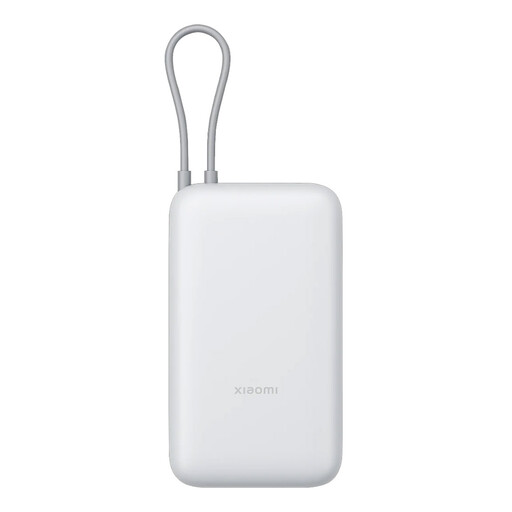
Xiaomi Power Bank 20,000mAh, integrated cable, Light Gray
The stated 20,000mAh capacity is worth considering when you need more charging margin than a phone-focused daily bank. Check its weight before carrying it all day, and confirm the integrated cable’s compatibility and any other connections you intend to use. Capacity alone does not establish its suitability for a tablet or several devices at once.
View on Joybuy
 No image available
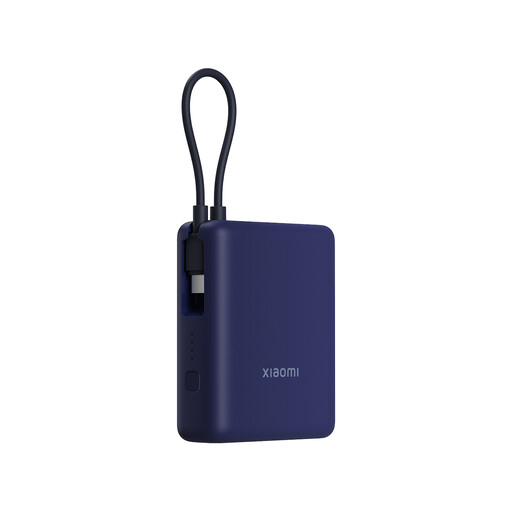
Xiaomi 33W Power Bank 10,000mAh, integrated cable, Ice Blue
This integrated-cable model is another option for a phone-focused day. Its title states 10,000mAh and 33W; confirm the exact variant and supported charging standard before relying on that output with your phone. The product details list a net weight of 0.21kg.
View on Joybuy
Common questions
How much capacity do I need for a day away from a socket?
For a phone-focused day, consider a compact 10,000mAh bank when carry weight matters; a 20,000mAh model offers more stated capacity for repeated or shared charging but may weigh more. Start with the devices you will charge and compare weight and Wh where stated. A capacity label does not guarantee a particular number of full phone charges.
Will any USB-C power bank fast-charge my phone or laptop?
No. The connector alone does not establish charging output or compatibility. USB Implementers Forum describes USB Power Delivery as a way to provide flexible power delivery; check the bank’s supported standard and port output against the device and cable, including the figures for simultaneous charging.
When does magnetic charging make sense?
Choose it when cable-free attachment matters and the exact power bank, phone and case are compatible. Check alignment and camera clearance before buying. Belkin states that Samsung devices connect through USB-C on its BoostCharge Pro Qi2 15W 10K model, so a magnetic design does not mean every phone can charge wirelessly.
What safety checks matter before buying?
Identify the exact model, buy from a traceable seller and check current UK product-recall notices. The Office for Product Safety and Standards recall covering Anker A1681, A1689 and A1647 illustrates why a brand name alone is not enough to identify an affected unit.
How should I charge and dispose of a power bank?
Follow its manufacturer’s instructions and do not use a damaged, swollen or overheating unit. West Yorkshire Fire and Rescue Service advises against charging lithium-ion batteries unattended or overnight. When the bank reaches end of life, the UK Office for Product Safety and Standards says to take batteries and electrical waste to an appropriate collection point rather than putting them in household rubbish.


