Phone top-up travellers
If you mainly want reserve power for a phone between stops, portability and the number of useful charges matter. Which? includes travel and topping up away from mains power among the uses for portable chargers.


Choose a compact power bank if you mainly need to top up a phone while travelling; consider more reserve capacity or higher output for a tablet or several devices, provided the battery and your airline’s rules allow it. A plug-in charger is useful only when you can access a suitable socket. Before you buy or pack anything, check the power bank’s marked Wh, your devices’ connectors and charging needs, and the current rules for every flight leg.
If you mainly want reserve power for a phone between stops, portability and the number of useful charges matter. Which? includes travel and topping up away from mains power among the uses for portable chargers.
If a journey leaves you without a socket for longer, or you carry a tablet as well as a phone, consider reserve capacity and output alongside the airline’s battery conditions. Which? distinguishes size, charging time and delivered device charges when assessing portable chargers.
If your devices use different connections or you may charge more than one at once, check port compatibility, cable ratings and shared output. USB-IF and Belkin describe cable power markings and model-specific shared-output limits respectively.
Start with the device you most need to keep charged, then match the power source, connections and airline conditions to the journey.
| Concern | What to check when buying | Who this matters to |
|---|---|---|
| Portable phone top-ups | Compare size, ports, marked Wh and independent real-device charging results; advertised mAh alone does not establish how many charges a phone will receive. | If I want reserve power without carrying more than I need, I would compare carrying size with useful phone charges; consumers whose main concern is a compact phone top-up are roughly 31%. |
| Reserve power for a longer journey | Check the marked Wh, real-device charging evidence, and the airline’s approval and in-flight-use rules. | If I expect a long stretch without mains power or need to charge a tablet, I would prioritise reserve power while checking the flight conditions; consumers putting longer-journey reserve first are roughly 31%. |
| Compatible connections | Match each device’s connector and charging needs to the ports, cable rating and output available when ports are used together. | When I carry devices with different connections, I want a workable cable and output combination rather than extra capacity I may not use; consumers prioritising mixed-device compatibility are roughly 23%. |
| Charging from a socket | Check likely socket access, the destination plug type, the charger’s input range and output, and whether a suitable cable is included. | If I can rely on suitable sockets at stops or after landing, I may prefer a mains charger or destination adapter to carrying more battery reserve; consumers who prioritise socket-based charging are roughly 15%. |
These proportions describe the relative priority of each concern among consumers considering an air-travel charging kit; they are approximate, not measured market shares.
Advertised capacity does not consistently predict the number of charges delivered to a device, and flight capacity checks use Wh. The UK Civil Aviation Authority’s guidance says a power bank above 100 Wh and up to 160 Wh requires airline approval; one over 160 Wh is not permitted in passenger baggage. Airlines may set stricter conditions.
Check the bank’s marked Wh and the rules for every operating airline. For expected phone or tablet use, compare independent real-device charging results rather than treating mAh as a promised number of charges.
A mains charger needs a suitable socket, and an integrated cable does not necessarily match every device. A charger’s output may also be shared across ports.
List the devices and sockets you expect to use, then check each connector, cable rating, output and included accessory.
A separate cable or destination plug adapter may still be needed.
Airline rules can differ, and safety alerts and recalls apply to specific models rather than every product in a category.
Before departure, check the current rules for each flight, the exact power bank model against UK Office for Product Safety and Standards alerts and recalls, and the bank for damage or swelling. Do not use a damaged battery.
Anker’s UK range includes power banks for different device combinations. Its A1383 is a 20,000mAh model with an integrated USB-C cable, which may suit travellers seeking more reserve power with fewer loose cables.
Belkin’s UK power-bank range includes USB-C and higher-output options for different setups.
INIU’s P41 range includes compact 10,000mAh power banks for travellers comparing phone and tablet top-up options.
UGREEN’s Nexode range includes power banks, USB-C mains chargers and cables for assembling a multi-device charging kit.
These Joybuy listings cover compact power banks for phone reserve power, including options with magnetic attachment or an integrated cable. Product features do not establish permission for a particular flight: check the exact bank’s marked Wh and each airline’s current rules before packing.
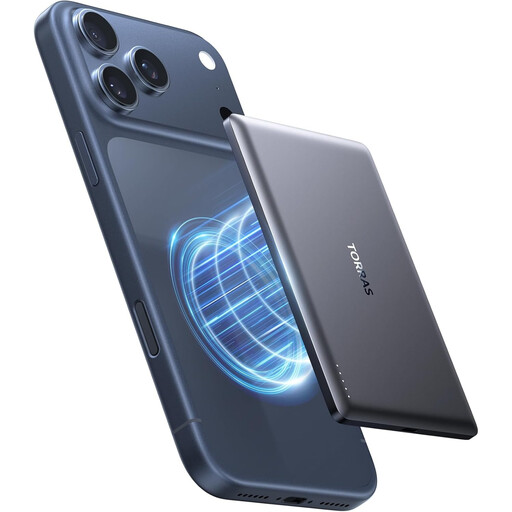 No image available
For a phone top-up when you want a slim power bank with magnetic attachment for a compatible iPhone.
The product name specifies 5000mAh capacity and a USB-C cable. Magnetic wireless attachment is described for MagSafe-compatible iPhones; other device charging is via USB-C cable.
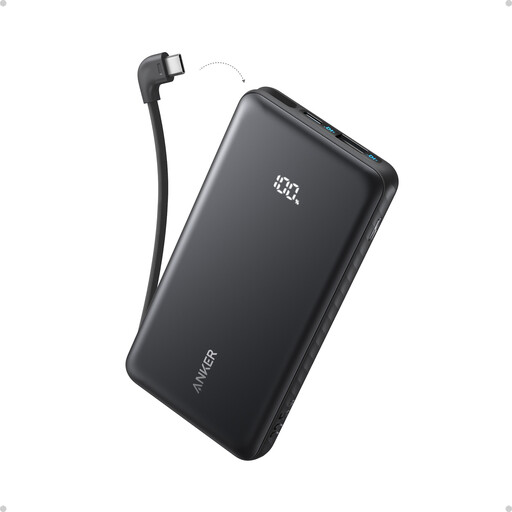 No image available
For travellers who want reserve power and an integrated USB-C cable rather than carrying that cable separately.
The product name specifies 10,000mAh capacity, 22.5W and a built-in USB-C cable. The listing also describes a USB-A port for connecting another device.
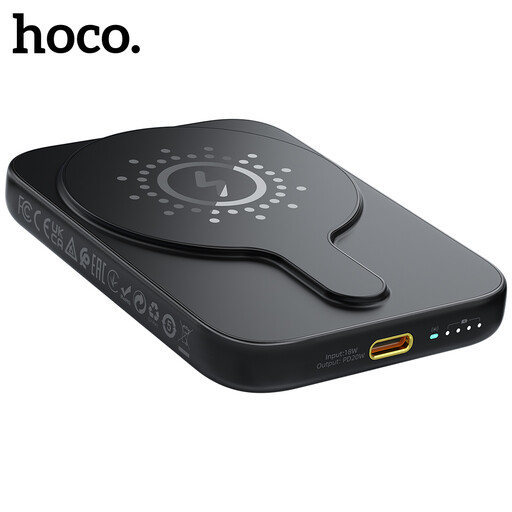 No image available
For a phone top-up when a 5000mAh magnetic power bank suits the connections and carrying needs of your device.
The product name identifies the J117 Esteem model, 5000mAh capacity and magnetic design. Check your phone’s compatibility and the bank’s marked Wh before travel.
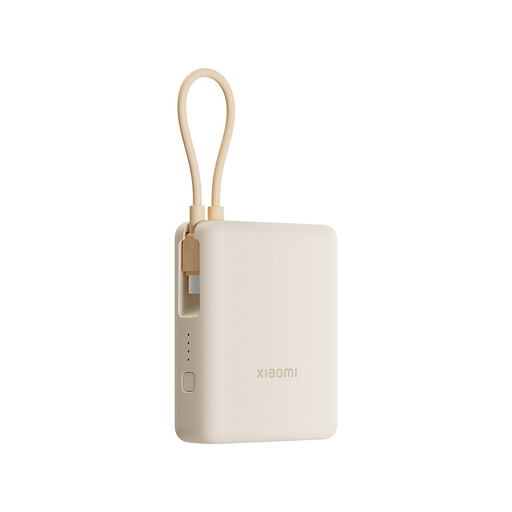 No image available
For travellers who want a 10,000mAh bank with an integrated cable and connections for different devices.
The product name specifies 33W, 10,000mAh and an integrated cable. The listing describes USB-C and USB-A outputs; check the requirements of each device you plan to connect.
 No image available
For travellers who want 10,000mAh reserve power supplied with a USB-C cable and travel pouch.
The product name specifies 22.5W charging and includes a USB-C cable. Check the exact battery’s marked Wh and your airline’s conditions before taking it aboard.
The UK Civil Aviation Authority advises passengers to carry power banks in the cabin, with a limit of two per person. If a cabin bag is taken for the hold, remove the power banks and keep them with you; protect them against short circuits and check your airline’s current conditions.
Check the operating airline’s rule rather than assuming it is allowed. ICAO’s guidance says not to use a power bank to charge other devices on board, and easyJet expressly prohibits this on its flights. The restriction on recharging the power bank itself is a separate issue.
Check the marked Wh and the rules for each airline on your itinerary; mAh alone is not the flight capacity measure. UK Civil Aviation Authority guidance says that above 100 Wh and up to 160 Wh requires airline approval, while a battery over 160 Wh is not permitted in passenger baggage. Airlines may apply stricter conditions.
Match the device connector and charging requirements to the charger’s output, then check the cable’s power rating and whether it is included. USB-IF describes 60W and 240W power markings for USB-C-to-USB-C cables in its compliance programme; a marking does not replace checking the needs of your specific device.
Search UK Office for Product Safety and Standards alerts and recalls using the exact brand and model, and do not use a battery that is damaged or swollen. Safety notices can apply to particular models, so do not treat an alert about one product as a finding about every power bank.