Buying priorities
Start with the devices that matter most, then check usable energy, charging compatibility, safe storage and how you will receive information if phone or home-internet service is disrupted.
| Priority |
What to check |
Your needs |
| Usable energy |
Compare stated Wh or rated/output capacity where published alongside advertised mAh. Check the battery-level display and allow for conversion losses, battery age and sharing between devices. |
I want enough reserve for my priority phone or small device, rather than relying on an exact number of full charges. Electrical Safety First notes that capacity affects how often a device can be recharged, while Which? says real-device results can differ from advertised expectations. |
| USB-C compatibility |
Check the output of the specific port, total output with other ports occupied, the bank’s input rating, cable rating and the device manufacturer’s charging requirement. |
My phone should charge from the port I plan to use, and I want the bank itself to be ready again before an outage. USB Power Delivery can negotiate power over USB-C, but a USB-C connector alone does not confirm the charging profile or speed. |
| Safe charging and storage |
Use a reputable retailer, retain model details, follow the product instructions and inspect the unit for damage, swelling or excessive heat. Charge it uncovered in a ventilated place away from heat and liquids. |
I need a power bank that is ready to use without creating avoidable battery risk at home. Electrical Safety First advises against charging battery packs overnight or while nobody is at home. |
| Information access |
Keep a battery or wind-up radio and written important numbers alongside the power bank. Decide which devices need charging first if available energy is limited. |
A charged phone is useful, but I do not want to assume mobile signal, home broadband or mains power will remain available. UK Government preparedness guidance includes a portable power bank, a battery or wind-up radio and written key numbers in household preparation. |
Joybuy product options
These Joybuy options focus on portable power banks for short-duration charging of phones and small USB devices during a household outage, including integrated-cable and multi-device choices.
 No image available
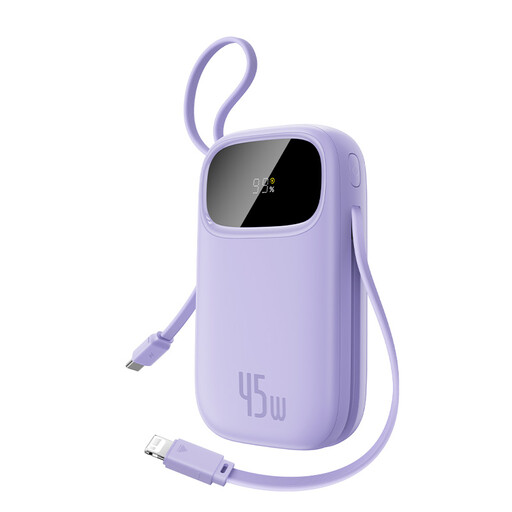
Baseus EnerFill FC31 Qpow 3 10,000mAh 45W Power Bank
An integrated USB-C cable, Lightning cable, USB-C output and USB-A output suit households with mixed device connectors.
Stated specifications include a battery percentage display and 36.5Wh battery energy.
The listing states 45W for one USB-C device, while total output with several devices connected is stated as 15W. Its title and detailed capacity figures use different measurements, so compare the stated Wh with the needs of your devices.
Joybuy
 No image available
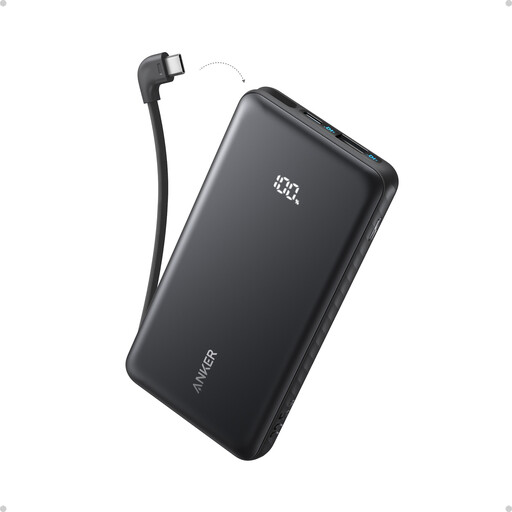
Anker Zolo 10,000mAh 22.5W Power Bank
This option is intended for one essential USB-C phone and a second low-power device, with a built-in USB-C cable and USB-A port.
The listing states 10,000mAh capacity, 22.5W output, a 20W recharge input and a screen showing charging status.
Check how its output is divided during simultaneous charging and whether its USB-C output profile matches your phone and cable.
Joybuy
 No image available
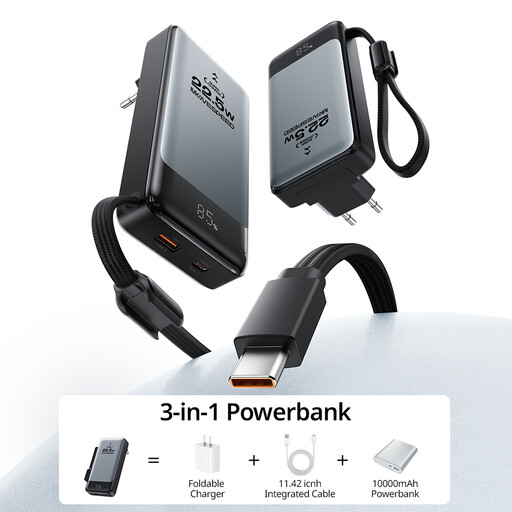
MOVESPEED 3-in-1 10,000mAh Power Bank
An integrated Type-C cable, Type-C port and USB-A port provide stated connections for up to three devices during a short outage.
The listing also describes a 29cm built-in cable and a wall-charger mode.
The title and detailed text give different output claims, so confirm the applicable maximum before buying. In wall-charger mode, the detailed specification states a 10W maximum total output.
Joybuy
 No image available
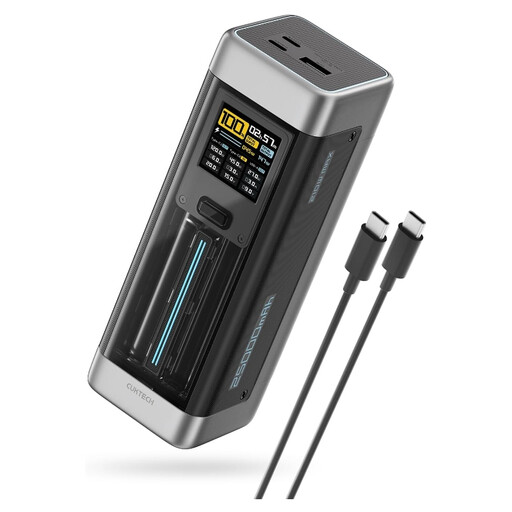
CUKTECH NO.20 25,000mAh 140W Power Bank
This larger-capacity option may suit a household also charging a higher-demand USB-C device alongside phones.
The listing states 25,000mAh capacity, two USB-C ports, one USB-A port, three-port charging and 140W PD3.1 capability.
It is primarily aimed at laptop charging, which may be unnecessary for a phone-focused kit. Check shared port allocation and use suitable cables for high-wattage operation.
Joybuy
 No image available
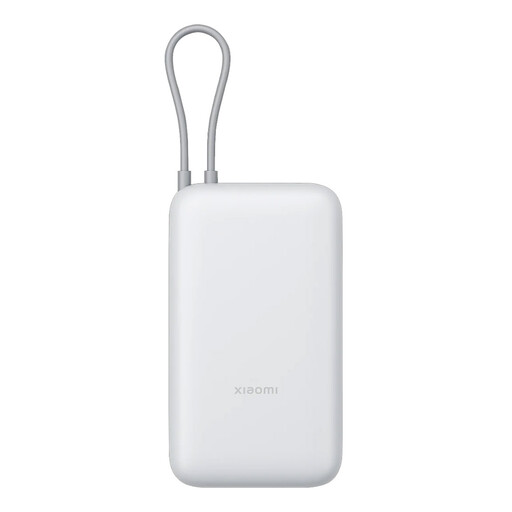
Xiaomi 20,000mAh Power Bank with Integrated Cable
This is aimed at USB-C phone charging with fewer separate accessories and a larger stated reserve for a short household outage.
The listing states 20,000mAh capacity, an integrated USB-C cable, two-way charging and up to 22.5W output.
The integrated cable is specified for USB-C devices, including iPhone 15 and 16 series. Confirm additional ports and simultaneous-device support if more than one device needs charging.
Joybuy
Frequently asked questions
Can a power bank keep my household connected during a power cut?
It can charge a compatible phone or other small USB-powered device, but it cannot restore mains power, guarantee mobile signal or keep home broadband working. UK Government preparedness guidance recommends a battery or wind-up radio and written important numbers as separate measures during a power cut.
How should I estimate how many phone charges a power bank can provide?
Do not treat advertised mAh as the exact energy delivered to a phone. Compare stated Wh or rated/output capacity where supplied with the phone’s battery energy, then allow a margin for conversion losses, charging conditions and battery age. Which? says real-device testing can produce lower results than advertised expectations.
Do I need USB-C Power Delivery?
Choose USB-C Power Delivery when your device and the relevant power-bank port support it and you want negotiated charging. USB-C is a connector rather than a guarantee of PD support or output wattage, so check the exact port specification, cable rating and your device manufacturer’s charging requirement.
How should I charge and store a lithium-ion power bank safely at home?
Buy from a reputable retailer, follow the manufacturer instructions, keep the unit away from heat and liquids, and charge it uncovered in a well-ventilated place. Electrical Safety First advises against charging power banks overnight or while nobody is at home; do not use a unit that is damaged, swollen or excessively hot.
How should I dispose of an old or faulty power bank in the UK?
Do not put it in household rubbish or ordinary recycling. GOV.UK advises using appropriate battery and electrical-waste collection points, as damaged or wet lithium-ion batteries can catch fire; tape lithium-battery terminals where appropriate before recycling.


