What to consider when choosing
Start with the airline rules and the devices you need to charge, then weigh carrying convenience against the time between suitable charging stops. For consumers choosing personal travel charging equipment for UK flights, the percentages below describe the relative emphasis of each primary concern.
| Concern |
What to check when buying |
Who this matters to |
| Flight acceptance and battery label |
Check the readable Wh marking, each airline’s capacity and quantity rules, and its storage and onboard-use instructions. |
If I want to avoid a last-minute problem at the airport, I need a rating the airline can assess and carriage arrangements that fit my itinerary. Consumers whose primary concern is flight acceptance make up around 25%. |
| Energy between sockets |
Compare Wh ratings, the time between charging opportunities, and the bank’s weight and dimensions. |
If I will be away from mains power for a long stretch, I need enough stored energy without choosing capacity by the advertised mAh figure alone. Consumers who put usable energy first make up around 25%. |
| Ports, cables and output |
Check each device’s connector and charging requirements, plus the bank’s single-port and shared-output details. |
If I need to charge particular devices together, I want cables and ports that fit them and enough documented shared output for that arrangement. Consumers who prioritise compatibility and charging output make up around 25%. |
| Carrying convenience |
Compare the exact model’s size and weight, and check whether an integrated cable suits all your devices. |
If I want a compact kit with fewer loose items, I need to balance the built-in cable’s connector against any other device I carry. Consumers who put carrying convenience first make up around 13%. |
| Charging at stops |
Check the charger’s input label against the destination supply, and confirm plug, earth and adaptor-load compatibility where relevant. |
If I expect to recharge at accommodation, I need a mains arrangement suited to the destination as well as a bank for time away from sockets. Consumers whose main concern is charging at stops make up around 12%. |
Power banks available on Joybuy
These Joybuy options are portable power banks for charging devices away from sockets. Before taking any bank on a flight, check its marked Wh value and the rules for each operating airline; a product’s capacity or charging output alone does not establish flight acceptance.
 No image available
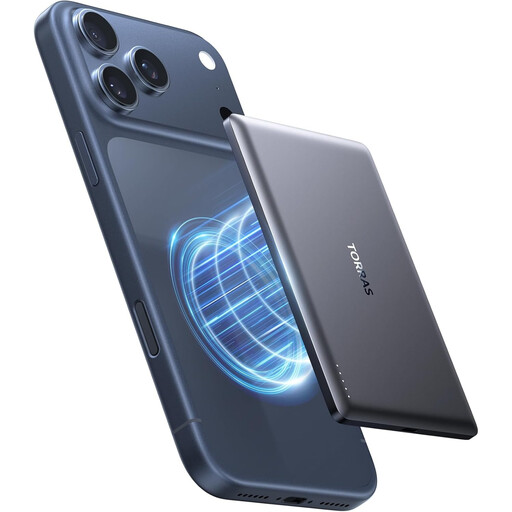
TORRAS MiniMag 5000mAh Magnetic Power Bank with USB-C Cable, Gray Titan
For a compact carry kit or a compatible MagSafe iPhone, with wired charging as another option.
5000mAh capacity; 18W wired USB-C output and 7.5W wireless output. The product description lists an approximate weight of 113g and magnetic charging for compatible iPhones.
Joybuy
 No image available
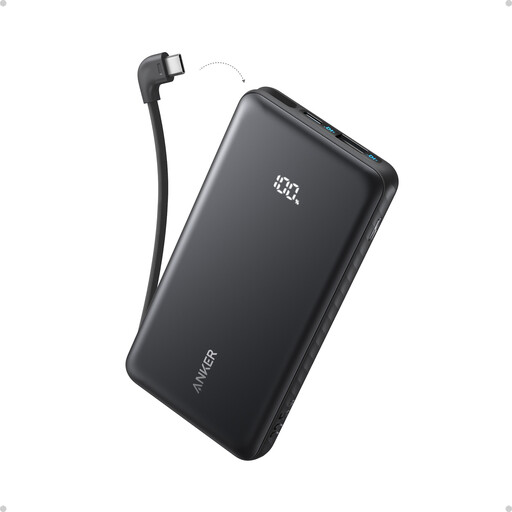
Anker Zolo 10,000mAh 22.5W Power Bank with Built-in USB-C Cable
For phone top-ups between sockets, or for a setup where the listed ports may help charge more than one device.
10,000mAh capacity and 22.5W output are stated in the product title. The description lists a built-in USB-C cable, USB-A and USB-C ports, a display, 20W input and charging for up to three devices.
Joybuy
 No image available
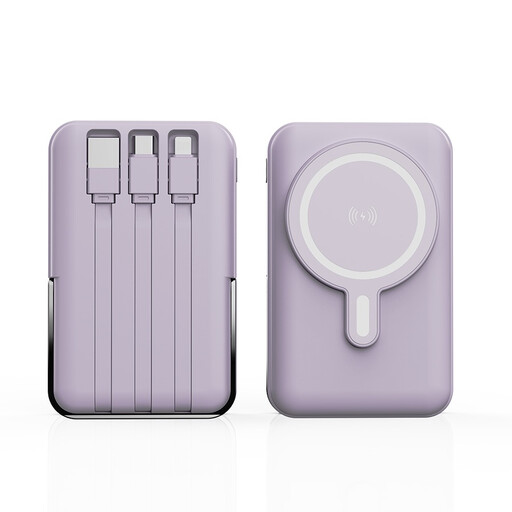
XBJ 852 10,000mAh 22.5W Magnetic Wireless Power Bank with Adjustable Stand
For portable charging if your phone supports the product’s wireless charging feature and you want an adjustable stand.
10,000mAh capacity and 22.5W maximum charging are stated in the product title. The title also lists wireless charging and an adjustable phone stand.
Joybuy
 No image available
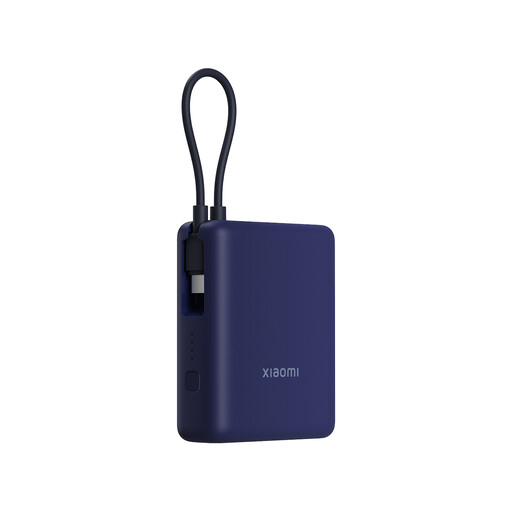
Xiaomi 10,000mAh 33W Power Bank with Integrated Cable, Ice Blue
For portable charging when the device and cable arrangement suit your needs.
10,000mAh capacity and an integrated cable are stated in the product title. The description lists USB-C output, a 33W maximum output and a net weight of 0.21kg.
Joybuy
 No image available
Duracell 10,000mAh Slim Power Bank with USB-C and USB-A
For charging a phone or tablet, including a setup where you want to connect two devices at once.
10,000mAh capacity is stated in the product title. The product description lists USB-C and USB-A ports and simultaneous charging for two devices.
Joybuy
Travel power bank FAQs
Is there one power-bank capacity allowance for every flight from the UK?
No single capacity figure guarantees acceptance on every flight. The UK Civil Aviation Authority says batteries rated from 100Wh to 160Wh require airline approval, while batteries over 160Wh are not permitted in passenger baggage under its guidance. Check each operating airline’s rules for your itinerary.
How can I check a power bank advertised only in mAh?
Look for the Wh rating on the battery case and in the manufacturer’s documentation. The International Air Transport Association gives the calculation as Wh = Ah × nominal voltage, or mAh × nominal voltage ÷ 1000. Use the battery’s actual nominal voltage, not an assumed value or the USB output voltage; the rating needs to be verifiable for airline assessment.
How should I carry a power bank, and can I recharge it during a flight?
The UK Civil Aviation Authority says power banks must travel in carry-on baggage and be individually protected when not in use. International Civil Aviation Organization changes effective 27 March 2026 limit passengers to two power banks and prohibit recharging them during flights. Check the operating airline’s instructions as well, since it may impose stricter conditions.
Will a built-in USB-C cable charge every phone?
No; check the connector on your particular device. A Lightning-equipped Apple device needs a Lightning-ended cable, and Apple documents USB-C to Lightning charging from a suitable USB-C source. Also check the device’s charging requirements rather than assuming every compatible connector provides the same charging speed.
Do I need a voltage converter as well as a travel adaptor?
That depends on the destination’s electricity supply and your charger’s input label. Electrical Safety First advises checking socket type, voltage and frequency, as well as the adaptor’s earth and load ratings. A plug adaptor changes the connection shape; it does not by itself establish that the charger is compatible with the supply.


