Travelling with one radio
If you mainly want a backup for one USB-rechargeable radio, check its connector and input requirements before choosing a pack you are comfortable carrying for the journey.


Start with the radio’s charging socket and the input voltage and current stated on its label or in its manual, then choose a power bank with a suitable output and cable. A 10,000mAh pack is a starting point for charging one radio on a coach; consider more capacity if you expect repeated charging or need to power other devices, while allowing for extra bulk. Capacity alone cannot tell you how many times your particular radio will recharge.
If you mainly want a backup for one USB-rechargeable radio, check its connector and input requirements before choosing a pack you are comfortable carrying for the journey.
Bring a Micro-USB lead that fits the radio and check the plug needed at the power-bank end. An integrated USB-C cable alone will not connect to a Micro-USB socket.
If the same pack must serve a radio and a phone, consider the available outputs and the capacity you need between opportunities to recharge the pack. More capacity can mean more to carry.
For consumers choosing a power bank for a USB radio on a coach, establish the radio’s connection and input requirements first; then weigh portability against the need to charge again or share the pack.
| Concern | Buying check | Who this matters to |
|---|---|---|
| Connector and input | Match the radio’s socket and cable to a power-bank output; check the radio’s stated voltage and current against that output. | If my radio uses Micro-USB or another particular socket, I need a connection that fits and meets its stated input before capacity matters. Around 42% of consumers put connector and input compatibility first. |
| Portability for one radio | Compare capacity, weight and dimensions after confirming a usable connection. | When I am carrying a pack mainly for one radio, I would rather avoid extra bulk unless I need the reserve. For around 33% of consumers, keeping this single-device backup easy to carry is the primary concern. |
| Reserve for more charging | Consider the capacity needed between mains charges and the number of outputs you will use. | If the trip calls for repeated radio charging or I am sharing the pack with a phone, I need enough reserve for both. Extra capacity is the main priority for around 25% of consumers. |
Capacity cannot tell you whether the pack connects to your radio or meets its stated input requirements.
Read the radio’s label or manual, identify its socket and required voltage and current, then check the output port and cable.
A power bank’s maximum output does not change what the radio is designed to accept. One radio’s documentation, for example, specifies a 5V, 1A USB source.
Match the radio’s stated input rather than using the pack’s headline wattage as a measure of radio charging speed.
A built-in USB-C plug cannot fit a Micro-USB charging socket, even if the power bank has sufficient capacity.
Bring the radio’s compatible lead and check that the pack has the output port needed at the other end.
Heat, moisture, impact and contact with conductive items can create safety risks for a battery pack.
Follow Electrical Safety First’s advice to protect the pack from heat and damage, keep it away from loose metal items, and avoid leaving it charging unattended.
The PB212 is a 10Ah power bank with a stated 5V output, according to retailer RS.
The BOOST↑CHARGE Power Bank 10K BPB011 is a 10,000mAh model with one USB-C and two USB-A ports, according to Belkin.
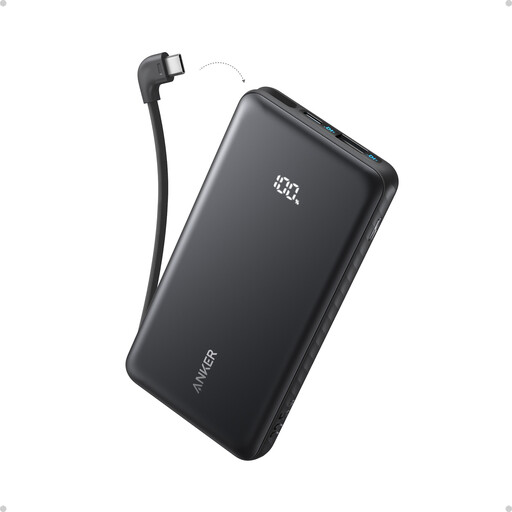
The Nano Power Bank A1259 is a 10,000mAh, 30W model with a built-in USB-C cable and USB-A and USB-C outputs, according to Anker.
These 10,000mAh choices are relevant to carrying a power bank for a USB radio on a coach. Check your radio’s socket and input rating, then confirm the output and cable you would use before choosing either pack.
 No image available
Consider this pack if you want a 10,000mAh backup for the radio and other USB devices. Its built-in USB-C cable needs a matching connection; for a radio using another socket, check which separate cable and power-bank output you would need. Confirm the output rating against the radio’s stated input before buying.
 No image available
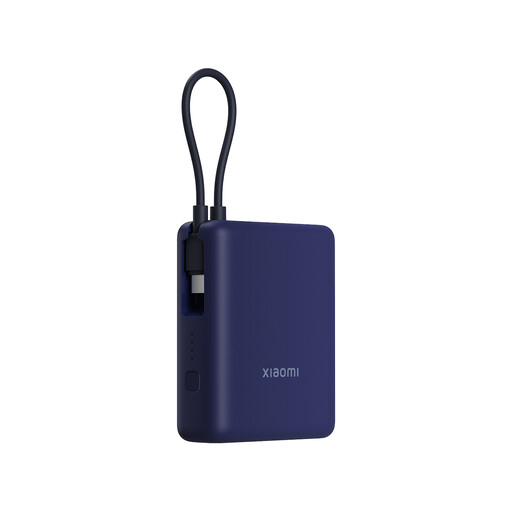
This is another 10,000mAh option for carrying a charging backup on the coach. Before relying on its integrated cable for the radio, check the cable connector, the output rating and the radio’s stated input. If your radio lead needs a USB-A port, confirm that the pack offers one.
No: the connection and electrical output must suit your radio. Check its socket and stated input voltage and current, then match the power-bank output and cable. One documented radio uses Micro-USB and requires a 5V, 1A USB source; your model may differ.
Check your radio’s manual before relying on that feature. The documented model can be used while charging, but that does not establish what another radio permits. Separately, do not assume the power bank can recharge itself while powering the radio; Electrical Safety First cautions that most portable battery packs do not support simultaneous charging and discharging.
Inspect the pack and connectors for damage before travelling, follow the manufacturer’s instructions and keep the pack away from heat, liquids and loose metal items. Electrical Safety First also advises against leaving a battery pack charging unattended.
Take it to an appropriate battery recycling collection point rather than putting it in general waste or ordinary household recycling. Electrical Safety First advises proper recycling of old power banks; check the collection point’s instructions for accepting them.