What should you check before choosing?
Decide what must remain powered, then check the connections, available energy and charging arrangements for that load.
USB power bank
Choose when: Your essential loads are phones or other USB-powered personal devices, and you can keep the bank charged.
Limit: A phone-focused USB bank does not provide a mains outlet or protect mobile coverage.
Portable power station
Consider when: A confirmed device or outlet requirement cannot be met by a USB bank.
Limit: Its additional connections do not mean it can run every appliance; each intended load must fit the exact unit’s limits.
| Priority | What to check | Your needs |
|---|
| Phone access |
Keep charging equipment ready and consider a battery or wind-up radio and torch. The UK Government’s Prepare campaign cautions that internet or mobile signal may also be lost during a power cut. |
I want a charged phone for calls and updates, but I also need a way to get information if the phone network is affected. |
| Stored energy |
Compare a power bank’s stated capacity with the phones you intend to recharge; do not assume a fixed number of charges from a mAh figure. For a station, check its watt-hour (Wh) capacity separately from its output rating. |
One phone may be my only charging load, or several household devices may need topping up before the battery itself can be recharged. |
| Ports and output |
Match USB-C or USB-A ports and cables to your devices. Check both the relevant port’s output and the combined limit when several ports are active; Belkin specifies 20W for one port but 15W total with all ports in use on its BoostCharge Power Bank 20K with Display. |
If we share one bank, I want to know what charging is available with our devices connected at the same time. |
| Other devices |
For a device beyond USB phone charging, check its connector, running wattage and starting demand where relevant against the station’s ports and continuous-output limit. Check that the proposed recharge input is compatible too. |
I have a particular device to keep running, so an outlet alone is not enough reason for me to choose a station. |
| Battery readiness |
Follow the exact product’s storage and charging instructions and check its recall status. Electrical Safety First advises against charging a power bank overnight or while you are out. |
I need a backup that is charged when a cut happens and can be stored and recharged according to its instructions. |
Brand and model references
The following published specifications illustrate checks to make on exact models; they do not describe every product from each brand.
Anker
Anker UK lists both USB power banks and Anker SOLIX portable stations, so compare models by the load you need to support.
- Anker UK states 20,000mAh capacity, 87W total output and up to 65W to one device for its Power Bank (20K, 87W, Built-In USB-C Cable). Anker SOLIX UK lists 288Wh capacity and 300W output for the C300 DC station.
- Those figures belong to the named models. Electrical Safety First also identifies a recalled Anker 535 Power Bank (PowerCore 20K) A1366 variant; check the precise model and current recall information.
Belkin
Belkin’s BoostCharge Power Bank 20K with Display provides a model-specific example of shared USB output.
- Belkin UK specifies two USB-C ports and one USB-A port for this model.
- Belkin states a 20W maximum with one port in use, but 15W total with all ports in use. Check the output arrangement of any other model separately.
EcoFlow
EcoFlow UK lists portable stations for buyers with a defined device and connection requirement beyond phone-only charging.
- EcoFlow UK lists its RIVER 2 at 256Wh capacity and 300W output.
- Capacity and rated output vary across the RIVER range. Check the exact station’s connections and limits against the intended device rather than relying on the series name.
Joybuy options for phone and device charging
These options include USB power banks for phone charging and a portable power station to consider for a specific need beyond phones. Choose by the devices and connections you actually need, not by battery size alone.
 No image available
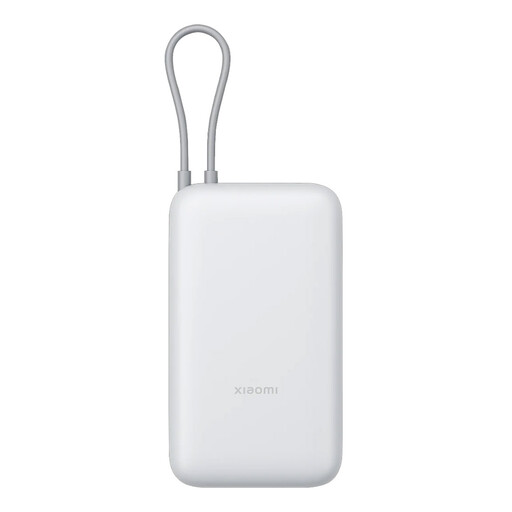
Xiaomi 20,000mAh Power Bank with Integrated Cable, GL Light Gray
A phone-charging option if you want to keep a USB-C cable with the bank. The listing states 20,000mAh capacity and up to 22.5W output; its stated integrated-cable compatibility includes USB-C Android devices and iPhone 15 and 16 series. Check your exact phone and, if you will connect several devices, the combined output.
View on Joybuy
 No image available
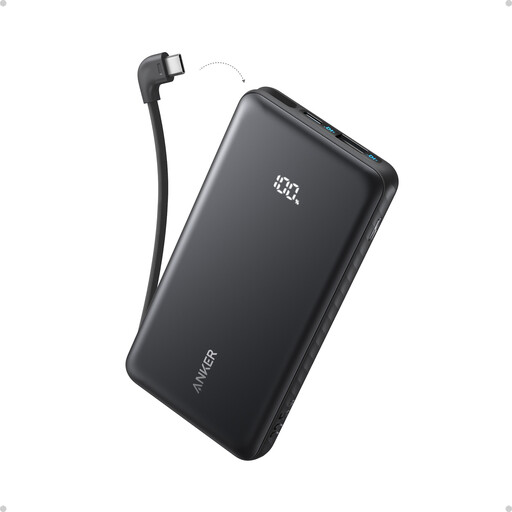
Anker Zolo 10,000mAh 22.5W Power Bank with Built-in USB-C Cable
Consider this bank if a built-in cable and USB-A and USB-C connections suit the phones in your household. Its listing states 10,000mAh capacity, 22.5W output and 20W input. Check the exact port and cable requirements of your phones and the combined output if charging more than one device.
View on Joybuy
 No image available
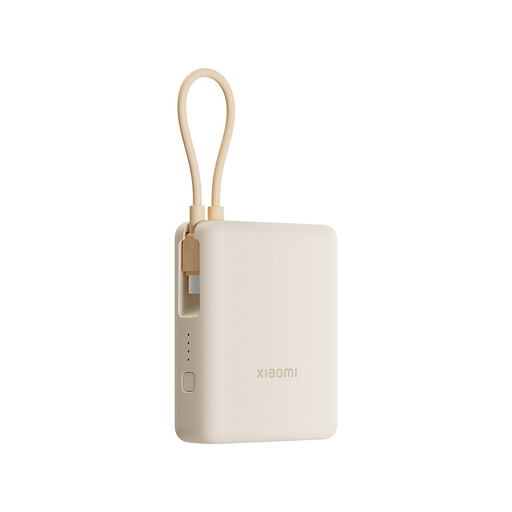
Xiaomi 33W 10,000mAh Power Bank with Integrated Cable, Tan
The 10,000mAh bank has an integrated cable and is described with USB-C and USB-A connections for sharing phone charging. Its listing gives conflicting figures for maximum output and for recharging the bank itself, so confirm those ratings for this variant before relying on a particular charging rate. Also check the combined output when several devices are connected.
View on Joybuy
 No image available
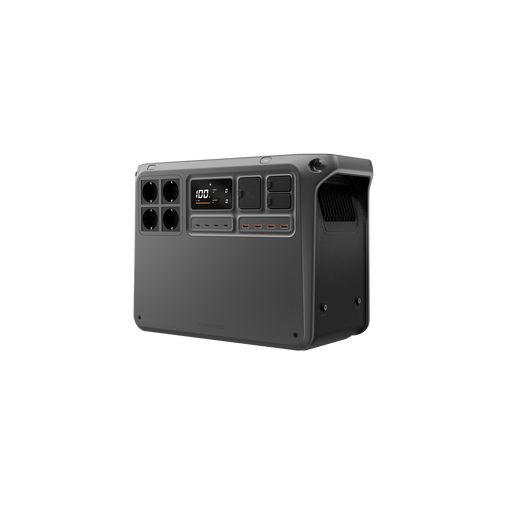
DJI Power 2000 Portable Power Station, UK Version, 2048Wh LFP, 3000W Continuous Output
Consider a station of this kind only if you have a defined device or outlet need beyond phone-only USB charging. The listing states 2048Wh capacity, 3000W continuous output, four AC outputs and USB ports. Match each intended device to the exact connections and output limits, and check the USB-port ratings, recharge method and storage instructions.
View on Joybuy
 No image available
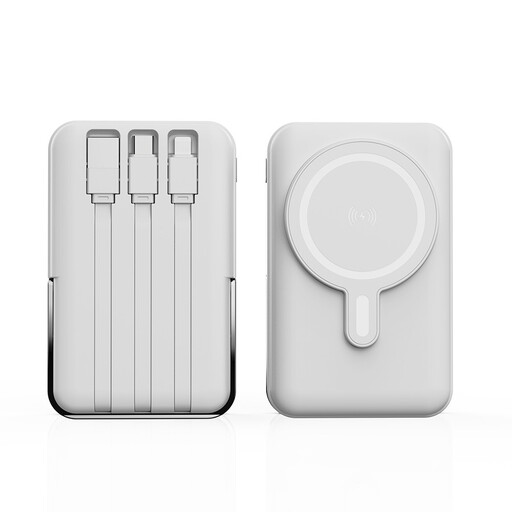
XBJ 852 10,000mAh Magnetic Power Bank with Wireless Charging and Stand, White
This phone-focused bank is described with a 10,000mAh capacity, a 22.5W maximum rating and an adjustable phone stand. Check the wireless charging standard and compatibility with your exact phone, as well as the wired ports and the method for recharging the bank, before choosing it for outage use.
View on Joybuy
Questions about charging during a power cut
Is a power bank enough for phones in a home power cut?
A charged USB power bank is the starting point when you only need to recharge phones or other compatible USB devices. Check its capacity, the output of the port you will use and how many devices may share it. The UK Government’s Prepare campaign cautions that a charged phone cannot guarantee mobile signal during a power cut.
When does a portable power station make sense instead?
Consider one when a specific device needs an outlet or connection that a USB bank cannot provide. Check that device’s power and connector requirements against the exact station’s watt-hour capacity, continuous output, ports and compatible recharge inputs; a stated output figure does not establish suitability for every appliance.
Will every port on a multi-port bank charge at full output?
Not necessarily: check the exact model’s combined-output specification. Belkin UK, for example, states 20W maximum from one port on its BoostCharge Power Bank 20K with Display, but 15W total when all its ports are in use.
How should I keep a power bank ready?
Follow its manual for storage and recharging, and keep it charged for the devices you expect to use. Electrical Safety First advises charging power banks in a ventilated place, not charging them overnight or while out, and keeping them away from damage, heat, liquids and loose conductive items such as keys.
Can a consumer battery replace a power-cut plan for essential healthcare equipment?
Do not assume a consumer power bank or station will meet that equipment’s needs. The Met Office advises people for whom electricity is crucial to healthcare to contact their distribution network operator and understand what to do during a disruption. Ofgem also describes additional support available through an energy supplier’s Priority Services Register.


