Phone-first flyers with limited bag space
If you mainly need backup phone power during a travel day, compare capacity and weight alongside the connector you use. Check the airline’s cabin-baggage rules before packing.


For a phone-focused travel day, consider a 10,000mAh USB-C power bank if carrying less bulk matters more than repeated charging; a larger multi-port bank makes more sense when several devices need power between mains sockets. Check the output against each device and cable, read the bank’s watt-hour (Wh) marking, and confirm the operating airline’s packing and in-flight-use rules before travelling.
If you mainly need backup phone power during a travel day, compare capacity and weight alongside the connector you use. Check the airline’s cabin-baggage rules before packing.
For a phone, tablet, earbuds or another traveller’s device, check the number of outputs and how power is shared when devices charge together. More stored energy also means considering the bank’s carrying weight.
A USB-C connector alone does not establish laptop compatibility. Compare the device’s charging requirements with the bank’s output profile and a suitable cable.
Start with the devices and time between mains sockets, then check charging connections and flight handling for the exact bank you plan to carry.
| Priority | What to check | Your needs |
|---|---|---|
| Capacity and bulk | Compare capacity for the devices and number of recharges you expect. Check the exact model’s weight and dimensions; capacity alone does not describe carrying comfort. | I mainly need phone backup for a travel day, so I would weigh extra stored energy against the space the bank takes up. For a longer journey, repeated charging matters more. |
| Output and connections | Match each device’s charging input and connector to the bank’s per-port output and a suitable cable. If charging together, check the shared-output rating; also check the bank’s input against the charger you will use to refill it. | A built-in cable would save me packing a separate one, but I still need the right connection. If I am charging a laptop or two devices at once, the applicable output matters more than the headline wattage. |
| Flight handling | Read the exact bank’s Wh marking and the operating airline’s current quantity, placement and in-flight-use rules. Follow its instructions for protecting the bank from short circuits. | Before flying, I need to know where to carry the bank and whether I can use it on board. International Air Transport Association guidance treats power banks as spare batteries restricted to cabin baggage; individual airlines can set further conditions. |
Airline battery restrictions can be expressed in Wh, which mAh alone does not establish. Placement and use rules can also differ by airline.
Read the Wh marking on the exact bank and check the operating airline’s current requirements for every flight sector. GOV.UK advises travellers to ask their airline when unsure about hand-luggage restrictions.
A USB-C port does not tell you whether its output profile meets a particular laptop’s charging requirements. Connecting other devices may also change the available output.
Compare the laptop’s required input with the bank’s per-port and shared-output specifications, then check the cable rating.
The International Air Transport Association treats power banks as spare batteries restricted to cabin baggage. British Airways likewise says they must not go in checked baggage.
Pack the bank according to the operating airline’s placement instructions and keep its contacts away from loose conductive objects such as keys or coins.
A retailer’s familiarity does not rule out a model-specific safety problem. In June 2026, the UK Office for Product Safety and Standards recalled specified POM power banks sold by TK Maxx because insecure internal wiring posed a fire risk.
Inspect the bank for damage and check the exact model against current UK recall notices before using it.
These model-specific references illustrate different capacity and output choices; they do not establish that every product from a brand has the same features.
Anker’s Nano Power Bank A1259 is a 10,000mAh example for travellers considering a built-in USB-C cable.
UGREEN’s Nexode 20,000mAh, 67W model is a higher-capacity example with a built-in USB-C cable.
Belkin’s BoostCharge Power Bank 10K with Integrated Cable BPB021 is a 10,000mAh option centred on its built-in USB-C connection.
These options span 10,000mAh banks with built-in cables and larger-capacity models for longer periods away from mains power. Compare the exact bank’s Wh marking and your airline’s rules before relying on any of them for a flight.
 No image available
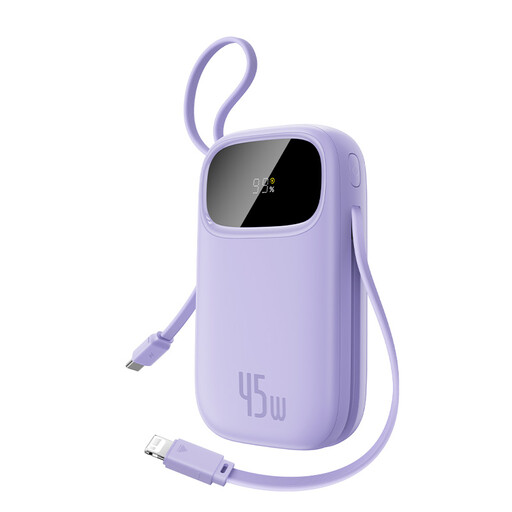
For a journey involving different device connections, this model has built-in USB-C and iP cables and a digital display. Its stated 45W maximum applies to single-device charging; the listed total for simultaneous charging is 15W. Check your device connections and the airline’s Wh and carrying rules.
 No image available
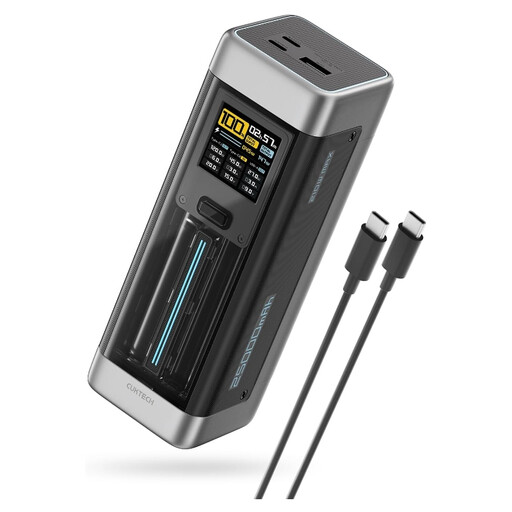
This three-port PD3.1 model is worth checking if a laptop or several USB devices need power between mains sockets. The stated 140W maximum does not establish compatibility with every laptop: confirm its charging profile and cable, and read the bank’s Wh marking before planning to fly with it.
 No image available
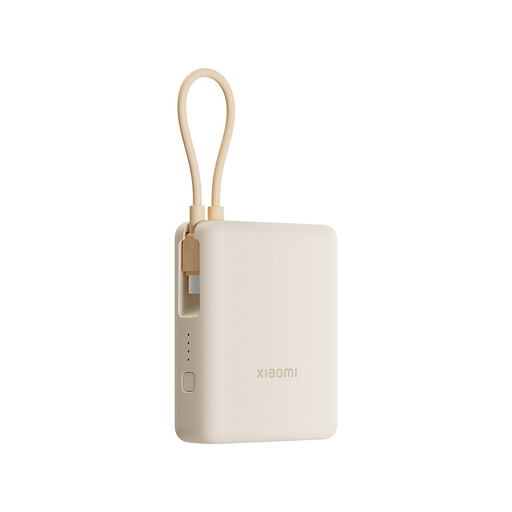
The integrated cable may suit phone-focused travel when you would rather carry fewer separate pieces. Check how output is shared if you intend to charge several devices, and confirm the exact bank’s Wh marking and carrying weight for your journey.
 No image available
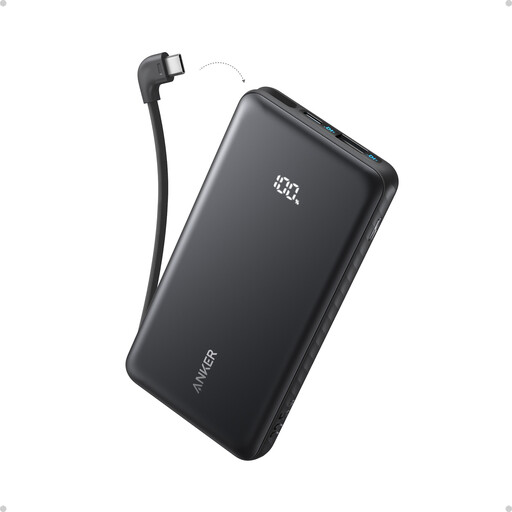
The built-in USB-C cable is useful when phone charging is the main travel need. If you also plan to charge another device, check the shared-output rating; for a flight, confirm the bank’s Wh marking and your airline’s rules.
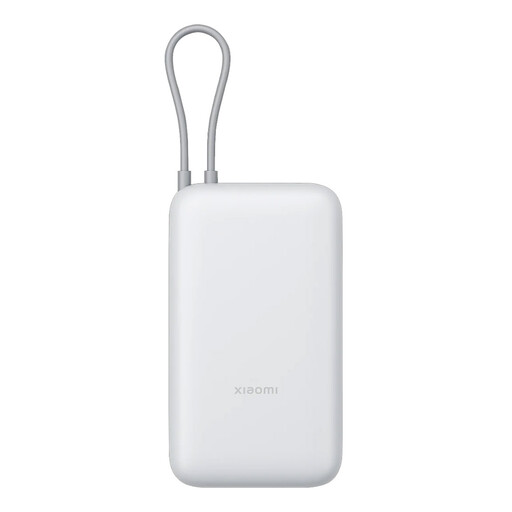 No image available
The 20,000mAh capacity is relevant when you expect a longer stretch away from mains power, while the integrated cable reduces the need for a separate USB-C cable. Check its Wh marking and carrying weight, and confirm the available outputs if several devices need charging together.
No. International Air Transport Association passenger guidance treats power banks as spare batteries restricted to cabin baggage. British Airways and easyJet also say power banks must not go in checked or hold baggage; follow your operating airline’s placement instructions.
Check the bank’s Wh rating against the operating airline’s current rule rather than relying on mAh alone. Ryanair states that power banks exceeding 100Wh are not permitted and limits passengers to two; easyJet also states a limit of two power banks per person. Check the rules for each airline on your itinerary.
Check with the operating airline before assuming either is allowed. easyJet says passengers must neither recharge a power bank nor use it to charge another device while on board.
Use the Wh marking on the exact bank where available. The International Air Transport Association explains that watt-hours equal rated capacity in ampere-hours multiplied by nominal voltage; an mAh figure alone cannot establish the Wh rating.
Inspect the bank for damage and check whether its exact model appears in a current recall notice. The UK Office for Product Safety and Standards recalled specified POM power banks sold by TK Maxx in June 2026 because insecure internal wiring posed a fire risk.