Phone-only commuters
If you mainly need navigation, messages and routine phone use through the day, compare usable charge and carry size before opting for the highest labelled capacity.


For a phone-only commute, a 10,000mAh USB-C power bank is a starting point if its output and cable suit your phone. Look at extra ports when you need to charge devices together, or a larger capacity when you expect repeated charging away from a socket. Labelled capacity is not the amount delivered to your phone, and a larger bank may be less convenient to carry.
If you mainly need navigation, messages and routine phone use through the day, compare usable charge and carry size before opting for the highest labelled capacity.
If charging opportunities are brief, check that the bank’s output and cable arrangement work with your phone. An attached cable helps only when its connector fits.
If you also carry earbuds, another phone or a small USB device, port count and the ability to charge devices together may matter more than keeping the bank small.
For a commute or day trip, decide whether your main need is a phone reserve, a quick compatible top-up, charging several devices, or enough capacity for repeated charging. Then compare exact models against that need.
| Concern | What to check | Who this matters to |
|---|---|---|
| Usable charge for the day | Compare rated output capacity or watt-hours where stated, rather than treating cell mAh as a full-charge count. Allow a margin for your usual phone use. | If I rely on my phone for navigation and messages until I get home, I want a reserve that lasts the outing. Around 29% of consumers put everyday usable charge first. |
| Charging speed and cable fit | Check your phone’s charging standard and connector against the bank’s per-port output and the cable you will use. | When I have only a short opportunity to top up, a compatible connection matters more to me than a high wattage on the box. Roughly 29% of consumers prioritise a cable-ready, faster top-up. |
| Charging several devices | Count the connectors you need and check the bank’s total output when its ports are used together. | If my phone and earbuds both need power on a day out, I want to know whether I can connect them at the same time. Around 21% of consumers make multi-device flexibility their primary concern. |
| Reserve for longer outings | Compare the exact model’s capacity, dimensions and weight. Check its watt-hour marking and your airline’s policy if you may fly with it. | When I may be away from a socket for longer or need to recharge repeatedly, I can accept more to carry for a larger reserve. Roughly 21% of consumers put extended charging capacity first. |
The capacity figure usually describes the bank’s internal cells. Anker Support UK explains that voltage conversion and circuit losses reduce the energy delivered at the output; the result also depends on how a device is charged.
Use mAh to compare the rough size of banks, but look for rated output capacity or watt-hours at a stated output where available. Leave a margin instead of planning around an exact charge count.
USB Power Delivery supports negotiated charging, so a bank’s maximum output is not necessarily what your phone will accept. An integrated USB-C cable also will not fit a device with a different connector.
Check the phone’s supported charging mode, the bank’s relevant port output and the cable’s connector and capability before making wattage the deciding factor.
A larger reserve can be useful on a long outing but awkward for an everyday commute. UGREEN lists one 20,000mAh Nexode model at 468g, while Anker lists its 10,000mAh Nano A1259 at 215g; these are weights for those particular models, not a rule for either capacity.
Compare the dimensions and listed weight of the exact products you are considering alongside capacity.
Safety notices apply to specified models: the UK Office for Product Safety and Standards recalled certain ESR HaloLock wireless power banks in November 2025 because they may overheat. For flights, the International Air Transport Association’s 2026 passenger guidance highlights the importance of a verifiable watt-hour rating; its guidance is not itself a regulatory ruling.
Check UK recall notices for the exact model and stop using a unit covered by a recall. Before flying, check the operating airline’s current policy and that the bank’s watt-hour rating can be identified.
These examples show features to compare on specific product lines, not features shared by every power bank from each brand.
Anker’s Nano A1259 is a 10,000mAh example for commuters considering an attached USB-C cable and 30W bidirectional charging.
Belkin’s UltraCharge integrated-cable line is relevant when a phone and other small devices may need charging on the same outing.
UGREEN’s cited UK models include a 20,000mAh wired Nexode with a built-in cable and a separate 10,000mAh Zapix magnetic wireless model.
These choices cover attached-cable banks for routine or longer outings, a higher-capacity three-port option, and a Qi2-labelled option for consumers considering wireless charging. Match the exact connector, output and carry size to your own devices and journey.
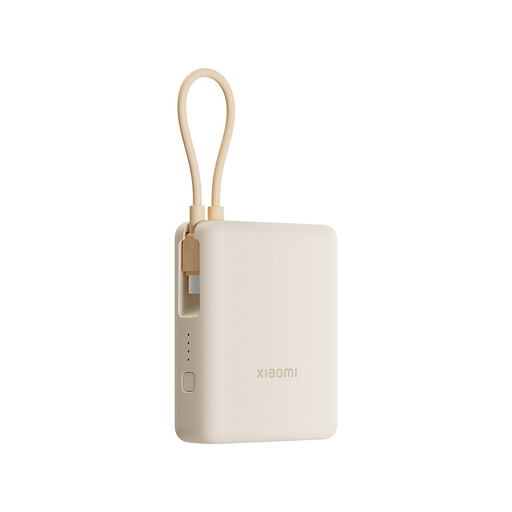 No image available
An attached cable may be convenient on a commute if its connector fits your phone. The stated 33W is a maximum for the bank, not a promise of your phone’s charging speed; check the relevant port output before relying on it for another device.
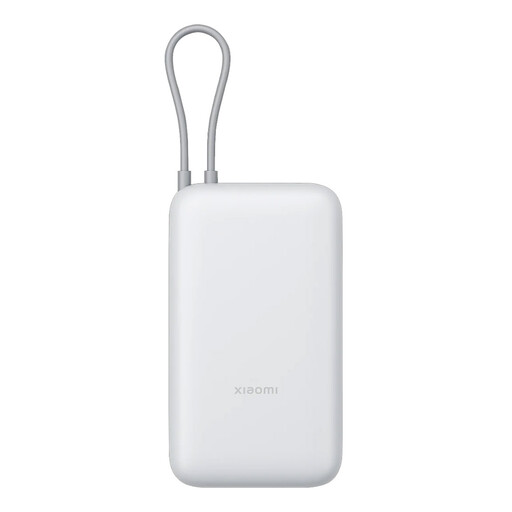 No image available
Consider this larger labelled capacity when you expect repeated phone charging before reaching a socket. Check its listed weight and dimensions for daily carry, and confirm that the attached cable suits your device; 20,000mAh is not the amount guaranteed to reach a phone.
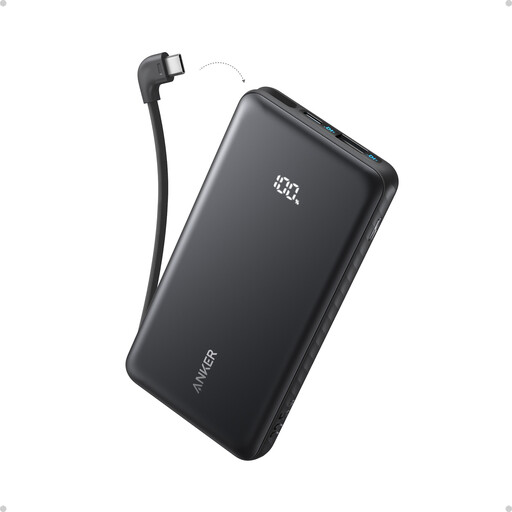 No image available
This is a phone-reserve option when an attached USB-C cable fits your handset. Check your phone’s supported charging mode against the bank’s output: its stated 22.5W maximum does not establish the speed your phone will receive.
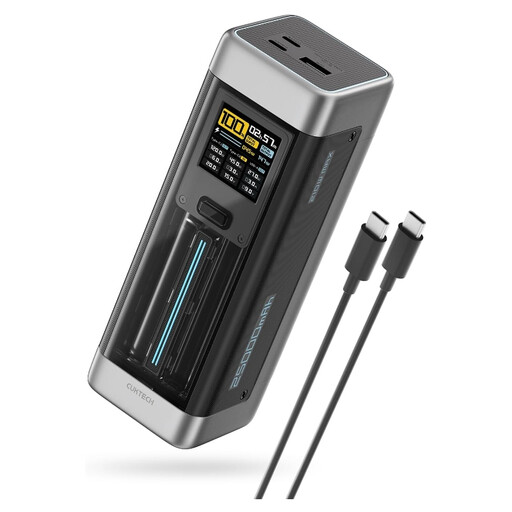 No image available
Its three-port design is worth considering if you carry several devices or need a larger reserve. The stated 140W USB-C output does not mean every connected device receives that power; check per-port and shared-output figures, as well as weight, before choosing it for a phone-focused commute.
 No image available
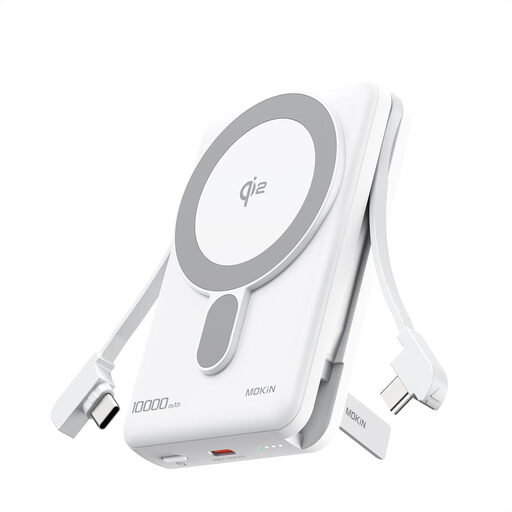
Consider the wireless option only if your phone and case support the required magnetic charging arrangement. Qi2 appears in the product name; check the exact product in the Wireless Power Consortium’s certified-product database before relying on that designation, and confirm the wired connector if you also plan to use a cable.
No: the labelled figure commonly describes internal-cell capacity, while voltage conversion and circuit losses reduce delivered output. Anker Support UK gives an illustrative 10,000mAh calculation of roughly 6,068mAh rated output, but that is not a guaranteed result for every bank or phone. Compare rated output at the stated voltage where it is available.
Not necessarily. USB Power Delivery negotiates power between compatible equipment, and the bank’s headline wattage is not automatically accepted by your phone. Check the phone’s supported charging mode, the bank’s per-port output profile and the cable’s capability.
An attached cable is useful when its connector fits the device you usually charge and you want one less cable to carry. You may still need a separate cable for another connector, a spare, or a second device charging at the same time.
No. Check that your phone and case support the relevant magnetic wireless arrangement, and verify the exact power bank’s claimed Qi or Qi2 certification in the Wireless Power Consortium’s product database. A Qi2 label in a product name alone does not establish certification or compatibility with your phone.
Check the operating airline’s current policy before travel rather than relying on the mAh figure alone. The International Air Transport Association’s 2026 passenger guidance uses watt-hours to assess lithium-ion batteries and says the rating should be marked on the case; an operator may refuse carriage if staff cannot verify it from the case or documentation. That guidance is not itself a regulatory-compliance ruling for every itinerary.