Earbud-only light packers
If you mainly need occasional top-ups for one earbud case and charge your phone elsewhere, a compact 5,000mAh bank may be enough. UGREEN describes this capacity as suited to light or emergency use.


For occasional top-ups of one earbud case, a compact 5,000mAh power bank is a sensible starting point if your phone charges separately; choose 10,000mAh when the bank also needs to serve a phone or another device. Check that your cable fits both the case and the bank before choosing an integrated-cable model. Electrical Safety First advises against leaving a power bank in a parked car.
If you mainly need occasional top-ups for one earbud case and charge your phone elsewhere, a compact 5,000mAh bank may be enough. UGREEN describes this capacity as suited to light or emergency use.
If the same bank must also support a phone used for navigation, calls or music, consider more reserve and enough usable outputs for your devices. The capacity on the label should not be treated as a guaranteed number of recharges.
An integrated USB-C cable means one less separate cable to pack, provided it fits the earbud case. If the case uses another connector, plan to carry a compatible cable.
Start with the earbud case’s connector, then decide whether the bank must also charge a phone; compare size and cable convenience once those needs are covered.
| Concern | What to check | Who this matters to |
|---|---|---|
| Connector and cable fit | Check the case’s charging port and the plug on its existing cable. Match them to the bank’s cable or outputs. | If my earbud case needs a different plug, a built-in USB-C cable will not spare me from packing another one. Around 45% of consumers put connector compatibility first. |
| Reserve for other devices | Decide whether the bank must also charge a phone, and check its number of outputs and stated shared-output limit. | I need enough reserve for my earbud case and a phone used during the journey, without assuming both will charge at full rated power together. For around 33% of consumers, that shared-device need comes first. |
| Bulk and cable clutter | Compare dimensions and weight; check whether an integrated cable fits your case or whether you will still carry a separate one. | When I take the bank out of the car at stops, I want a small backup that is straightforward to carry. Keeping bulk and loose cables down is the main concern for around 22% of consumers. |
An integrated cable reduces clutter only if its connector fits the case; otherwise you still need another cable.
Check the port on your case and the plugs on its existing cable. If you use different connectors, look for an output that accepts the cable you need.
Belkin says a USB-C-to-Lightning cable for its integrated-cable model is sold separately.
Capacity affects stored-energy reserve, not charging speed. The capacity printed for the bank’s internal cells is not a guaranteed amount of usable USB output.
For an earbud-only backup, weigh compactness and connector fit against reserve. Consider 10,000mAh if the bank must also support a phone, and check output power separately if phone-charging speed matters.
A power bank can be exposed to extreme temperatures in a parked car. Electrical Safety First advises against leaving one there and warns about heat, damage and unattended charging.
Take the bank with you at stops. Keep it dry and uncovered while charging, inspect its cables and ports, and stop using it if it is damaged.
Belkin states different single-port and combined output figures for its BoostCharge 10K display model. A bank’s headline wattage therefore does not, by itself, tell you what each connected device receives.
Check the exact model’s shared-output specifications if you intend to charge a phone and earbud case simultaneously.
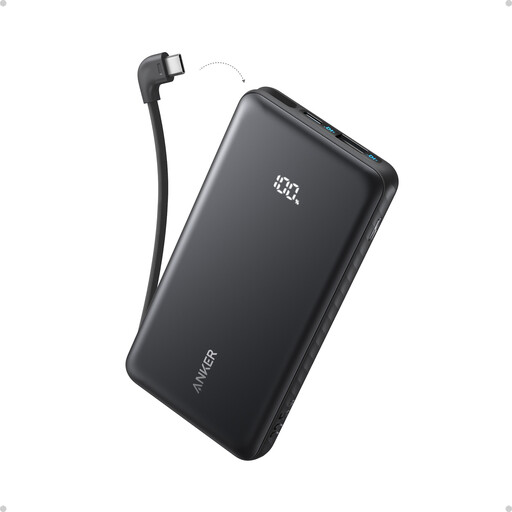
Anker’s Nano A1259 is an example of a 10,000mAh model with an integrated cable.
Belkin offers 10K models with integrated or detachable USB-C cables and different port arrangements.
UGREEN’s 10,000mAh range includes built-in-cable models with different wired and wireless charging arrangements.
These choices include 10,000mAh banks for trips involving other devices and a 5,000mAh option for a lighter earbud-case backup. Check the charging-case connector before relying on any included or built-in cable.
 No image available
Consider this if you want a 10,000mAh reserve and would rather not pack a separate cable for a USB-C earbud case.
The built-in cable is USB-C; check your case’s connector before relying on it. Check the bank’s dimensions if it needs to fit in a pocket.
 No image available
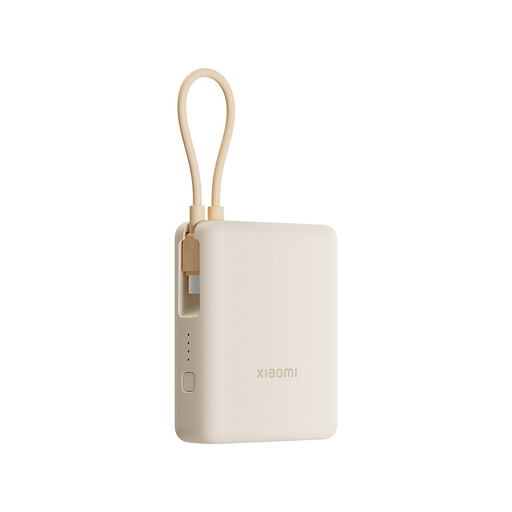
This 10,000mAh option suits a trip where you want a cable attached to the bank rather than packed separately.
Check the integrated cable’s connector against your earbud case, and compare dimensions if carrying weight and space matter.
 No image available
Consider this if you prefer a separate cable and want a pouch for carrying the bank between stops.
The named cable is USB-C; check that its plugs and the bank’s output suit your earbud case and any other device you intend to charge.
 No image available
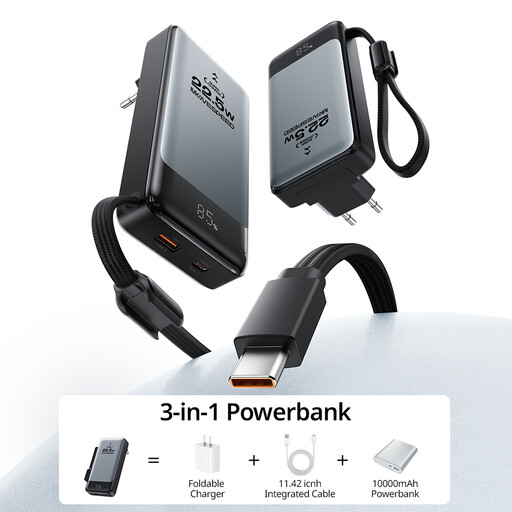
Its stated three-output arrangement may suit a journey where earbuds are not the only device needing a charge.
Check that the integrated Type-C cable fits your case and that the shared output suits the devices you plan to connect together. Consider its carrying weight if you will take it out of the car regularly.
 No image available
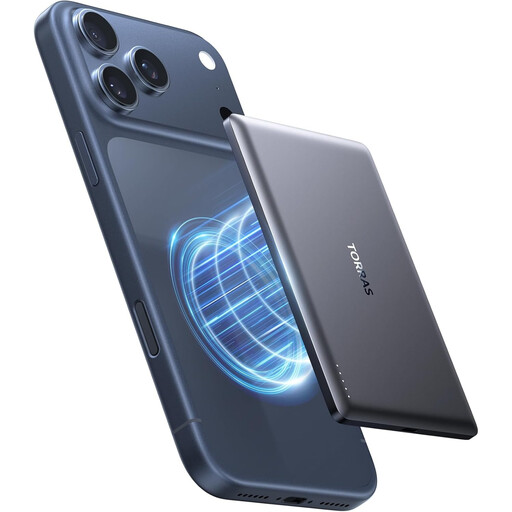
Consider this 5,000mAh option for an earbud-case backup when your phone has another charging source.
Check that the USB-C cable and wired connection suit your case. The magnetic feature does not, by itself, establish earbud-case compatibility, and 5,000mAh offers less reserve than the 10,000mAh choices for additional devices.
It can be enough for light or emergency top-ups of one earbud case, particularly if your phone charges separately. Consider 10,000mAh when the bank must also serve a phone or another device; the number of case recharges depends on the case battery and charging losses.
Not necessarily: a higher wattage rating alone does not tell you how quickly your earbud case will charge. Check the case’s charging requirements and use a suitable, undamaged cable.
No. The built-in cable must fit the case’s charging port; a Lightning, micro-USB or other connection may need a separate compatible cable. Belkin says a USB-C-to-Lightning cable is sold separately for its integrated-cable power bank.
Take it with you rather than leaving it in a parked car. Electrical Safety First advises against leaving power banks there because of temperature extremes; keep the bank away from direct sun, liquids and objects that could contact its connections.
Only rely on simultaneous input and output if the instructions for the exact power bank expressly support pass-through charging. Otherwise, recharge the bank and charge the earbud case separately, keeping the bank uncovered during charging.