Phone-first field workers
If one phone handles navigation, photographs, notes and calls away from a socket, focus on the energy needed to cover its likely shortfall and an output it can use.


For a day of GPS, photographs and calls, start with a USB-C power bank sized around your phone’s expected battery shortfall, allowing for the fact that its rated capacity is not all delivered to the phone. Choose multiple ports if you will charge other devices, or higher USB-C Power Delivery output if a laptop accepts it; check shared output, cable compatibility and carry weight before deciding. Buy through a traceable retailer and stop using a damaged or overheating pack.
The devices you carry and how often you can recharge them matter more than your job title.
If one phone handles navigation, photographs, notes and calls away from a socket, focus on the energy needed to cover its likely shortfall and an output it can use.
If you charge a phone alongside an accessory, second handset or tablet, check the bank’s total output when the intended ports are occupied—not just its port count.
If site visits also require laptop power, confirm that the laptop accepts USB-C charging and that the bank’s single-port output and cable meet its requirements.
Work out the phone’s likely shortfall first, then check charging connections, other devices and how you will recharge the bank between shifts.
| Priority | What to check | Your needs |
|---|---|---|
| Usable reserve | Compare the rated mAh with your phone’s battery size and expected use. Allow for energy lost before it reaches the phone; Electrical Safety First says capacity affects the number of recharges. | My phone needs to stay usable through navigation, photos and calls, even if I cannot recharge the bank during the shift. |
| Phone charging | Check the output of the port you will use, your phone’s accepted input and the cable. Electrical Safety First notes that output power affects charging speed. | When I have a short break, I want to know whether my actual phone can use the bank’s stated output. |
| Several devices | Check the total and per-port outputs with all intended ports in use. Belkin specifies a shared 15W total when every port on its BoostCharge Power Bank 20K is used. | I may need to charge my phone and another device together, rather than choosing which one gets power. |
| Laptop use | Confirm that the laptop accepts USB-C charging, then match its required input to the bank’s single-port USB Power Delivery output and a suitable cable. A USB-C-shaped socket alone does not establish compatibility. | A laptop is part of my field kit, so I need to check its charging requirements before choosing a higher-output bank. |
| Between-shift recharge | Check the bank’s input rating and the wall charger needed for any stated recharge time. UGREEN says its Nexode 25,000mAh model recharges fully in two hours with a 65W adapter. | If shifts run on consecutive days, I need enough time and a compatible charger to replenish the bank. |
| Carrying and safety | Check dimensions and weight for your kit, and choose a seller with identifiable support. Follow the supplied instructions; London Fire Brigade advises against charging batteries at very high or low temperatures. | I will carry the bank throughout the day and need to be able to identify the product and get help if something goes wrong. |
A capacity label is not a promise of an exact number of full phone charges. Conversion losses and the phone’s use during charging affect the reserve left for work.
Estimate the phone’s likely shortfall across the shift and leave a margin instead of dividing the two headline battery capacities.
Power can be shared when several devices are connected. Belkin states that its BoostCharge Power Bank 20K supplies 15W total when all its ports are in use.
Check the output table for the exact combination of ports and devices you expect to use.
Recharge and device-charging claims depend on compatible equipment. UGREEN’s stated two-hour recharge for its Nexode 25,000mAh model requires a 65W adapter.
Compare your wall charger, cable and device requirements with the bank’s input and output specifications.
A different wall charger or cable may be needed if your current equipment does not meet those requirements.
Faults can have serious consequences: Electrical Safety First lists a Lenovo USB-C laptop power-bank recall involving a fire risk from loose internal screws.
Use a retailer with identifiable support, keep the product details and stop using a pack that is damaged, swollen or overheating.
These named models illustrate different configurations; their specifications should not be applied to every product from the same brand.
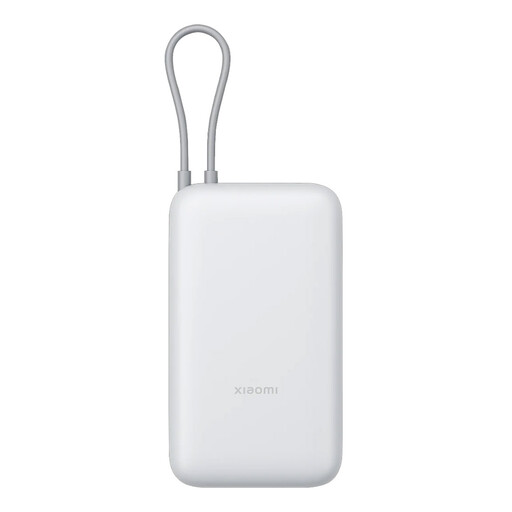
The Anker Zolo Power Bank (20K, 30W, Built-In USB-C Cable) illustrates a phone-focused USB-C setup.
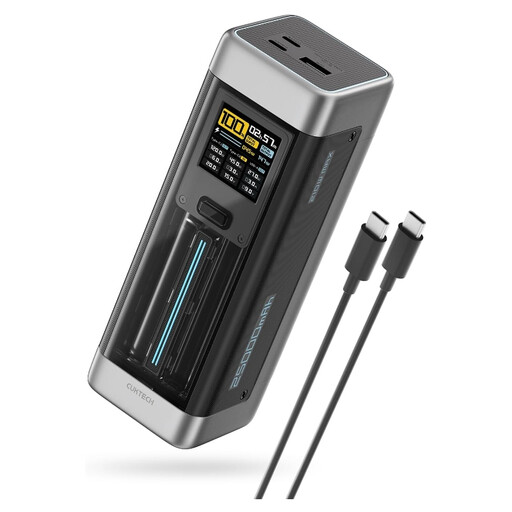
The Nexode 25,000mAh 145W model is a reference for considering laptop-capable USB-C power alongside phone charging.
The BoostCharge Power Bank 20K and BoostCharge Pro 3-Port Laptop Power Bank 20K illustrate why multi-port and laptop-charging requirements need separate checks.
These options cover a phone-focused bank with a built-in cable, a higher-output bank to assess for laptop use, and a three-output bank for carrying several small devices. Check each against your own devices and shift length.
 No image available
For phone-centred shifts, the integrated cable may mean one less separate item to carry.
The 20,000mAh figure is rated capacity, not a guaranteed amount delivered to your phone. Check your handset’s connection and charging requirements, and the bank’s weight and dimensions, against your workday.
 No image available
Consider this route if fieldwork includes a laptop that accepts USB-C charging as well as a phone.
The title states 25,000mAh, 140W USB-C and PD3.1, with three ports. Before relying on it for a laptop or simultaneous charging, check the laptop’s required input, the cable and the output available from the ports you intend to use. Rated capacity does not equal delivered energy.
 No image available
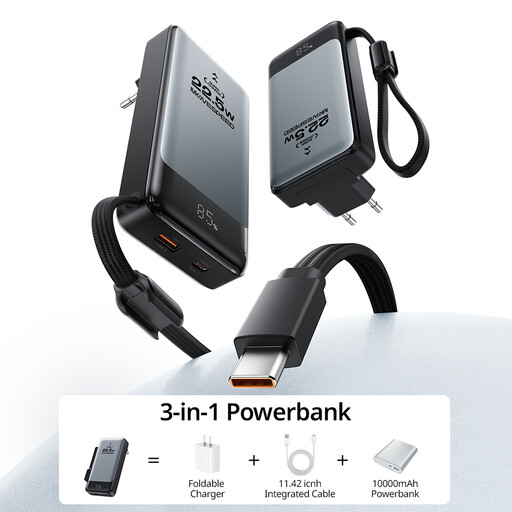
The integrated Type-C cable and three outputs may suit a phone carried alongside other small devices.
Its title states 10,000mAh rated capacity and 15W. Check whether that reserve covers your phone’s expected shortfall and how output is divided when several devices are connected; three outputs do not establish the charging rate of each one.
Start with your phone’s remaining charge, battery capacity and likely use of GPS, the camera and communications. Leave a margin: rated power-bank mAh is not an exact measure of energy delivered to the phone or a guaranteed number of full charges.
No. Check that the phone accepts the bank’s stated output through the port and cable you will use. If other devices will be connected at the same time, check the bank’s shared-output figures too.
Only if the laptop accepts compatible USB-C charging and the bank and cable meet its input requirements. Check the bank’s single-port output for laptop use, then its shared-output arrangement if you plan to connect your phone as well.
Compare the bank’s input specification with the wall charger you will use, and read the conditions attached to any recharge-time claim. For example, UGREEN says its Nexode 25,000mAh model reaches full charge in two hours with a 65W adapter; that timing is specific to the stated setup.
Stop using or charging it and seek advice from the retailer or manufacturer. Keep its product details so you can identify the model and check for recalls; avoid exposing batteries to very high or low temperatures, as London Fire Brigade advises.