Phone-first short-trip travellers
If your phone holds boarding passes, messages and maps, you may want a compact charging kit for the travel day rather than equipment intended to charge a laptop.


Start with the airline operating your flight: choose a power bank with a verifiable watt-hour (Wh) rating, carry it in cabin baggage and check any limits on quantity or use in flight. For phone backup, consider a compact USB-C model; for laptop charging, match the bank’s stated output and cable to your device instead of choosing by capacity alone. Check destination sockets and your charger’s input-voltage label before buying a plug adaptor, and choose a case by your device’s dimensions.
If your phone holds boarding passes, messages and maps, you may want a compact charging kit for the travel day rather than equipment intended to charge a laptop.
Keeping a work device usable through airport time and connections makes USB-C charging compatibility, device fit and access to mains charging important checks.
When several devices share a kit, consider the available ports, output when ports are used together, destination sockets and how you will carry the cables.
Check battery carriage rules before comparing charging features. Then match the power, cables and carrying arrangement to the devices you actually plan to take.
| Concern | What to check | Who this matters to |
|---|---|---|
| Power-bank carriage | Find the Wh marking and check your airline’s capacity, quantity and in-flight-use rules. Pack the bank in cabin baggage. | If I need backup power, I need to know I can take the battery on my flight before its charging features matter; around 33% of consumers put carriage conditions first. |
| Laptop and tablet charging | Compare the device’s charging requirements with single-port USB-C output, the cable and any shared-output limits. | When I work between flights, keeping my laptop or tablet usable matters more than carrying the smallest kit; around 27% of consumers make work-device continuity their primary need. |
| Compact phone backup | Check the bank’s Wh marking, USB-C connection, size and whether its cable is built in or separate. | For a travel day centred on my phone, I want backup power without carrying unnecessary bulk; around 20% of consumers prioritise a compact phone setup. |
| Several devices and destination sockets | Check port types and shared output, then confirm the destination plug type and charger input-voltage range. | If I carry several devices abroad, I need a workable arrangement for charging and packing them; around 20% of consumers put that combined setup first. |
Capacity in milliamp-hours does not, on its own, establish the Wh rating used for air carriage. The International Air Transport Association says an operator may refuse a battery if staff cannot verify that rating.
Locate the Wh marking before purchase and check the operating airline’s rules on capacity, quantity and use during the flight.
A USB-C connector does not establish that the bank, cable and laptop have matching charging requirements. Output available to one port may also differ when other devices are connected.
Compare your laptop’s charging requirements with the bank’s stated single-port output and its shared-output specification.
An adaptor can change how a plug fits a socket without changing the voltage supplied to a charger.
Read the charger’s input-voltage label and check the destination socket and supply before choosing an adaptor or converter.
The UK Office for Product Safety and Standards has reported an international travel adaptor presenting an electric-shock risk. A universal-looking design is not, by itself, a safety check.
Check product-safety alerts, identify the maker and specifications, and inspect the adaptor for damage before travel.
Anker lists compact USB-C power banks, including a 10,000mAh model with a built-in cable.
Belkin lists USB-C power banks for phones as well as higher-output models intended for compatible laptops.
Incase lists laptop sleeves for travellers selecting device protection and accessory storage rather than portable power.
These cases address carrying a laptop while flying. Choose by the dimensions of your device; a case does not replace a suitable charging setup or your airline’s battery rules.
 No image available
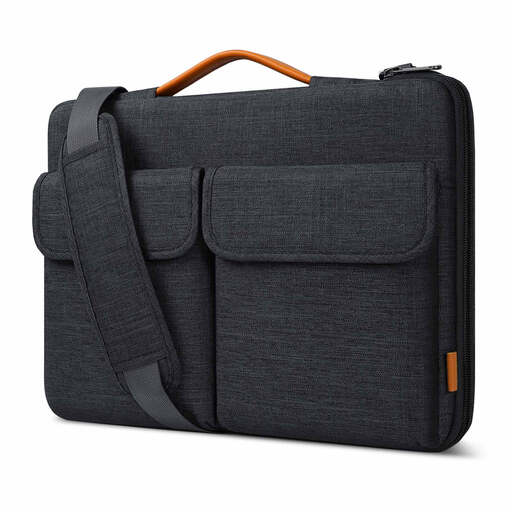
Consider this shoulder bag for carrying a laptop through the airport. It is listed for 15.6-inch laptops; compare your device’s dimensions with the case’s internal fit before buying.
 No image available
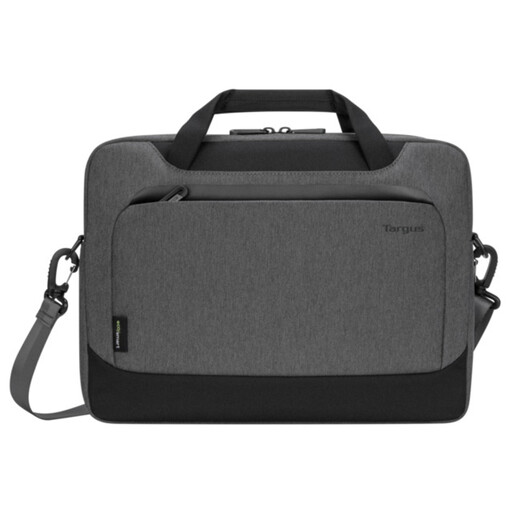
This slipcase is an option for carrying a laptop separately during travel. It is listed for 14-inch devices; check its internal compartment dimensions against your laptop.
 No image available
Consider this sleeve if you plan to carry a notebook inside cabin baggage. It is listed for 14-inch notebooks; confirm that your particular device fits before buying.
Carry a power bank in cabin baggage, not checked luggage. International Air Transport Association passenger guidance treats power banks as spare batteries; British Airways and easyJet also specify cabin or hand baggage. Check the operating airline for further conditions.
No: check its Wh rating and your airline’s applicable limits as well as whether its output suits your devices. The International Air Transport Association says lithium-ion batteries must have the Wh rating marked on the case; British Airways sets approval conditions for certain spare batteries between 100Wh and 160Wh.
Check the operating carrier’s rule before relying on in-flight charging. easyJet says customers may carry up to two power banks in cabin baggage but must not use them to charge another device on board; do not assume the same conditions apply to every airline.
Check both the destination socket and the input-voltage range printed on your charger. A dual-voltage phone or laptop charger generally needs a suitable plug adaptor, while a single-voltage device may need a converter where the supply voltage differs. A plug adaptor alone does not convert voltage.
Charge and check essential devices before leaving, protect cables and battery contacts from damage, and keep your power bank in cabin baggage. GOV.UK advises travellers to charge devices for travel; the International Air Transport Association says an operator may refuse a battery if its Wh rating cannot be verified.