What should you check before buying?
Start by deciding whether you need stored power away from a socket: a power bank provides it, whereas a multi-port mains charger needs a usable socket. A compatible device-specific spare battery or a well-chosen cable kit can support the plan, but neither replaces those checks.
| Concern |
What to check |
Who this matters to |
| Airline rules and battery safety |
Check the operating airline’s current battery capacity, quantity, packing and onboard-use rules. Match the exact model against applicable recall notices. |
I need my devices available after boarding, so I cannot risk packing a battery in the wrong place or bringing an affected model. About 31% of consumers put airline rules and battery safety first. |
| Stored energy for the journey |
List the devices and likely time between charging stops; compare stated capacity in mAh and Wh with your airline’s limit. |
With a long connection or extended device use ahead, I need enough stored power before the next reliable socket. For about 31% of consumers, that reserve is the primary concern. |
| Ports and device compatibility |
Check connector types, per-port and shared output, and whether the chosen cables suit each device. |
If I carry a phone and a USB-C laptop or tablet, both need a charging arrangement that works for them. Matching several devices is the main need for about 23% of consumers. |
| Carry and cable readiness |
Check dimensions and weight for the required cabin location, and pack the cables your devices use. |
I want to find the right lead and keep my charging kit accessible without carrying unnecessary accessories. That practical readiness comes first for about 15% of consumers. |
Power banks for charging away from a socket
These Joybuy power banks are options to compare if you need stored power between usable sockets. Check each model’s battery energy, device compatibility and your operating airline’s current rules before choosing one for a flight.
 No image available
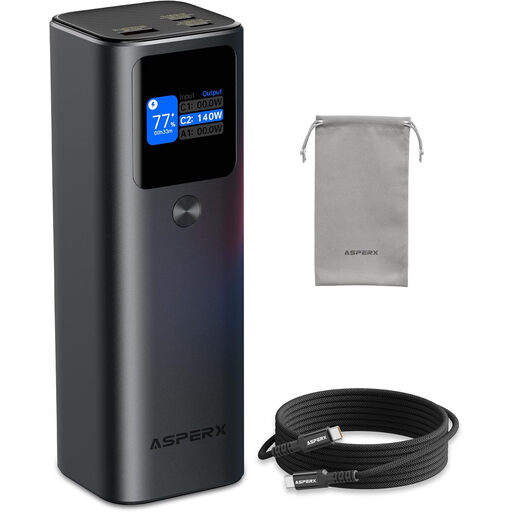
AsperX 27,600mAh laptop power bank, 162.5W
Consider this when you need a substantial portable reserve between sockets. The listing states 99.36Wh alongside its 27,600mAh capacity and 162.5W rating; compare the Wh figure with your carrier’s current limit. Check the output available to your particular device and whether the bank fits the required cabin location. A flight-approval claim in a product title is not approval from every airline.
View on Joybuy
 No image available
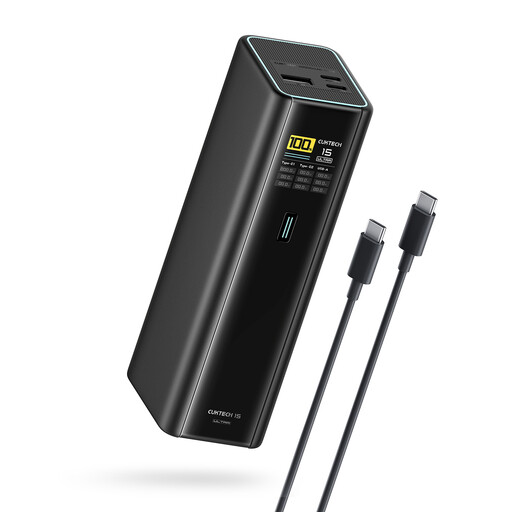
CUKTECH 15 Ultra PB200U 20,000mAh, black
Consider its three-port layout if several devices need a connection while you are away from a socket. The title states 20,000mAh and 140W; confirm the output available from each port when your devices are connected. Check the bank’s Wh capacity against your airline’s rule and its size against the required cabin storage location.
View on Joybuy
 No image available
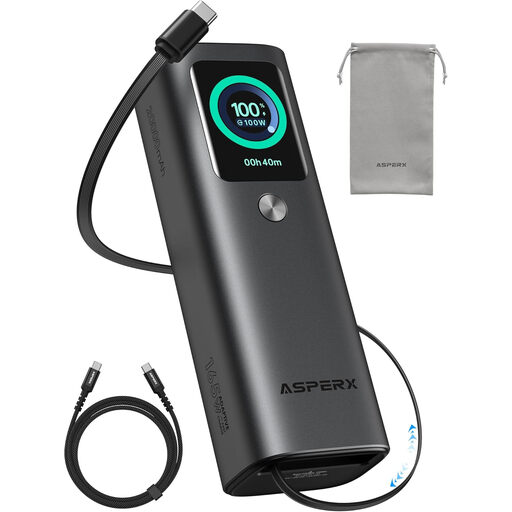
ASPERX 20,000mAh laptop power bank with retractable cables
The retractable cables may help if keeping loose leads together is your main packing concern. The title states a 165W rating; confirm that the cables and available outputs match your devices. Check its Wh capacity and required cabin location with the airline rather than relying on the title’s flight-related claim.
View on Joybuy
 No image available
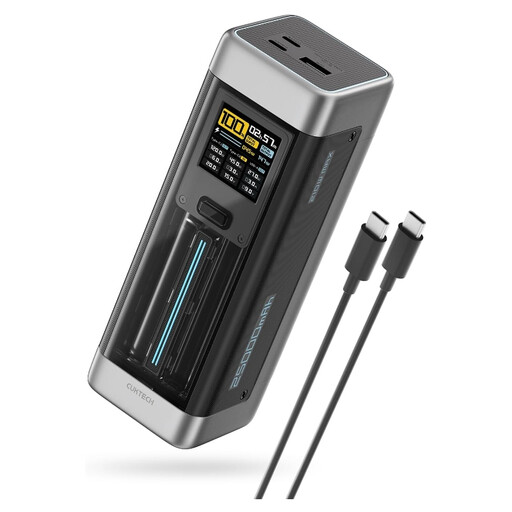
CUKTECH NO.20 P23 25,000mAh, grey
Its stated capacity may be relevant when charging opportunities are far apart, while its three-port design offers connections for several devices. The title lists 140W; check how output is shared, whether your cables match, and the Wh figure your airline uses for its battery limit. Confirm that its dimensions suit the required cabin location.
View on Joybuy
 No image available
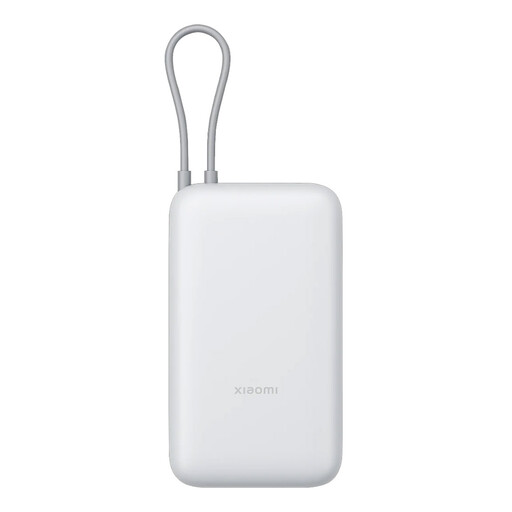
Xiaomi 20,000mAh power bank with integrated cable, GL light grey
An integrated cable offers one less separate lead to pack if it matches your device. The title states 20,000mAh; confirm your device’s connector and charging requirements, the bank’s Wh capacity, and whether it fits your airline’s required cabin location.
View on Joybuy
Flight-charging questions
Should a power bank go in hand luggage or hold luggage?
Check the operating airline’s instructions and keep the power bank in its specified cabin location. British Airways says power banks and spare batteries must be in hand baggage, not checked baggage; easyJet specifies cabin baggage for power banks, while Ryanair specifies carrying them on your person or in an under-seat cabin bag.
Can I charge my phone from a power bank during the flight?
Only if your operating airline permits it. easyJet says power banks must not be used to charge other devices or recharged onboard, so check the policy for each carrier on your itinerary rather than assuming cabin carriage also permits use.
Is a 20,000mAh power bank permitted on every flight?
No universal allowance follows from the mAh figure alone. UGREEN UK, for example, lists its specific Nexode 20,000mAh 100W model at 72Wh; Ryanair’s published terms prohibit devices or batteries over 100Wh. Check the Wh figure for the exact bank and all applicable rules of your operating airline, including quantity, packing location and onboard use.
Can a multi-port USB charger replace a power bank?
A mains charger cannot provide stored power when there is no usable socket. Choose it for confirmed charging stops where you need several ports; if you also need to charge devices between sockets, assess a power bank separately and check its ports, output, cables and airline eligibility.
What if I own an Anker power bank named in the UK recall?
Stop using an affected unit and follow the recall instructions. The UK Office for Product Safety and Standards identifies specified Anker A1681, A1689 and A1647 power banks as presenting an overheating-related fire risk; check the notice’s model and applicability details against your unit.


