For a phone-focused commute or day out, start by comparing compact 10,000mAh USB-C power banks; for longer trips or several devices, consider more capacity or ports, accepting the extra carrying and recharging demands. Check the output and cables against your devices rather than relying on capacity or a USB-C socket alone. If you are flying, check the watt-hour (Wh) rating and your operating airline's rules, and keep the bank in cabin baggage as the UK Civil Aviation Authority advises.
Who needs which kind of power bank?
Phone-first commuters and city-day travellers
If your phone handles tickets, maps and messages throughout the day, compare compact 10,000mAh-class options. Check the weight you will carry and how much charging the exact model delivers; the capacity figure alone does not promise a set number of phone charges.
Holiday, festival and outdoor-day travellers
Longer stretches without a socket, repeated phone charging or sharing with someone else make a higher-capacity bank worth considering. Balance that reserve against its size and recharge time. For flights, check its Wh rating and the operating airline's rules.
Tablet, laptop and multi-device travellers
Check the device's charging requirements against the bank's USB-C Power Delivery (PD) output, cable capability and output when several ports are in use. A USB-C connector by itself does not establish that a particular laptop will charge at the rate it needs.
What should you check before buying?
Start with the devices and the longest likely time away from a socket. Then compare the exact model's capacity, connections and carrying burden.
| Priority |
What to check |
Your needs |
| Charging reserve |
Compare capacity with the number of devices and time between sockets. Look for independent delivered-charge results where available: nominal mAh does not guarantee a fixed number of full charges. |
I mainly need a phone top-up during a long day, or enough reserve for repeated charging on a longer trip. |
| Carry size |
Check the exact model's weight and dimensions alongside capacity. Consider where you will keep it while travelling. |
A bank is more useful to me if I am willing to carry it for the whole commute or day out. |
| Charging compatibility |
Match your device's documented input with the bank's single-port USB-C PD output and the cable's capability. Check the bank's recharge input if opportunities to refill it are brief. |
For a tablet or USB-C laptop, I need to know that this particular combination of device, bank and cable meets its charging requirements. |
| Cables and ports |
Confirm every connector you need, including any built-in cable. If charging devices together, check the stated combined output rather than adding up the ports' individual maxima. |
I may want to charge a phone and another device without packing the wrong cable or assuming both will charge at full speed. |
| Air travel |
Find the Wh rating on the bank or in its documentation and check each operating airline's current restrictions. The UK Civil Aviation Authority says power banks belong in cabin baggage, not checked luggage; IATA warns that an operator may refuse carriage if staff cannot verify the Wh rating. |
When I fly, I need a bank whose rating I can show and whose carriage fits the rules for my itinerary. |
What can make a power bank the wrong choice?
-
Choosing by the largest mAh figure alone
More stated capacity does not promise a particular number of full phone charges, and a larger bank may be less convenient to carry or recharge.
Work out how long you will be away from a socket and what you will charge. Compare model weight, recharge time and independently tested delivered charges where available.
-
Assuming USB-C means laptop-ready fast charging
USB Power Delivery covers different power levels. The bank, device and cable all affect the charging rate, while using several ports can change the output available to each device.
Check your laptop or tablet's documented charging input, the bank's applicable single-port and combined outputs, and the cable specification.
-
Overlooking what a built-in cable connects to
An integrated USB-C cable will not connect directly to a device that needs Lightning or another connector.
List the devices you will take, then check the built-in cable, spare ports and any other cables you would need to pack.
A separate compatible cable may still be needed.
-
Packing a power bank in checked baggage
The UK Civil Aviation Authority instructs passengers to keep power banks in the cabin rather than checked luggage. IATA says an operator may refuse carriage when the Wh rating cannot be verified.
Before each flight, check the rating on the bank or its documentation and the operating airline's current rules for every leg.
Which brands are useful to compare?
These brand examples illustrate different connections and outputs; compare the specifications of an individual model rather than assuming they apply across a brand's range.
Anker
Anker UK lists the Nano Power Bank A1259 as a 10,000mAh model with a built-in USB-C cable and stated 30W charging.
- A model to compare if keeping a USB-C cable attached to the bank matters on a phone-focused trip.
- Check the intended device and any simultaneous-charging requirement against the exact model's specifications.
Belkin
Belkin UK lists power banks with different cable arrangements and USB-C outputs. Its UltraCharge Pro Power Bank 10K has a stated output of up to 60W over USB-C and three-device connectivity.
- Compare its individual models when USB-C output or charging more than one device is important.
- Check the selected model's connectors and output under your intended charging conditions.
INIU
Which? includes INIU among the brands in its power-bank testing coverage.
- Provides another brand whose individual models can be compared for travel use.
- Check the exact model's capacity, output, connections and Wh documentation rather than applying a brand-wide assumption.
Joybuy power banks to consider
These options cover a phone-focused bank with an integrated cable, a mixed-cable option for several devices, and a higher-capacity bank for longer periods away from a socket. Match their stated outputs and connections to your own devices.
 No image available
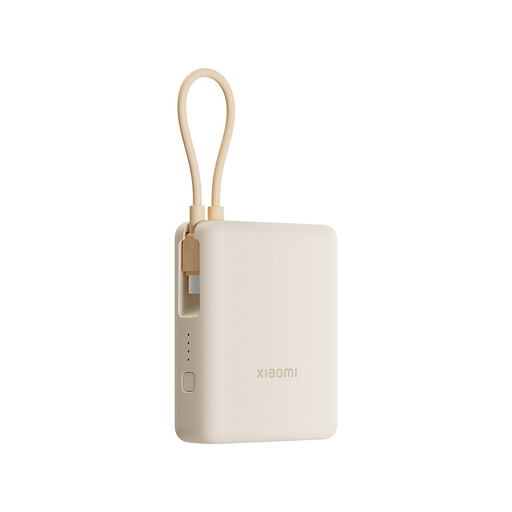
Xiaomi 33W Power Bank 10000mAh (Integrated Cable), Tan
Consider this 10,000mAh option for a phone-focused day when having a cable attached to the bank is useful. The listing states an integrated USB-C cable, USB-C and USB-A outputs, up to 33W output and charging for up to three devices at once. Check the combined output for your devices, and check the Wh marking or documentation and airline rules before flying.
View on Joybuy
 No image available
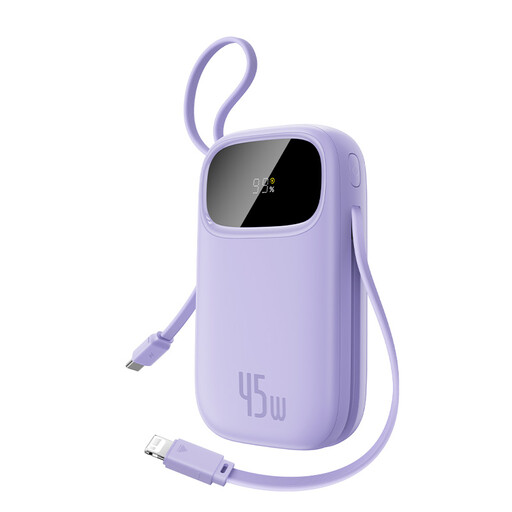
Baseus EnerFill FC31 Qpow 3 Digital Display 10000mAh 45W, Nebula Purple
This 10,000mAh model is worth checking for a day out with both USB-C and Lightning devices. The listing describes built-in cables for both connections, USB-C and USB-A ports, up to 45W output for one device and 15W total output when charging multiple devices. Check the output and cable requirements of any laptop you intend to connect. For flights, confirm that its stated 36.5Wh rating can be verified from the bank or documentation and check the airline's rules.
View on Joybuy
 No image available
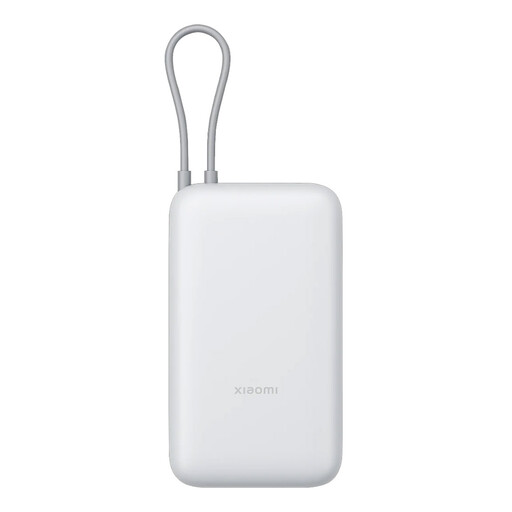
Xiaomi Power Bank 20000mAh (Integrated Cable) GL, Light Gray
The stated 20,000mAh capacity makes this a higher-capacity option to compare for longer trips or repeated charging. It has an integrated USB-C cable; the listing describes its maximum 22.5W output in relation to fast-charging Xiaomi smartphones, so check the charging requirements of other devices separately. Check its weight and dimensions for all-day carry, and its Wh documentation and airline rules before flying.
View on Joybuy
Power bank questions
Can I put a power bank in checked luggage?
No. The UK Civil Aviation Authority says to keep power banks with you in the cabin, not in checked luggage. Check the operating airline's current restrictions before each flight.
How do I check whether a power bank can travel by air?
Check its watt-hour (Wh) rating and the operating airline's rules for your itinerary. IATA says an operator may refuse carriage if staff cannot verify the rating from the battery or its documentation.
Does 10,000mAh tell me how many times it will charge my phone?
No fixed number of full charges follows from the capacity figure alone. Electrical Safety First identifies capacity as a factor in how many times a bank can recharge a device; compare delivered-charge testing for the exact bank and phone where available, alongside how long you will be away from a socket.
Will any USB-C power bank charge my laptop quickly?
No. USB-C is the connector, while USB Power Delivery supports a range of power levels, as the USB Implementers Forum explains. Check that your laptop accepts USB-C charging and that the bank's applicable output and your cable meet its documented requirements.
Is a built-in cable enough for a mixed-device trip?
Only if its connector matches the devices you intend to charge. Check the built-in cable type, the bank's other ports and its combined output; a built-in USB-C cable does not remove a separate Lightning or other cable requirement.


