Short-break recorder users
You need reserve power for one USB-powered recorder during a short cottage stay and can recharge the bank from a socket between sessions.


Check the exact recorder manual before choosing a power bank: its USB socket must support external power, and its input and connector must match the bank and cable. A 10,000mAh bank is a starting point for one recorder on a short stay when you can recharge the bank; consider a 20,000mAh option for longer sessions or shared charging, without treating the printed capacity as guaranteed recording time.
You need reserve power for one USB-powered recorder during a short cottage stay and can recharge the bank from a socket between sessions.
You expect extended recording or time away from sockets, so you need to plan how much reserve to carry until you can recharge.
Your recorder and other devices use different cables. Output ports and the cables you carry matter more to this kit than wireless-phone charging features.
Confirm the recorder’s USB power mode and connection first. Then choose a capacity for your recording sessions and recharge opportunities, and plan where you will charge the bank safely in the cottage.
| Concern | What to check | Who this matters to |
|---|---|---|
| Recorder compatibility | Check the exact manual for external USB-power support and input requirements; match the connector to the bank’s output and your cable. | If my recorder cannot accept power from the bank, its capacity will not help me record; around 45% of consumers put recorder compatibility first. |
| Usable reserve | Plan for session length and chances to recharge. Compare rated output capacity or watt-hours where stated, rather than relying on headline mAh alone. | When I have several sessions before I can recharge, running short of reserve matters most; for around 33% of consumers, that is the primary concern. |
| Cottage charging | Follow the manufacturer’s instructions; charge with the bank uncovered and ventilated, then unplug it after charging. | I want a straightforward way to recharge the bank while I am present in temporary accommodation; safe, manageable charging comes first for around 22% of consumers. |
Anker explains that a bank’s headline mAh describes its internal cells, typically at around 3.7V. It does not give the amount delivered through the USB output, so it cannot establish recording time on its own.
Check rated output capacity or watt-hours where available, consult the recorder’s power information and leave a reserve for longer sessions.
A USB socket does not by itself confirm that a recorder accepts power from a bank. The ZOOM F3 and TASCAM DR-22WL manuals document USB power modes for those models, but another recorder may have different requirements.
Read your exact model’s manual, then match its supported input and connector to the bank’s output and an appropriate cable.
You would not be there to notice a damaged cable or a problem during charging. Electrical Safety First advises keeping a charging power bank uncovered and well ventilated, and unplugging it after charging.
Charge while present, follow the bank’s instructions and disconnect it when charging is complete.
Its USB-C-first portable banks include designs worth considering when you want an integrated cable but still need to check the recorder’s connector.
Its UltraCharge 10K listing is relevant if your kit needs an integrated USB-C cable alongside separate USB-C and USB-A ports.
Its range includes compact USB-C designs and larger multi-port configurations, which serve different cable and reserve needs.
These 10,000mAh and 20,000mAh banks offer integrated-cable options for a cottage recorder kit. Choose only after checking that your recorder accepts external USB power and that the particular bank and cable provide the connection it needs.
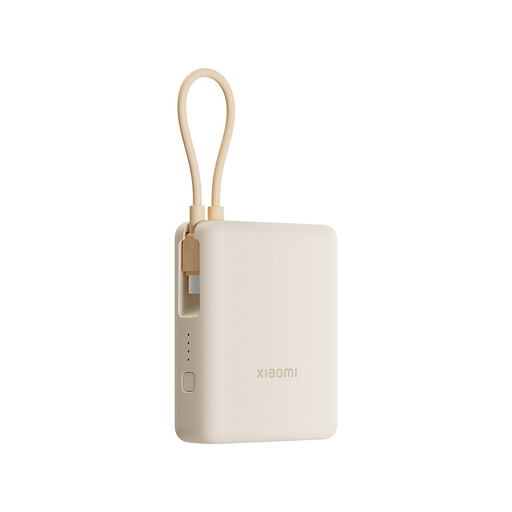 No image available
Consider this for a short stay if its output and cable match your recorder’s documented power input. The 10,000mAh figure is the stated bank capacity, not a promise of delivered USB capacity or recording time.
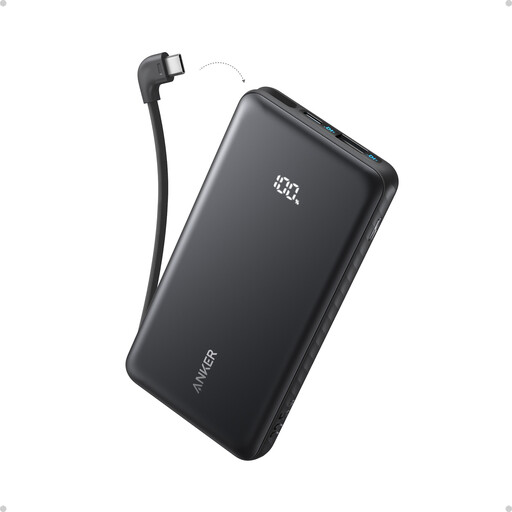 No image available
The built-in USB-C cable may reduce loose cables for a recorder confirmed to accept a matching USB-C power connection. Check the recorder’s input requirements; the stated 10,000mAh capacity does not establish how long it will run.
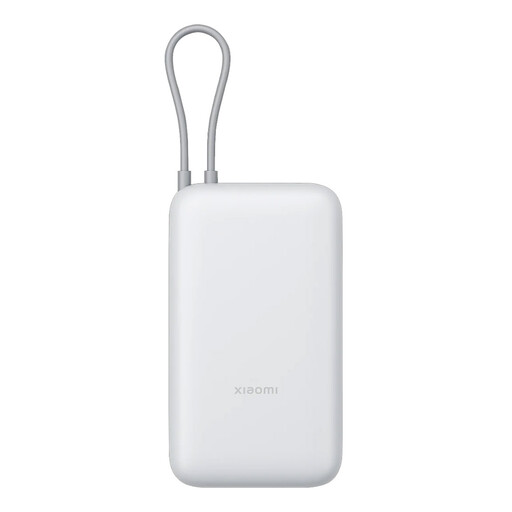 No image available
Consider the larger stated capacity if several sessions may pass between recharges. Before choosing it for your recorder, confirm the integrated cable or an available output works with the recorder’s required input; 20,000mAh is not a guaranteed delivered USB capacity.
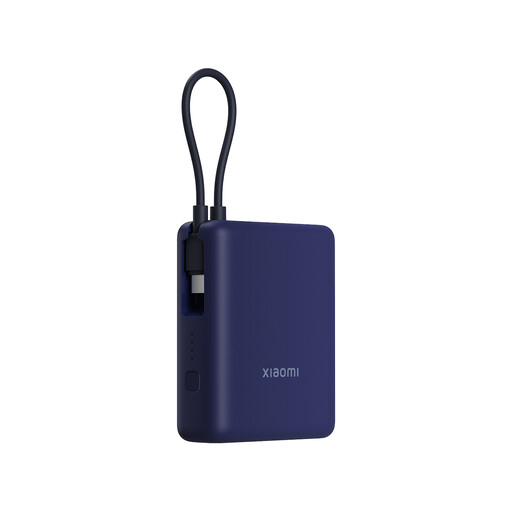 No image available
This integrated-cable option may suit a compact kit for a short stay. Check that its cable or output matches your recorder, especially if the recorder needs a connection other than USB-C, and allow for less usable USB capacity than the printed 10,000mAh figure suggests.
No: USB connectivity alone does not establish that a recorder accepts power from a bank. The ZOOM F3 and TASCAM DR-22WL manuals document USB power options for those models; check your exact recorder’s manual, input requirements and connector before relying on a bank for a session.
It can be a starting point for one recorder on a short stay if you can recharge the bank, but it does not guarantee a number of recording hours. Anker explains that headline mAh describes internal cell capacity; for longer sessions or shared charging, consider more reserve after checking the bank’s output and your recorder’s requirements.
Charge it while you are present instead. Electrical Safety First advises keeping a charging power bank uncovered and well ventilated, avoiding prolonged charging when it is not in use, and unplugging it after charging.