
24/7 Customer Support

Free returns

Same-day & Next-day Delivery

Quality Guaranteed

Unlock Your Welcome Offers: FREE Delivery | Up to 80% OFF | Free 30-day JoyPlus trial
Download the APP
A flat phone battery is inconvenient; a flat car battery on a dark roadside can be much more serious. Choosing between portable power banks and car jump starters depends on what you need to power, how often you travel and whether you want one device for everyday charging or emergency vehicle support.
Marketing descriptions can make these products seem interchangeable. They are not. A compact 20000mAh power bank may be suitable for phones and tablets but cannot necessarily start a vehicle. Meanwhile, a high-current car jump starter may charge a phone, yet be less convenient than a slim USB-C battery pack for daily commuting.
Before buying, watch for these common traps.
A battery labelled 20,000mAh does not deliver 20,000mAh directly to your phone. Internal voltage conversion, heat and circuit losses reduce the energy available at the output. Some products also list both nominal and rated capacity, which can appear inconsistent if you only compare the larger number.
Treat capacity as a guide, not a guaranteed number of full phone charges. Check the rated capacity, output watt-hours where available and the manufacturer’s charging specifications.
A 140W USB-C power bank or 165W laptop charger can provide substantially more output than a standard phone charger, but your laptop, cable and charging protocol must all support the required power. A USB-C port alone does not guarantee laptop charging.
For laptops, check:
A fast-charging portable charger may charge a compatible phone quickly but provide insufficient power for a laptop.
A 2000A jump starter or 3000A jump starter with air compressor is advertised by peak current, but engine size, battery condition, temperature and connection quality also affect starting performance. Always confirm that the unit supports your vehicle’s voltage and fuel type.
The products listed here are designed for 12V petrol and diesel vehicles, but buyers should still check the individual product specifications and their vehicle handbook. A jump starter is an emergency aid, not a replacement for a correctly maintained battery.
For smartphones, headphones, cameras and tablets, a 10,000mAh to 20,000mAh unit is generally a practical range. A power bank for iPhone, Samsung and laptops needs more careful comparison because laptops consume considerably more energy than phones.
A 20,000mAh model is a useful middle ground for commuting, university, travel and outdoor use. A 25000mAh power bank can offer more reserve, but it is usually heavier and may receive closer attention when carried on flights. Airline policies vary, so check the current rules and the watt-hour rating before travelling.
Look for the charging standard as well as the headline wattage. USB Power Delivery is relevant for many modern phones, tablets and laptops, while QC3.0 power bank models may suit compatible devices using Qualcomm Quick Charge.
A USB-C battery pack with USB-C input and output is more flexible than a pack that only recharges through an older connector. Multiple ports are useful when charging several devices, but confirm whether the advertised power is available from one port or shared across all ports.
A power bank with built-in cable can reduce forgotten accessories. However, inspect the cable type and length to ensure it matches your phone or tablet. Integrated cables also need gentle handling because damage may affect a feature you rely on regularly.
For a car jump starter, check peak current, stated starting current, supported vehicle types and clamp design. A built-in display can make remaining charge easier to monitor. An LED light with steady, strobe and SOS modes may be useful during roadside checks, but it should not encourage unsafe repairs in traffic.
If you are considering a portable tyre inflator, compare maximum pressure, hose storage, power source and auto-stop function. Maximum PSI describes the possible pressure, not necessarily how quickly a tyre will inflate. Store lithium battery products away from excessive heat, moisture and direct sunlight, and stop using one if it becomes swollen, leaks or becomes unusually hot.
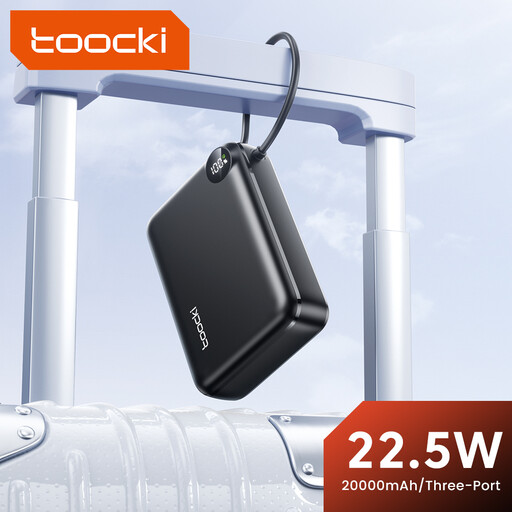
Why This Fits Their Persona: A slim 20,000mAh option for students, commuters and phone users who want everyday charging without a vehicle-specific device.
The USB-C input and output specifications are stated, while the 22.5W figure gives a clearer comparison than capacity alone.
20,000mAh capacity; USB-C in/out; supports PD3.0 and QC4+ charging.
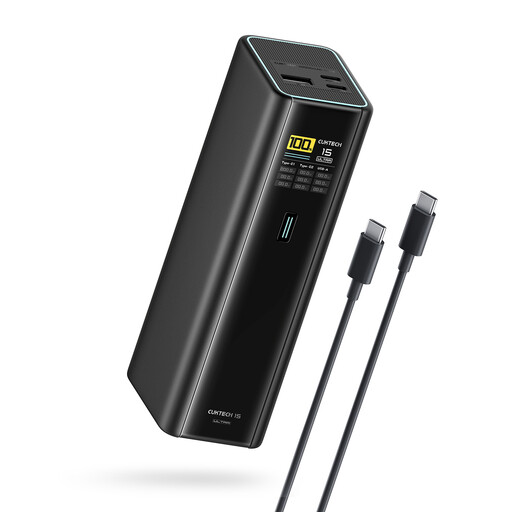
Why This Fits Their Persona: Suitable for professionals and travellers carrying a laptop, tablet and phone who value high USB-C output in a compact format.
The 140W maximum is paired with three ports and PD3.1 details, helping buyers assess laptop compatibility instead of relying on a generic “fast” label.
20,000mAh capacity; up to 140W USB-C output; three charging ports.
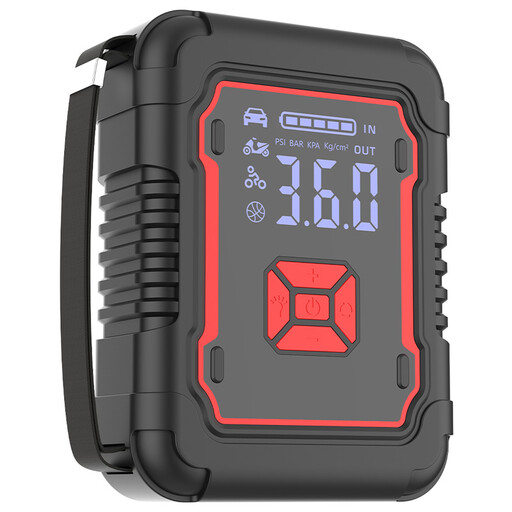
Why This Fits Their Persona: A practical emergency car power pack for drivers who want jump-starting, tyre inflation, phone charging and lighting in one unit.
It states both 3000A peak current and 12V vehicle compatibility, while its auto-stop inflator addresses the risk of over-inflation.
Up to 150 PSI; QC3.0 18W output; LED steady, strobe and SOS modes.
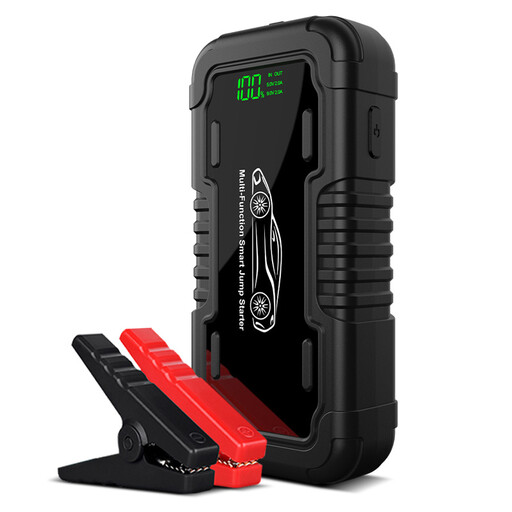
Why This Fits Their Persona: Designed for motorists wanting a dedicated 12V battery booster that also provides backup USB charging for trips and commuting.
The specification separates 800A starting current from 2000A peak current, giving a more useful picture than a single headline figure.
12V petrol and diesel support; 20,000mAh stated capacity; LCD battery display.
We have compiled a complete, real-time list of products that fully satisfy these strict selection criteria and UK safety regulations.
Battery lifespan varies with charging cycles, storage temperature, usage and product construction. Avoiding extreme heat, deep discharge and physical damage can help preserve performance. Capacity may gradually reduce over time, so a power bank stored in a vehicle should be checked more frequently.
Some can. A dedicated laptop power bank should state USB-C Power Delivery output and sufficient wattage for the computer. A 140W model may suit compatible high-demand laptops, while a 22.5W phone charger is generally intended for phones, earbuds and smaller devices. Check the laptop’s charger rating and use a suitable high-power USB-C cable.
Recharge it after every jump-starting attempt and check it regularly if stored for emergencies. The Porbi S903 lists an approximate five-hour recharge time using 18W input, while the Porbi X9 lists approximately three to four hours under its stated charging conditions. Actual times depend on the charger, cable and remaining battery level.