Phone-first day travellers
If your phone holds tickets, maps and messages, a compact backup can help you keep it usable through a train, coach or airport delay. Check that its connector suits your phone before relying on a built-in cable.


Pack a compact USB-C power bank if your main concern is keeping a phone usable between stops. If you need to work on a laptop away from sockets, check the laptop’s charging requirements before choosing a higher-output USB-C power bank; where mains access is available, a multi-port wall charger may cover both devices instead. Before flying, check the operating airline’s battery rules and keep essential devices charged for possible security checks.
If your phone holds tickets, maps and messages, a compact backup can help you keep it usable through a train, coach or airport delay. Check that its connector suits your phone before relying on a built-in cable.
If you need to work between meetings or away from a socket, match the laptop’s USB-C charging requirements to the power bank or charger, including its output when other devices are connected.
Check the operating airline’s current rules for your battery and how it must be carried. Keep your phone or laptop charged enough to switch on if airport staff ask.
Start with where you will charge: a power bank supplies backup away from sockets, while a wall charger needs mains access. Then match the output, cables and flight arrangements to the devices you will actually carry.
Choose when: You need to charge a device between stops or during a delay without access to a socket.
Trade-off: It adds a battery to carry and, when flying, must meet the operating airline’s rules.
Choose when: You expect mains access and want to charge a laptop and phone from one outlet.
Trade-off: It cannot provide power away from a socket, and output may be divided between ports.
| Concern | Buying check | Who this matters to |
|---|---|---|
| Backup energy and bulk | Compare the labelled capacity in Wh and mAh with the devices and time you expect to spend away from mains power. | On a long journey, I need enough backup for my essential devices without carrying more battery than I want. About 31% of consumers put usable energy and carrying size first. |
| Laptop and multi-device output | Check the laptop’s USB-C charging requirement, the power output and any split when multiple ports are used; match the cable’s stated capability too. | If I work between stops, my laptop and phone need a charging setup that suits them together. Adequate output is the primary concern for about 31% of consumers. |
| Flight and battery safety | Check the operating airline’s current capacity, quantity, carriage and in-flight-use rules, plus any recall notice for the exact model. | Before I fly with a power bank, I need to know how to carry it and whether I can use it on board. Around 23% of consumers place flight rules and battery safety first. |
| Cables and sockets | Match built-in and separate connectors to your devices; for a wall charger, check the plug arrangement for your itinerary. | For a short trip, I want fewer loose cables without arriving with the wrong connector. Keeping the setup simple is the main need for about 15% of consumers. |
Capacity does not tell you whether its output suits a laptop or how its battery fits an airline’s rules. Belkin’s UK range, for example, lists distinct Wh ratings alongside the mAh figures for different models.
Compare the exact model’s labelled Wh rating, USB-C output and intended devices. Check the operating airline’s policy before flying.
Airline rules cover more than battery capacity. easyJet says power banks must not be recharged or used to charge other devices on board its aircraft.
Read the operating airline’s current instructions for carriage, storage and use before packing.
Belkin states that its WCH013myBK dual-USB-C charger provides up to 65W from one port, but 45W plus 20W when both are in use.
Check the output allocation for the ports you plan to use together, particularly if one device is a laptop.
The Office for Product Safety and Standards has issued recalls for specified Anker and Belkin power-bank models because of overheating and fire risks. A notice about one model does not identify every product from that brand as affected.
Match your unit’s model and any stated manufacturing period against the recall notice. If it is affected, stop using it and follow the recall instructions.
Anker UK lists the Nano A1259 as a 10,000mAh power bank with a built-in USB-C cable and 30W charging for mobile devices.
UGREEN UK lists a Zapix power bank with 10,000mAh capacity, 30W USB-C wired charging, Qi2 15W wireless charging, a built-in cable and a stand.
Belkin UK lists integrated-cable power banks, laptop-oriented power banks and multi-port wall chargers.
These options cover portable batteries for phone-led or laptop-oriented travel and a wall charger for stops with mains access. Match each product to your devices and, if flying with a battery, to the operating airline’s rules.
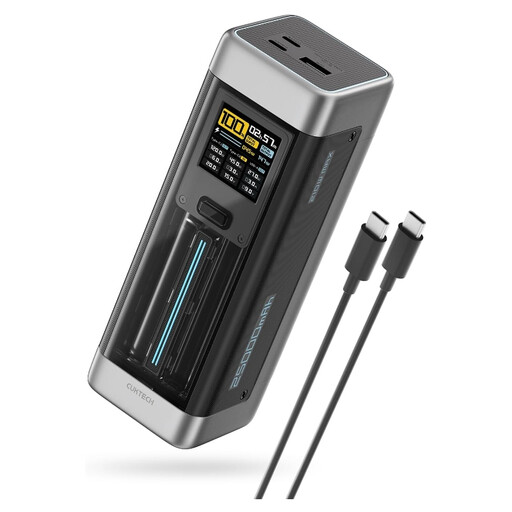 No image available
Consider this laptop-oriented battery if you need power away from a socket and your laptop’s USB-C charging input matches its applicable output. The listed variant has a 25,000mAh capacity and three ports; check its labelled Wh rating, the output available to your laptop and your airline’s rules before flying.
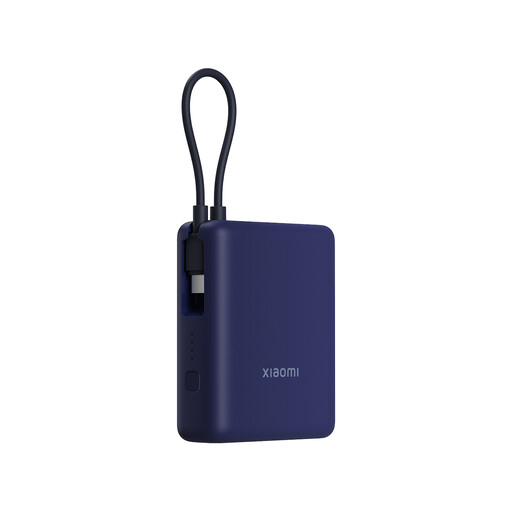 No image available
This is a compact-cable option to assess for phone-first journeys. Its listed capacity is 10,000mAh; confirm that the cable and output suit your phone, and check the battery’s labelled Wh rating against your airline’s rules if you fly.
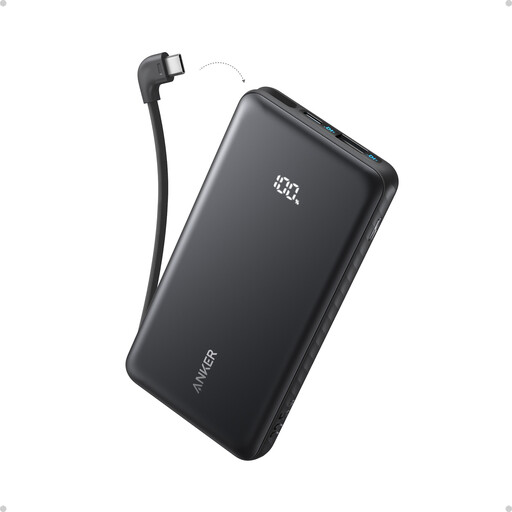 No image available
The built-in cable may simplify phone charging between stops if it matches your device. Check the output available when charging more than one device, and verify the battery’s labelled Wh rating and your airline’s rules before flying.
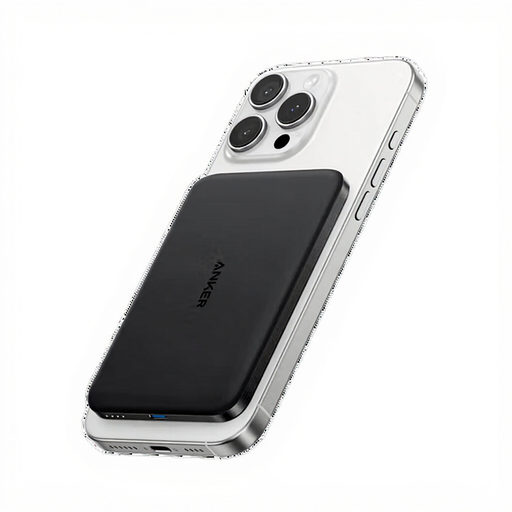 No image available
Consider this for magnetic wireless top-ups if your phone and case are compatible. It is listed at 5,000mAh; confirm the fit before relying on it for a trip, and check its labelled Wh rating and airline carriage rules if flying.
 No image available
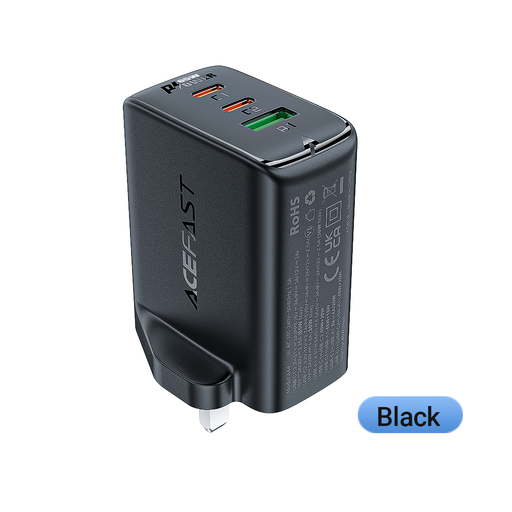
This mains-powered option suits a stop where you can use an appropriate outlet, rather than charging between sockets. Check the output split across its three ports and your laptop’s charging requirement before planning to charge several devices together.
Check the operating airline’s current rules for your exact battery and flight. Ryanair says devices or batteries exceeding 100Wh are not permitted and requires power banks to be carried on the passenger or in an underseat cabin bag; easyJet allows a maximum of two power banks per person in cabin baggage only. Those are carrier-specific rules, not a single rule for every flight.
Only if the operating airline permits it. easyJet says power banks must not be recharged or used to charge other devices on board, so check your carrier’s current in-flight instructions rather than relying on its carriage rules alone.
You may be asked to switch on an electronic device. Northern Ireland government travel guidance says a device that does not switch on when requested will not be allowed onto the aircraft. Keep the device itself charged, not just a separate power bank.
Choose a cable with a stated power capability that meets the laptop and charging setup’s requirements. The USB Implementers Forum notes that cables do not all have the same capabilities, so the USB-C connector shape alone is not enough to establish suitability.
Match its exact model and any applicable manufacturing period against the Office for Product Safety and Standards product-safety alerts and the manufacturer’s recall instructions. Notices for specified Anker and Belkin models do not mean every product from those brands is affected; if your unit is affected, stop using it and follow the recall instructions.