
24/7 Customer Support

Free returns

Same-day & Next-day Delivery

Quality Guaranteed

Unlock Your Welcome Offers: FREE Delivery | Up to 80% OFF | Free 30-day JoyPlus trial
Download the APP
Bringing the gym into your home is an appealing prospect, offering convenience and consistency for your fitness routine. A power tower is often the centrepiece of a home gym, a versatile piece of strength training equipment that promises a full-body workout. However, the market is filled with options that look similar but perform very differently. Many buyers in the UK find themselves with a piece of kit that fails to meet their expectations, gathering dust instead of helping them build strength.
Before you invest, it's crucial to understand the common pitfalls. Many people are drawn in by flashy marketing, only to discover their new equipment has critical flaws. The most frequent issues include:
To avoid these traps, focus on a few core parameters that determine the quality and usability of a power tower. Analysing these specifications will help you select a durable and effective piece of home gym equipment.
The foundation of any good power tower is its frame. Look for models constructed from heavy-duty steel. The overall weight of the unit is a good indicator of its sturdiness; a heavier frame is generally more stable. Pay close attention to the base design. A wide H-shaped or U-shaped base provides a larger footprint, significantly improving stability and preventing rocking during dynamic movements like kipping pull-ups or vigorous leg raises. Also, check for non-slip rubber feet, which protect your floor and prevent the unit from sliding.
Versatility is a key benefit of multi-function fitness equipment. A quality power tower should offer multiple height adjustments for the pull-up bar to accommodate different user heights and ceiling clearances. This ensures you can achieve a full range of motion without your feet touching the floor. The dip station for home use should also have comfortable, well-positioned grips. Some premium models even offer adjustable-width dip handles to better suit your shoulder width.
Consider what exercises you plan to do. A basic power tower will include a pull-up bar and a dip station. More advanced models may incorporate push-up handles near the base, a vertical knee raise (VKR) station for ab workout machine functionality, or even an integrated, foldable bench. These additions can transform your power tower into a comprehensive workout hub, allowing for exercises like bench presses, rows and more advanced core training exercises.
To help you navigate the options, we've matched several products to different user needs, focusing on how they address the common pitfalls.
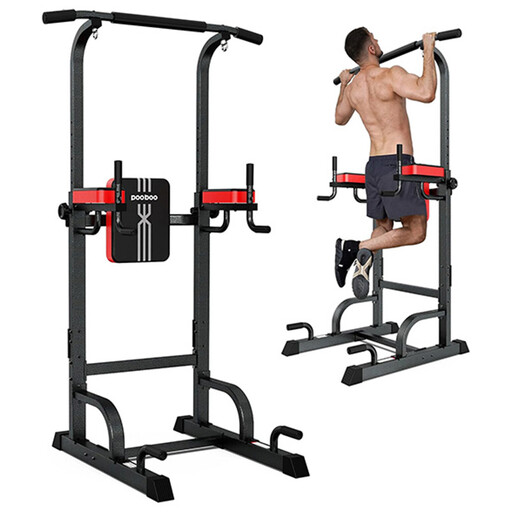
Why This Fits Their Persona: This is an excellent starting point for anyone building a home gym on a sensible budget. It provides all the core functions—pull-ups, dips and leg raises—in a solid package without the extra cost of features a beginner may not need immediately.
Its high-strength alloy steel frame and stable base design directly counter the 'wobbly frame' pitfall common in many entry-level models, providing a secure platform for bodyweight exercises.
Features an adjustable height design and a substantial 440-pound (approx. 200 kg) weight capacity, offering reliability and room to grow as your strength increases.
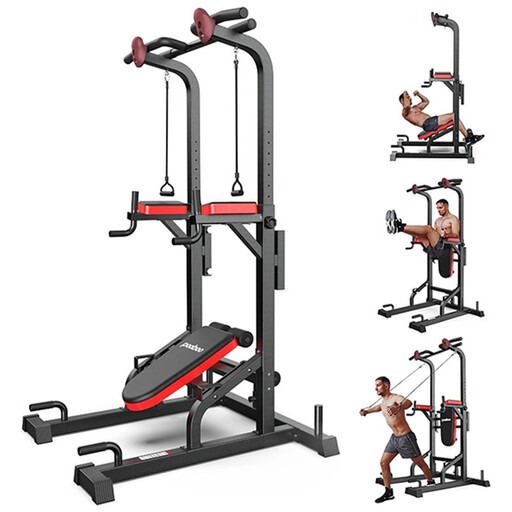
Why This Fits Their Persona: For those who want maximum utility from a single footprint. This unit integrates a foldable bench, expanding workout options to include dumbbell presses, rows and other exercises, creating a truly multi-function fitness station.
It directly solves the 'poor ergonomics' trap by offering multiple workout stations in one unit, including unique rock-climbing grips for varied back and grip training, catering to a wider range of movements.
Combines a power tower and a weight bench, saving space and money. The heavy-duty steel frame supports up to 480 lbs (approx. 217 kg), making it suitable for serious training.
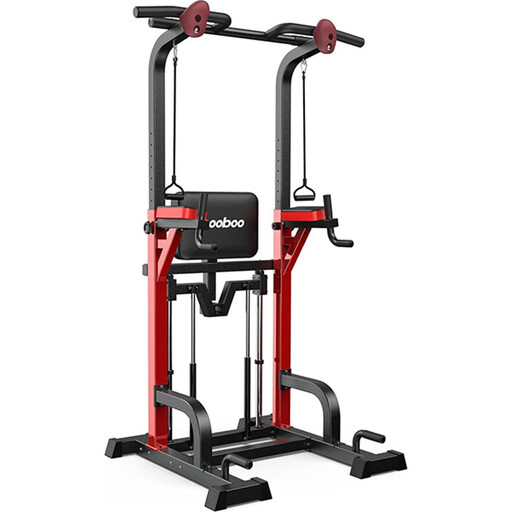
Why This Fits Their Persona: This model is for the user who is serious about progression. It's built with commercial-grade steel and a high weight capacity, making it ideal for more intense workouts, including weighted pull-ups and dips.
It tackles the 'misleading weight capacity' trap head-on with a robust frame engineered for dynamic loads and a stated 480 lbs capacity, providing the stability needed for advanced training.
Includes a resistance assisted pad, a valuable tool for both beginners working up to their first pull-up and advanced users looking to add extra reps or train through fatigue.
We have compiled a complete, real-time list of products that fully satisfy these strict selection criteria and UK safety regulations.
Always check the product's assembled dimensions before buying. As a general rule, you will need a floor area of at least 1.5 metres by 1.5 metres to allow for safe movement around the unit. Crucially, check your ceiling height. Ensure there is enough clearance above the pull-up bar to perform the exercise without hitting your head.
Most power towers are equipped with rubber or plastic feet to prevent slipping and protect your flooring. However, for added protection, especially on wooden, laminate or tiled floors, it is highly recommended to place a heavy-duty equipment mat underneath. This also helps to absorb vibrations and add another layer of stability.
Assembly is required for all power towers. They typically arrive with all necessary tools and a detailed instruction manual. While it can be done by one person, having a second person to help hold parts in place makes the process much easier and safer. Expect it to take between one and two hours. After assembly and before your first workout, double-check that every bolt is securely tightened. It's also good practice to check them periodically.