
24/7 Customer Support

Free returns

Same-day & Next-day Delivery

Quality Guaranteed

Unlock Your Welcome Offers: FREE Delivery | Up to 80% OFF | Free 30-day JoyPlus trial
Download the APP
A power tower can combine pull-ups, dips, push-ups and leg raises in one home workout station. However, choosing the wrong model can lead to wobbling, uncomfortable padding or a frame that does not fit your ceiling height.
For UK households, the key is to look beyond the number of exercises listed on the box. A suitable power tower dip station should match your available space, body weight, training level and the way you intend to use it.
A large weight-capacity figure does not automatically mean a station will feel stable during pull-ups or dips. Stability also depends on the base design, crossbars, rubber feet, frame construction and the floor underneath.
A tower placed on thick carpet may move differently from one positioned on a hard, level floor. Check the complete structure rather than relying on the maximum load alone.
Some listings describe a multifunction power tower but provide only basic pull-up and dip points. If you want to train your core, check whether the station includes a dedicated leg raise station, padded armrests or suitable handles for knee raises.
For push-ups, look for additional low handles or adjustable grips. A feature is only useful if it supports the movements you actually plan to perform.
A tall power tower may be unsuitable for a garage, spare bedroom or low-ceilinged flat. Measure the room before buying, allowing extra clearance above the pull-up bar for safe movement.
Most home gym strength training equipment requires assembly. Poorly tightened bolts can cause unwanted movement, so confirm that the package includes instructions and plan time to check every connection before use.
Look for a steel frame, reinforced supports and non-slip feet. Powder-coated or finished steel can help protect the frame during normal indoor use, but it does not remove the need to keep the station dry.
A broad H-shaped or triangular base can distribute force across the floor. Rubber feet should sit flat, with no rocking or gaps. If you have laminate or wooden flooring, a suitable protective mat may help reduce marking and movement.
The stated load capacity is a limit, not a recommended training target. It should account for your body weight and any additional resistance, such as a weighted vest or resistance bands.
Never exceed the manufacturer’s stated limit. For example, the products below list capacities ranging from 440 pounds to 480 pounds, while two Sportsroyals models specify 204 kg. Always follow the capacity shown for the exact model you purchase.
An adjustable power tower can be more practical for households with several users. Check the height range, locking mechanism and armrest position rather than assuming “adjustable” means suitable for everyone.
A pull-up bar should offer enough clearance for your grip and movement. Padded armrests and non-slip handles may make dips and leg raises more comfortable, but padding should not replace correct positioning or controlled technique.
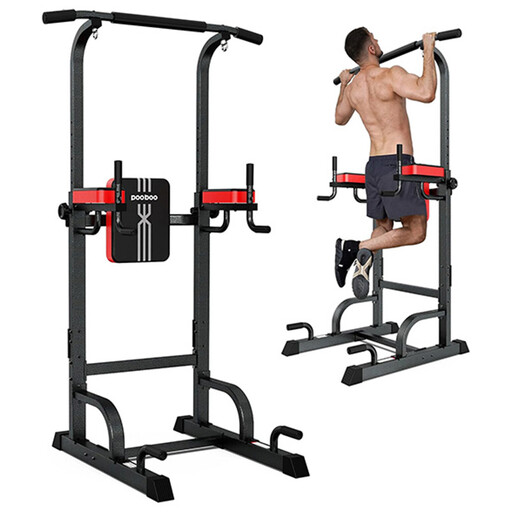
Why It Suits This User: A straightforward home workout station for beginners who want pull-ups, dips and general bodyweight exercise equipment without adding a separate bench or cable system.
The adjustable height design and alloy steel frame address common fit and construction concerns. Its listed maximum capacity is 440 pounds.
Supports pull-ups, dips and strength exercises; height is adjustable for different home gym arrangements.
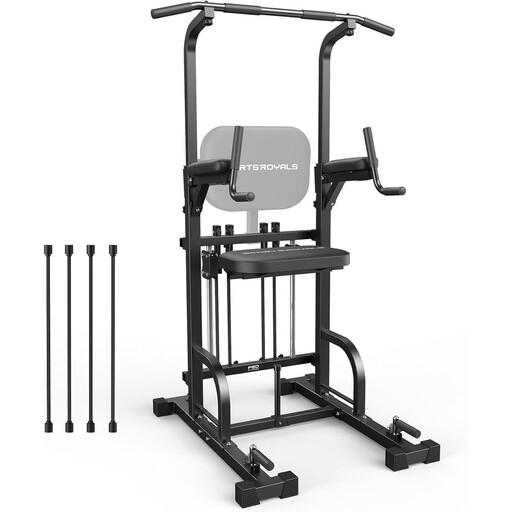
Why It Suits This User: Suitable for households seeking more adjustment and assistance options for shared training, including beginners and intermediate users.
It specifies six height levels from 164.56 to 221.5 cm, eight non-slip rubber feet and a 204 kg maximum load.
Includes adjustable resistance bands from 10–40 kg and a folding support pad for assisted pull-ups or back support.
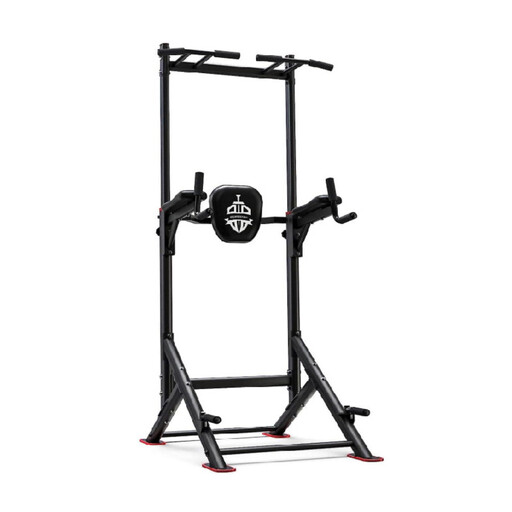
Why It Suits This User: A practical match for users prioritising a reinforced base and multiple grip positions for repeated pull-ups, dips, push-ups and vertical knee raises.
The product specifies approximately 2 mm steel tubing, reinforced crossbars and a double-triangular base rather than relying only on a capacity figure.
Offers wide and narrow grips, three push-up angles and six height levels from 178–235 cm.
For a compact home gym, prioritise exercises you can perform consistently:
A bench-equipped model may suit users who want to combine a power tower with pressing or seated exercises. The Pooboo C772, for example, includes a bench, rock-climbing grip pull-up bar and dip station, with a listed 480-pound weight-bearing capacity. Check the assembled dimensions—approximately 41 x 30 x 99 inches—to ensure it fits your room.
We have compiled a complete, real-time list of products that fully satisfy these strict selection criteria and UK safety regulations.
Before using any power tower:
If the tower moves significantly during a controlled movement, stop using it and reassess the surface, assembly and fasteners.
Yes, provided you select suitable exercises and use controlled movements. Assisted pull-up bands, lower-height settings and gradual progression can make a station more approachable. Beginners should follow the supplied instructions and avoid exceeding their current ability or the product’s load limit.
Measure the tower’s assembled height and leave additional clearance above the bar for your head and movement. Models in the recommendations range from approximately 94 inches to 99 inches, while adjustable designs may have lower settings. Compare these measurements with your available ceiling height before ordering.
Service life depends on assembly quality, frequency of use, user weight, storage conditions and maintenance. A steel frame can remain suitable for regular home use when kept dry and inspected periodically, but bolts, padding and rubber feet may require attention sooner. Follow the manufacturer’s care instructions and replace damaged parts before use.