
24/7 Customer Support

Free returns

Same-day & Next-day Delivery

Quality Guaranteed

Unlock Your Welcome Offers: FREE Delivery | Up to 80% OFF | Free 30-day JoyPlus trial
Download the APP
A power tower dip station can combine pull-ups, dips, push-ups and leg raises in one piece of bodyweight workout equipment. However, choosing a suitable model for a UK home gym involves more than comparing weight limits or counting exercise functions.
Many buyers discover too late that a tower is difficult to fit, moves during use or does not suit their training level. The following guide highlights common purchasing traps, key specifications and suitable options for different types of user.
A stated maximum capacity is useful, but it does not tell the whole story. A tower may support a substantial static load while still moving during pull-ups or dips if the base is narrow, the floor is uneven or the frame has insufficient bracing.
Look for practical stability features such as:
The user’s bodyweight, movement speed and exercise style also affect how much force reaches the frame. Leave a sensible margin below the published maximum rather than treating it as a target.
A home gym power tower can include a pull-up bar, dip handles, knee-raise supports, push-up grips, resistance assistance or even a bench. More functions are not automatically more useful.
Check the assembled dimensions, not only the package size. Several models in this category are approximately 94–99 inches high, or around 239–251 cm, which may be unsuitable for rooms with a low ceiling. Also allow clearance above the bar and around the sides for safe movement.
A fixed-height free-standing pull-up station may work well for one tall user but be awkward for shorter household members. An adjustable height dip station is more flexible, particularly for families or users sharing a home gym.
Also inspect the handle shape, foam padding and adjustment mechanism. Assembly is required for the products featured here, so buyers should confirm that they have enough floor space to assemble the frame and can periodically check bolts and connections.
High-strength alloy steel and commercial steel frames are commonly used for this type of multi-function strength training equipment. Material wording alone should not decide your purchase. Look for the complete structure: tube thickness where provided, reinforced joints, crossbars and base geometry.
For example, a double-triangular base or an H-shaped base with several rubber feet can distribute movement more effectively than a lightweight, narrow frame. Place the tower on a flat, stable surface and avoid thick carpets that may allow rocking.
The listed capacities vary across the selection:
These figures should be read alongside the manufacturer’s instructions. Do not exceed the lower applicable recommendation, and remember that resistance bands, added weights and dynamic movements can increase the load on the equipment.
A pull-up and dip station should match both the user and the planned exercises. Check whether the pull-up bar is high enough for a full range of motion, while the dip and knee-raise supports remain comfortable.
An assisted pull-up station with a resistance pad or bands may help beginners practise the movement with reduced bodyweight resistance. It can also provide a progression route before attempting unassisted repetitions. Experienced users may instead prioritise a rigid frame, several grip positions and a higher adjustment range.
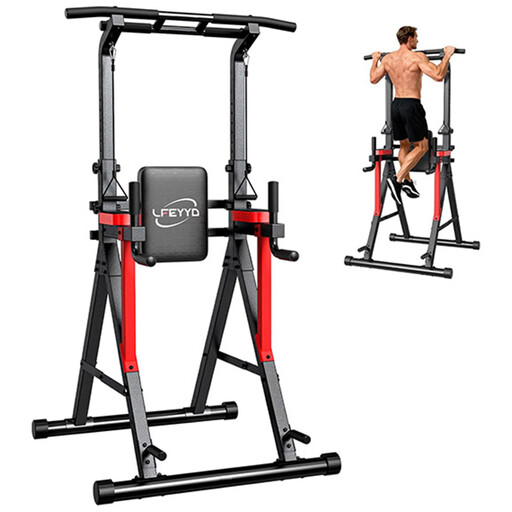
Why This Fits Their Persona: The 13-level adjustment range offers flexibility for a starter or shared household gym, while the free-standing design avoids wall mounting.
Its stated adjustment levels help reduce the risk of buying a fixed station that does not suit different users.
13-level height adjustment; ergonomic foam grips; listed 480 lb capacity and 400 lb recommendation.
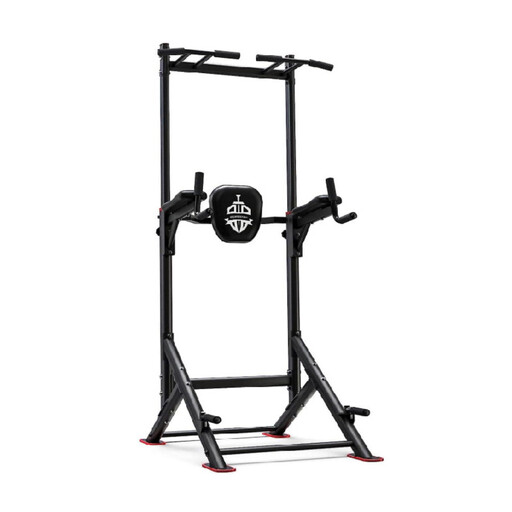
Why This Fits Their Persona: Users prioritising frame detail and adjustment flexibility may prefer its approximately 2 mm steel tubing, double-triangular base and six height levels.
The published base design and cross-bracing provide more useful detail than relying on a large capacity figure alone.
204 kg stated load capacity; six height levels from 178–235 cm; wide and narrow grip positions.
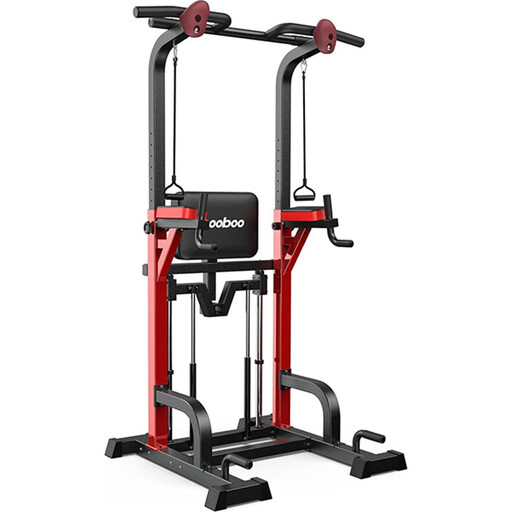
Why This Fits Their Persona: The resistance assisted pad is designed for users building towards unassisted pull-ups while retaining dip and core-training functions.
It provides a specific assistance feature instead of leaving beginners to manage full bodyweight from their first session.
Adjustable height; resistance assisted pad; commercial steel frame with a listed 480 lb capacity.
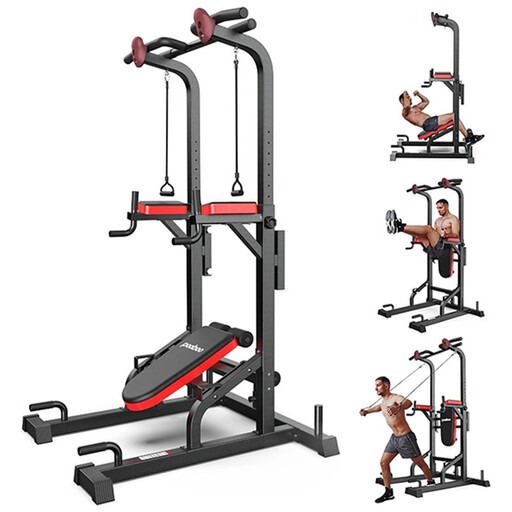
Why This Fits Their Persona: Users wanting more than a pull-up and dip station can use the integrated bench and climbing-grip bar for varied home strength training.
The bench is a clearly stated function, making it easier to judge whether the extra footprint is worthwhile.
Integrated bench; rock climbing grip pull-up bar; adjustable, non-slip design with a listed 480 lb load capacity.
Before using any power tower dip station:
It can be, but measure carefully first. Check the assembled height, width and length, then add clearance for movement. A tower around 239 cm high may not suit a room with a low ceiling, and a broad base can occupy more floor space than expected.
Lifespan depends on frame quality, frequency of use, user load and maintenance. Regularly checking bolts, protecting the frame from damp conditions and respecting the stated capacity can help reduce avoidable wear. Foam grips and pads may require replacement sooner than the steel frame.
No. A conventional free-standing pull-up station uses bodyweight and, on some models, resistance bands or an assistance pad. There is normally no ongoing electricity cost, although users should allow for assembly tools and occasional replacement of worn grips or bands.