
24/7 Customer Support

Free returns

Same-day & Next-day Delivery

Quality Guaranteed

Unlock Your Welcome Offers: FREE Delivery | Up to 80% OFF | Free 30-day JoyPlus trial
Download the APP
A power tower for home gym use can bring pull-ups, dips, leg raises and push-ups into one workout area. However, a large frame and an impressive list of exercises do not automatically make a station suitable for your home.
UK buyers commonly run into three avoidable problems:
The right multifunction power tower should match your available space, training level and preferred exercises rather than simply offering the largest advertised number.
A power tower transfers force through the frame during pull-ups, dips and knee raises. Look for a broad base, reinforced supports and non-slip feet. A heavy-duty power tower made from steel may provide a more substantial structure than a lightweight frame, but the overall base design matters just as much as the material.
Check:
Do not interpret a high capacity rating as permission to use unstable flooring or add unapproved weights. Follow the supplied instructions, keep children and pets away during use and inspect the station regularly.
An adjustable height power tower can suit multiple household users and different exercises. Before ordering, measure from the floor to the ceiling, allowing extra space for your head and range of movement. Sloped ceilings, light fittings and low beams can make a nominal height unsuitable.
Also check the adjustment mechanism. Each setting should lock securely and both sides should be set evenly where applicable. A tall station can be useful for full pull-ups, while a lower setting may be more practical for assisted movements or shared use.
A basic pull-up and dip station may cover upper-body training, whereas a multifunction model can add leg raises, push-up handles, resistance assistance or a bench. Consider whether you will actually use these features. Extra attachments increase the footprint and may add assembly time.
Look for:
A doorway pull-up bar may be more suitable where floor space is limited, but it does not provide the same dip-station support or freestanding stability as a tower.
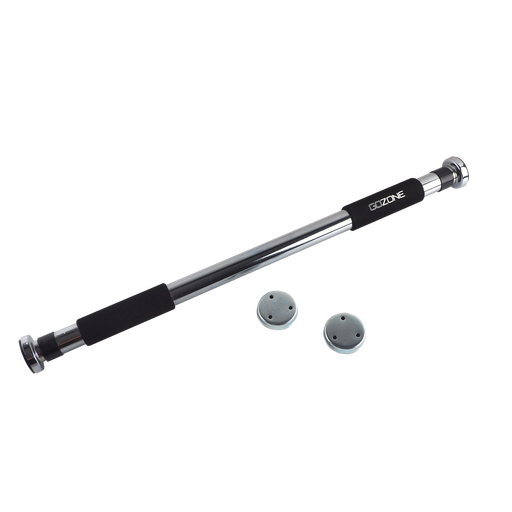
Why This Fits Their Persona: A practical option for UK residents starting upper-body training in a flat or rented home where a full freestanding tower may take up too much room.
Its 62–91cm adjustable range is stated clearly, helping buyers compare it with their door frame before purchase. It uses a locking, no-screw design rather than requiring drilling.
Portable steel construction, foam grips and a listed load capacity of up to 300 pounds. Check the door frame strength before every use.
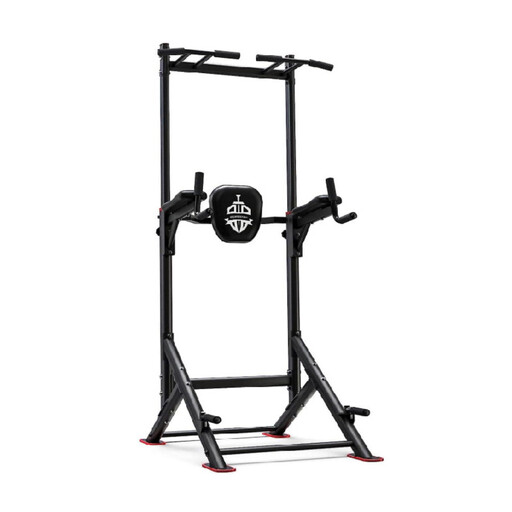
Why This Fits Their Persona: Suitable for households wanting a more structured piece of home gym strength training equipment with several grip options and adjustable height.
The specification lists a double-triangular base, reinforced crossbars and six height levels from 178–235cm, making key stability and fit details easier to assess.
Approximately 2mm steel tubing, three push-up angles and wide and narrow grip positions are listed. Assembly and regular bolt checks are required.
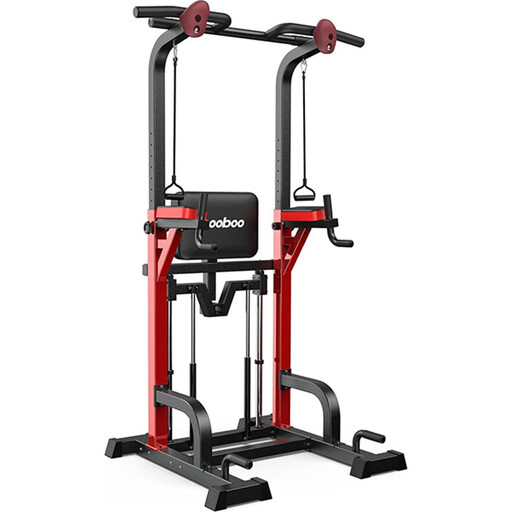
Why This Fits Their Persona: Designed for users who want assisted pull-ups alongside dips and other bodyweight movements while progressing towards unassisted repetitions.
It identifies both the resistance-assisted pad and adjustable height in its product details, rather than leaving beginners to buy separate assistance equipment.
Commercial steel construction, a listed 480-pound capacity and assembled dimensions of approximately 40.7 x 42.1 x 94.4 inches. Verify the supplied load guidance before use.
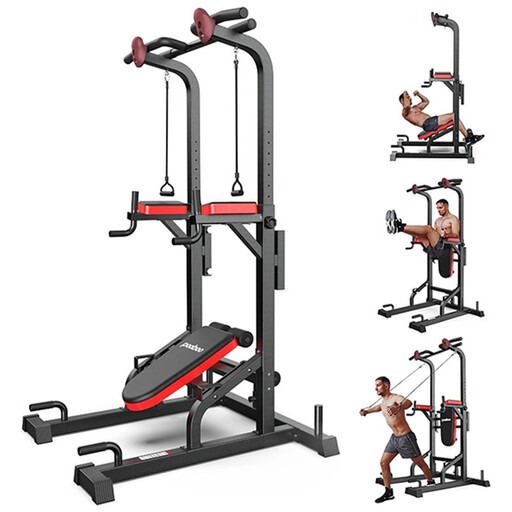
Why This Fits Their Persona: A practical match for users building a broader home gym around bench exercises, pull-ups, dips and core work.
The bench, climbing-grip pull-up bar, dip station and adjustable-height design are all specified, helping you assess whether the extra footprint has a clear purpose.
Heavy-duty steel construction, non-slip features, a listed 480-pound weight-bearing figure and assembled dimensions of 41 x 30 x 99 inches.
Most freestanding towers require assembly. Place the frame on a flat, stable surface, follow the supplied instructions and tighten every connection before exercising. It is sensible to recheck bolts after initial use, then periodically as part of normal maintenance.
Keep the station away from radiators, damp areas and obstructed walkways. Wipe steel and padding with a soft cloth, avoid abrasive cleaners and replace damaged grips or components rather than continuing to use them. For doorway bars, confirm that the frame is strong enough and that the locking system is secure before each session.
Product information is not a substitute for checking the equipment’s instructions, weight limits and any relevant UK safety information. If a product is intended for shared household use, make sure every user can reach the handles comfortably and operate the adjustments correctly.
We have compiled a complete, real-time list of products that fully satisfy these strict selection criteria and UK safety regulations.
Measure the assembled width, depth and height first, then add clearance for movement. A freestanding tower can occupy roughly one square metre or more, while a doorway pull-up bar uses less floor space but offers fewer exercises. Check skirting boards, door trim and ceiling height before ordering.
Lifespan depends on construction, frequency of use, floor conditions and maintenance. A steel frame with secure joints can remain usable for a long period when it is assembled correctly and kept dry. Regularly inspect welds, bolts, padding and grips and stop using the equipment if structural damage appears.