
24/7 Customer Support

Free returns

Same-day & Next-day Delivery

Quality Guaranteed

Unlock Your Welcome Offers: FREE Delivery | Up to 80% OFF | Free 30-day JoyPlus trial
Download the APP
A power tower pull-up bar and dip station can provide several types of strength training in one frame, but the wrong model may become an expensive clothes rack. UK buyers often focus on the advertised weight capacity or number of exercises while overlooking stability, ceiling clearance and adjustment quality.
Before choosing a home gym power tower, watch for these common purchasing traps:
A power tower transfers force through the base during pull-ups, dips and knee raises. Look for a broad footprint, reinforced crossbars, non-slip feet and a frame made from steel or alloy steel. An H-shaped or triangular base can help distribute movement, but the design still needs sufficient room around it.
Measure the intended area before ordering. Compare the assembled dimensions rather than the package size and leave additional space for moving your arms and legs. A tower listed at approximately 94–99 inches high may be unsuitable for a room with a low ceiling, especially when you need clearance above the pull-up bar.
For UK homes, also consider uneven flooring, skirting boards and nearby furniture. A level surface helps the frame sit securely and reduces rocking.
Weight capacity is one of the most visible specifications, but it requires careful reading. A product may list a structural maximum of 440 or 480 lb while giving a lower maximum recommended user weight. Treat the lower recommendation as the practical limit, particularly if you intend to add a weighted belt or perform explosive movements.
High-strength or commercial steel tubing can provide a robust structure, but tubing thickness, bracing and connection points also matter. Check that the instructions explain how bolts should be tightened and that all height adjustments lock securely.
The Sportsroyals models in this guide list a 204 kg maximum load, while several Pooboo models list capacities in pounds. Converting units can make comparison easier: 204 kg is approximately 450 lb. Avoid comparing figures without checking whether they refer to user weight, total load or a manufacturer recommendation.
A pull-up and dip station should match your planned routine rather than simply offer the longest feature list. Common functions include:
An adjustable power tower is useful for households with different users, but check the number and range of height positions. Padded armrests, foam grips and inward-angled handles can improve comfort during longer sessions. These features do not replace controlled technique or correct setup.
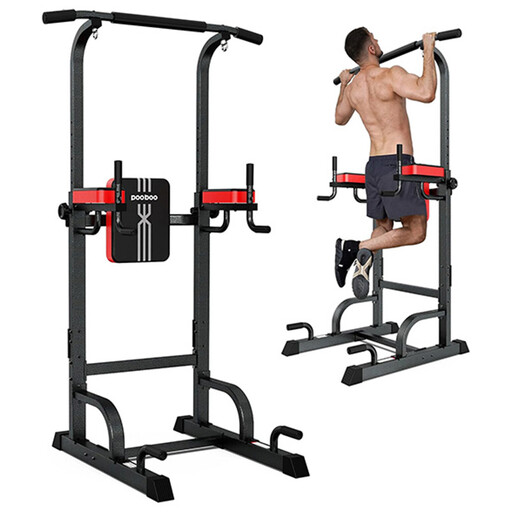
Why This Fits Their Persona: A straightforward option for someone building a first home gym around pull-ups, dips and general strength training without adding a bench or complex attachments.
Its stated 440-pound capacity and adjustable-height design provide clearer buying criteria than choosing by exercise count alone. Assembly and bolt checks remain necessary.
Alloy-steel frame, pull-up and dip functions, adjustable height and a listed 440-pound maximum capacity.
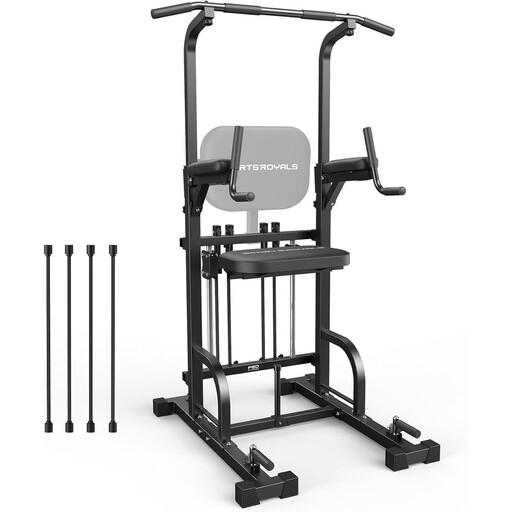
Why This Fits Their Persona: Suitable for households wanting adjustable training support, padded contact points and several exercise options in one free-standing station.
The listing specifies six height levels, eight non-slip rubber feet and a 204 kg maximum load, making the stability features easier to assess.
Assisted pull-up pad, 10–40 kg resistance-band range, rotatable push-up handles and 164.56–221.5 cm height adjustment.
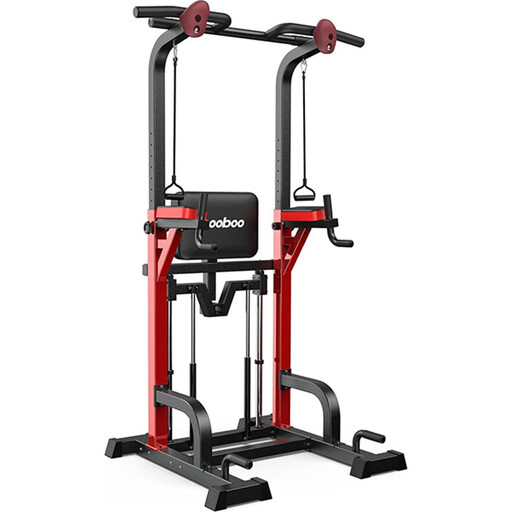
Why This Fits Their Persona: Designed for users who want a commercial-steel frame, assisted pull-up support and a wider full-body workout selection for regular home training.
It identifies both a 480-pound frame capacity and a lower 349.98-pound maximum recommendation, helping buyers avoid treating one headline number as the whole specification.
Commercial-steel construction, adjustable height, pull-up and dip station functions, plus a resistance-assisted pad.
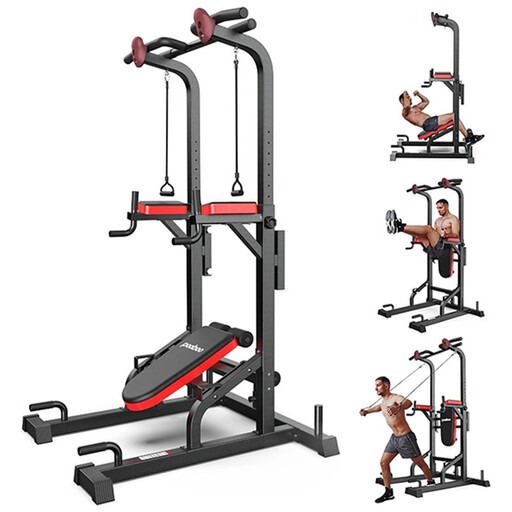
Why This Fits Their Persona: A practical match for users who want a bench alongside pull-up, dip and climbing-grip exercises rather than a single-purpose station.
Its advertised multifunction design is supported by listed components: a bench, rock-climbing grip pull-up bar and dip station. Check the 99-inch height before purchase.
Bench included, adjustable height, non-slip structure and a listed 480-pound weight-bearing capacity.
Most power towers require home assembly. Before the first session:
A tower does not have an ongoing electricity cost, but it does require space, occasional maintenance and enough ceiling height for safe movement. Follow the supplied warnings and never exceed the stated capacity or recommended user limit.
We have compiled a complete, real-time list of products that fully satisfy these strict selection criteria and UK safety regulations.
Yes, provided the height, grip positions and stability suit the user. Beginners may prefer an assisted pull-up station with a resistance pad or bands, allowing them to build control before attempting unsupported repetitions. Start with manageable movements and follow the product instructions.
Check the assembled height first. The products listed here range from approximately 94 to 99 inches, while some adjustable models use metric height ranges. Allow additional clearance above the bar and around the user. Measure the room, flooring and any overhead fittings before ordering.
Lifespan depends on construction, frequency of use, user load and maintenance. Regularly checking bolts, protecting the frame from damp conditions and avoiding loads above the stated limit can help preserve the equipment. Assembly quality is just as important as the headline material description.