Households charging phones and tablets
A portable USB reserve can keep personal devices charged. Plan a separate way to receive updates, since a charged phone cannot restore a disrupted network.


Choose a USB power bank for portable top-ups to phones and tablets during a short interruption; for a laptop, check its charging requirements before relying on one. A portable power station offers a larger stored-energy reserve for several devices or mains-powered chargers, but its capacity does not guarantee a particular runtime. Neither option guarantees a working connection, so plan another way to receive updates if broadband or mobile service fails.
A portable USB reserve can keep personal devices charged. Plan a separate way to receive updates, since a charged phone cannot restore a disrupted network.
Check whether the laptop accepts USB-C charging and what wattage or charger it requires. Compare stored energy in Wh rather than treating a power bank’s mAh label as a laptop-runtime estimate.
Confirm the backup arrangement with the communications and equipment providers. Ofcom explains that a digital landline needs battery backup to work during a power cut; a charged consumer device does not establish that connected support will keep working.
Start with the devices and chargers the household needs, then decide how much stored energy and which outputs the charging source must provide. Keep lighting and access to information as separate parts of the power-cut plan.
| Priority | What to check | Your needs |
|---|---|---|
| Stored energy | Compare labelled Wh where available. Allow for conversion and charging losses rather than converting a mAh label directly into a promised number of full charges. | I want enough reserve for the devices I expect to use and the interruption I am preparing for. |
| Laptop and port output | Check the laptop’s charging method, required wattage and USB-C protocol. Compare those requirements with the relevant port’s output, including its limit when other ports are in use. | If I need to work on a laptop or charge several devices at once, the available ports and shared output matter as much as the battery capacity. |
| Information and light | Keep a battery or wind-up radio, a torch and written contact details accessible. UK Government Prepare warns that serious outages can affect mobile, landline and broadband connections. | A charged phone alone may not let me receive updates or provide household lighting. |
| Battery care | Follow the product’s charging and storage instructions, check for damage or recalls, and choose a reputable retailer. Electrical Safety First specifically advises buying power banks and chargers from a reputable retailer. | I need a battery that is ready when required, with a charging and storage routine I can follow safely. |
| Connected support | Ask the communications and equipment providers how the specific landline, telecare alarm or connected device will work during an outage. Confirm the backup arrangement before relying on it. | If someone depends on a landline or telecare service, keeping a mobile charged does not answer whether that service will remain usable. |
A power bank’s nominal capacity is not the energy delivered to a device. Anker Support UK explains that voltage conversion and device charging reduce usable energy.
Compare labelled Wh, then check the required port output and allow for losses when planning device use.
A station may power a compatible household device, but it cannot keep external broadband or mobile infrastructure operating. UK Government Prepare warns that these services can fail in a serious outage.
Keep a battery or wind-up radio and important numbers on paper rather than depending solely on a network connection.
Battery condition and charging practices matter. A UK product-safety recall identified a fire risk from overheating in the Anker 321 Power Bank (PowerCore 5K, Black) A1112; that notice concerns the identified product, not every Anker power bank.
Follow the instructions for the battery you own, check recall information and do not continue using a damaged or recalled unit.
Ofcom explains that digital landlines need battery backup during a power cut, while UK Government Prepare warns that mobile, landline and broadband services can all be affected in serious circumstances.
Tell the relevant providers about any reliance on emergency calling or connected support, and confirm the arrangement for the particular service and equipment.
These examples illustrate product types and specifications, not a ranking or a claim that every model from a brand has the same capabilities.
Anker’s UK listing for its Power Bank (20K, 87W, Built-In USB-C Cable) describes a compact USB-charging route.
EcoFlow’s UK listing specifies the RIVER 3 portable power station at 245Wh capacity and 300W rated output.
Jackery’s UK listing specifies the Explorer 500 v2 portable power station at 512Wh capacity and 500W output.
These Joybuy options include one portable power station for a larger stored-energy reserve and power banks for portable device charging. A radio, torch and any provider-specific communications backup remain separate decisions.
 No image available
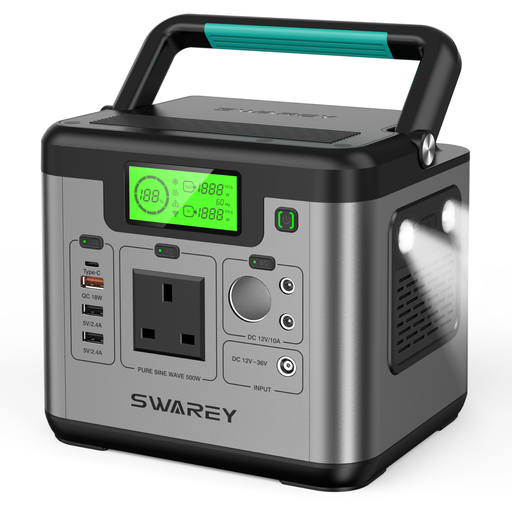
For a household considering a larger reserve for several devices, the product description states 518Wh capacity, 500W rated AC output and a 65W USB-C port. Match each charger to the relevant output and estimate energy use for the intended duration; capacity alone does not establish runtime. Check the unit’s size, recharging arrangements and any solar-input requirements if those affect your plan.
 No image available
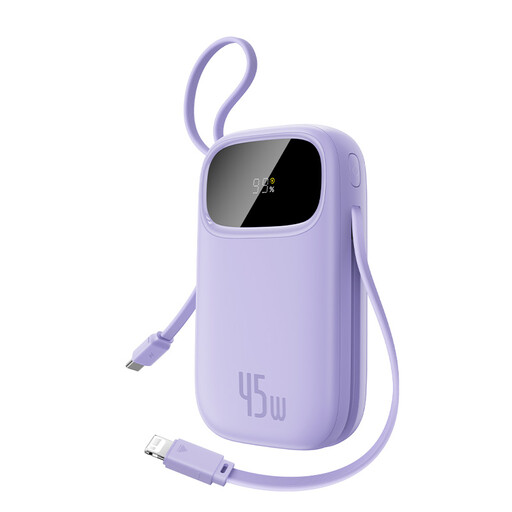
A portable option for topping up personal devices, with built-in USB-C and Lightning cables. The listing states 36.5Wh and up to 45W for one device, but a shared 5V 3A total output when charging several devices; check a laptop’s USB-C requirements before relying on it for laptop power.
 No image available
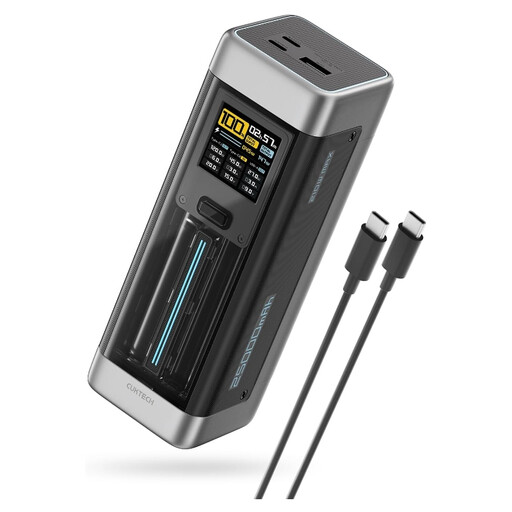
For a laptop that accepts compatible USB-C charging, the listing claims up to 140W USB-C output and identifies two USB-C ports and one USB-A port. Check the laptop’s protocol and wattage, the output available when ports are used together, and labelled energy in Wh before estimating how long the bank will help. Keep the unit ventilated and uncovered during high-output use, as its description instructs.
 No image available
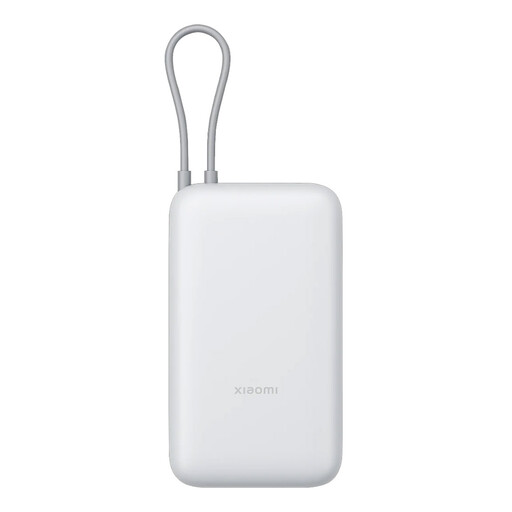
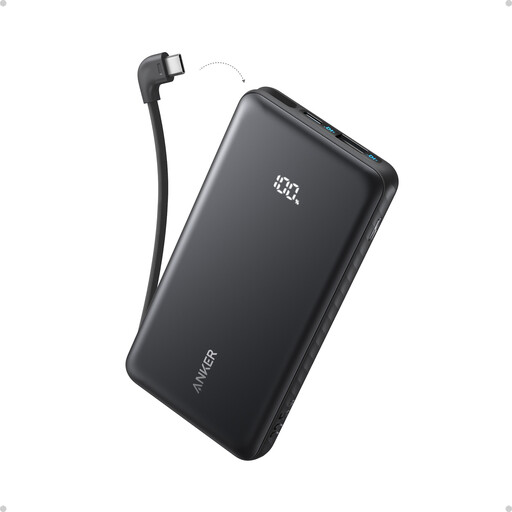
The integrated USB-C cable makes this a phone-and-tablet charging option without a separate cable for that connection. The listing states up to 22.5W under compatible-device conditions; compare labelled Wh with expected use rather than assuming a number of charges from 20,000mAh. Check other port needs separately, and do not assume laptop compatibility.
 No image available
A compact reserve for USB-powered personal devices, with a built-in USB-C cable and listed USB-C and USB-A charging options. The listing states 22.5W output; check labelled Wh for energy planning and confirm any simultaneous-output or laptop-charging requirement before depending on it during a cut.
Start with its labelled energy in Wh, then consider the devices you intend to charge and allow for conversion and device-charging losses. Anker Support UK recommends Wh over mAh alone for comparing power-bank energy; neither figure guarantees a set number of full charges while devices are also in use.
Not necessarily. UK Government Prepare warns that mobile, landline and broadband connections can all be disrupted in serious circumstances. Keep an alternative way to receive updates, such as a battery or wind-up radio, alongside written contact details.
Contact the communications provider and the equipment or care provider before an outage to confirm how the particular service will operate. Ofcom explains that a digital landline needs battery backup during a power cut; a charged mobile or consumer power station does not, by itself, establish that a telecare arrangement will work.
Follow its charging and storage instructions, keep it in suitable condition and check recall information for the exact product. Electrical Safety First advises buying power banks and chargers from a reputable retailer; do not rely on a damaged or recalled battery as your emergency reserve.