Solo cooks making quick hot meals
Grated mozzarella can go straight onto an individual pizza, pasta bake, toastie or jacket potato. Waitrose lists these hot dishes among the uses for its grated mozzarella.


For an occasional one-person pizza, pasta bake or toastie, a smaller pack of grated mozzarella is a practical starting point: it can be scattered over the dish without grating, while a larger pack makes more sense when several meals are planned. Choose spreadable garlic-and-herb soft cheese for its creamy flavour instead of treating it as the same kind of topping, and check the opened-pack instructions before deciding how much to buy.
The useful distinction is whether the meal calls for a scattered topping or a creamy, flavoured ingredient.
Grated mozzarella can go straight onto an individual pizza, pasta bake, toastie or jacket potato. Waitrose lists these hot dishes among the uses for its grated mozzarella.
If only a few meals will use the cheese, compare pack size with the instructions for keeping it after opening. Sainsbury's says to use its resealable 250g grated mozzarella within three days of opening.
Grated mozzarella suits a dish that needs cheese scattered across its surface. Boursin describes its Garlic & Herbs cheese as creamy and spreadable, making it a different choice when garlic-and-herb flavour is the point of the dish.
Start with the cheese's role in the meal, then match the quantity and storage instructions to how often you will use it.
| Priority | What to check | Your needs |
|---|---|---|
| Cheese format | Check whether the product is grated mozzarella for scattering over a hot dish or a spreadable, flavoured soft cheese. Check the stated cooking uses if the recipe calls for a particular result. | For my pizza or toastie, I want a topping I can scatter. For a spread or creamy filling, I may want garlic-and-herb soft cheese instead. |
| Pack size | Compare the amount in the pack with the meals you plan to make. Galbani lists a 180g grated mozzarella pack; Sainsbury's lists around eight servings in its 250g pack, while its Stamford Street Co. 500g pack lists approximately 16. | If I use cheese only occasionally, I want a quantity I can finish. A larger pack is more relevant when several cheese-topped meals are planned. |
| After opening | Read the exact product's refrigeration, sealing and use-by-opening instructions. Sainsbury's says to use its 250g grated mozzarella within three days of opening; its Stamford Street Co. listing advises sealing the 500g product to avoid drying out. | I need to know whether I can use the remaining cheese across the meals I have planned, rather than judging the pack by size alone. |
| Nutrition label | Compare saturates and salt both per 100g and for the portion you expect to use. NHS food-label guidance classifies more than 5g saturates per 100g as high; Boursin lists 26g per 100g for its Garlic & Herbs cheese. | I want to compare the amount going onto one meal, rather than relying on words such as 'mild' or 'medium fat'. |
| Ingredients | Read the current pack's ingredient and allergen statements. The Food Standards Agency identifies milk as a common ingredient in cheese; check the exact product if milk or other ingredients affect your choice. | Where an allergy or ingredient preference matters, I need the label for the cheese I am buying, not an assumption based on its name. |
Boursin describes its Garlic & Herbs cheese as creamy and spreadable, whereas the grated mozzarella products are presented for scattering over hot dishes. The format and garlic-and-herb flavour change the role the cheese plays in a small meal.
Choose grated mozzarella when the dish calls for a shredded topping; choose the flavoured soft cheese when a spread or creamy ingredient fits the recipe.
Sainsbury's lists approximately 16 servings in its Stamford Street Co. 500g grated mozzarella and advises keeping it well sealed to avoid drying out. That quantity may be awkward for an occasional single-portion meal.
Count the cheese-topped meals you expect to make after opening, then compare pack sizes and follow the chosen product's storage instructions.
Cheese left unused or allowed to dry out can become food waste.
A description such as 'medium fat' does not tell you how much saturated fat is in the portion you will use. NHS food-label guidance uses per-100g figures to describe saturated-fat levels.
Read the current saturates and salt figures per 100g and per serving, then consider the amount you intend to add to the meal.
The Food Standards Agency identifies milk as a common ingredient in cheese. A product's exact ingredients and allergen statement matter when an allergy or dietary restriction affects the purchase.
Check the physical pack each time you buy, including any ingredient or suitability statements relevant to you.
These examples show how pack format, stated use and storage instructions can differ; a brand name alone does not settle the choice.
Galbani offers a 180g grated mozzarella in its cooking-mozzarella range.
Its 250g own-label grated mozzarella offers a reference point for several one-person hot meals.
This Sainsbury's line includes a 500g grated mozzarella pack for repeated use.
Waitrose lists a 250g grated mozzarella for hot dishes.
M&S lists a 250g finely grated mozzarella.
Boursin Garlic & Herbs is a flavoured, spreadable soft cheese rather than pre-grated mozzarella.
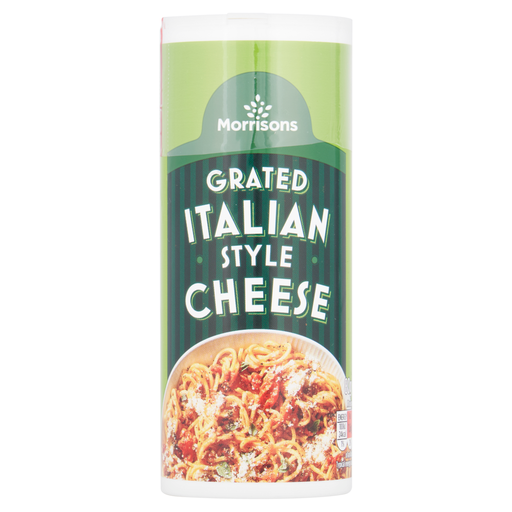
This grated Italian-style cheese is an option to consider for a small hot meal. If your recipe calls specifically for mozzarella, check the cheese type on the product label before choosing it.
 No image available
The 80g pre-grated format is relevant to a small pizza or pasta bake. Check the cheese type if you need mozzarella, and read the current pack for ingredients, allergens and instructions after opening.
Grated mozzarella is a straightforward choice when you want cheese to scatter over a hot dish: Waitrose lists pizza and toasties among the uses for its product. For occasional cooking, compare a smaller pack with the opened-pack instructions before buying a larger quantity.
Use it for a different role rather than expecting the same topping. Boursin describes its Garlic & Herbs cheese as creamy and spreadable; grated mozzarella is the more direct match when a recipe calls for cheese scattered over a baked dish.
Follow the instructions on the exact pack. Sainsbury's says to use its 250g grated mozzarella within three days of opening, and M&S gives the same instruction for its grated mozzarella; keep the cheese refrigerated and sealed as its label directs.
Check the particular product before planning to freeze it. M&S labels its grated mozzarella as not suitable for freezing; that instruction does not establish the rule for every other product.
Read the current ingredient and allergen statement on the exact pack before buying. The Food Standards Agency identifies milk as a common ingredient in cheese, so do not assume a different brand or cheese format avoids it.