For a routine 5K lasting around 30 minutes, you usually do not need a biscuit during the run: University College London Hospitals NHS Foundation Trust says snacks for energy may be needed for activities lasting longer than 60 minutes, while shorter activities may call for them to prevent or treat low blood glucose. If you want something before setting off, neither a digestive nor a custard cream is automatically the better choice; consider when you last ate, whether you have tolerated that biscuit before and its ingredients. The UK Sports Institute also suggests a banana when breakfast has been missed.
Who is this choice relevant to?
New and recreational 5K runners
If you are wondering whether to carry a biscuit for a short run, start with its likely duration rather than assuming you need food along the way. The NHS Couch to 5K plan builds towards a 30-minute continuous run; University College London Hospitals NHS Foundation Trust distinguishes shorter activities from those lasting longer than 60 minutes when discussing energy snacks.
Runners choosing a familiar biscuit
If you would like a biscuit before an easy run, compare the nutrition per biscuit and check that you already tolerate eating it before exercise. A digestive and a custard cream have different recipes, but the biscuit name alone does not tell you which will suit your timing or dietary requirements.
Runners managing low blood glucose
Pre-exercise food decisions may be different if you need to prevent or treat hypoglycaemia. Follow your individual diabetes or glucose-management plan rather than applying general advice for a routine short run; University College London Hospitals NHS Foundation Trust identifies this as a reason snacks may be needed for shorter activities.
What should you check before a 5K?
Decide whether you need to eat at all, then consider timing, the amount in each biscuit and any ingredient restrictions.
| Priority |
What to check |
Your needs |
| Need for food |
Consider the run’s duration and when you last ate. University College London Hospitals NHS Foundation Trust says energy snacks may be needed for activity lasting longer than 60 minutes; for shorter activity, preventing or treating low blood glucose may be the reason to carry one. |
For a routine short 5K, I would rather decide whether I am hungry than assume I need mid-run fuel. If I manage low blood glucose, my individual plan comes first. |
| Eating time |
Think about how close the start is and whether you have eaten that food before running. The UK Sports Institute notes that many athletes eat one to three hours before a run and suggests a banana if breakfast was missed. |
If I am eating shortly before setting off, I want something familiar and a portion I know I tolerate. |
| Per-biscuit values |
Compare like-for-like servings. McVitie’s lists 9.3g carbohydrate and 3.1g fat per Original Digestive; Sainsbury’s lists 8.6g and 2.4g per custard cream, while Asda lists 8.1g and 2.6g respectively. |
I want to know what the biscuit I would actually eat contains, rather than judging a digestive or custard cream by its name. |
| Ingredients |
Read the current pack for allergens and dietary declarations. Sainsbury’s and Asda list wheat and milk in their standard custard creams; Tesco labels its separate Free From Custard Creams gluten free and milk free. |
If wheat or milk matters to me, I need the declaration for the exact product and pack I am buying. |
Common mistakes to avoid
-
Assuming every 5K needs food during the run
Buying or carrying biscuits for a routine short session may be unnecessary. University College London Hospitals NHS Foundation Trust says that, for shorter activities, snacks may be needed to prevent or treat low blood glucose rather than to provide energy for the activity itself.
Consider the duration, when you last ate and whether an individual glucose-management plan changes what you need to carry.
-
Choosing by sweetness instead of checking the serving
A sweet taste does not establish how a biscuit will suit you before running. McVitie’s lists 3.1g fat per Original Digestive, compared with 2.4g per Sainsbury’s custard cream and 2.6g per Asda custard cream; none of those figures tells you your personal tolerance.
Compare the per-biscuit label and try a familiar food during ordinary training rather than making an event your first test.
-
Assuming similar-looking biscuits have the same allergens
The checked standard Sainsbury’s and Asda custard creams contain wheat and milk. Asda also lists possible cross-contact with rye, barley, oats and sesame, while Tesco sells a separately labelled Free From custard cream.
Check the current ingredients and allergen declaration for the exact variant, including any free-from product.
Biscuit brands and product lines
These references concern the named biscuits, not every product made by each brand. Pack labels provide the detail needed for a like-for-like choice.
McVitie’s
Original Digestives are the plain-digestive reference in this biscuit comparison.
- McVitie’s lists 9.3g carbohydrate, 3.1g fat and 0.5g fibre per biscuit.
- The listed recipe includes wheat flour; check the current pack for all ingredients relevant to you.
Tesco
Tesco lists both standard Custard Cream Biscuits and a separate Free From Custard Creams product.
- The standard biscuits are described as vanilla-flavour-filled sandwich biscuits; the Free From variant is labelled gluten free, milk free and suitable for vegans.
- Those declarations belong to different products, so check the exact pack rather than applying one variant’s label to the other.
Sainsbury’s
Its standard Custard Creams provide a per-biscuit reference for comparing sandwich biscuits.
- Sainsbury’s lists 8.6g carbohydrate, 2.4g fat, 1.2g saturates and 3.3g sugars per biscuit.
- The listed ingredients include wheat and milk.
Asda
Asda Custard Creams offer another standard biscuit with per-biscuit nutrition information.
- Asda lists 8.1g carbohydrate, 2.6g fat and 1.5g saturates per biscuit.
- Asda declares wheat and milk, and possible cross-contact with rye, barley, oats and sesame.
M&S
Extra Cream Custard Creams are a distinct variant; compare their panel on the same serving basis as other biscuits before drawing conclusions.
- M&S lists 68.2g carbohydrate, 23.4g fat and 13.5g saturates per 100g.
- The listed ingredients include wheat, milk and soya.
Crawford’s
Crawford’s Custard Creams are listed by Tesco in a 300g pack.
- The named pack is an option if you specifically want a classic custard cream.
- Use the current pack’s nutrition and allergen declaration when comparing it with another biscuit.
Joybuy biscuit options
These Joybuy listings include custard creams and plain digestives for readers considering a familiar biscuit before a 5K. Compare the exact variant and pack rather than treating a product name as evidence that it will suit your run.
 No image available
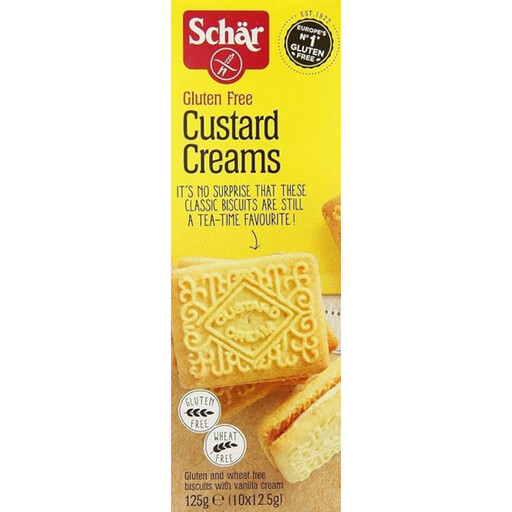
Schar Gluten Free Custard Creams 125g
A custard-cream option if you want to check a gluten-free variant for a familiar pre-run biscuit. Confirm the current pack’s full allergen declaration and per-biscuit nutrition for your needs.
View on Joybuy
 No image available
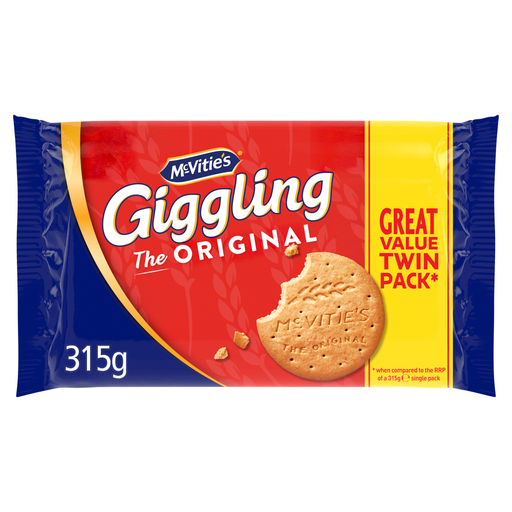
McVitie’s Digestives The Original 2x315g
A plain digestive to consider if you already tolerate biscuits before running. McVitie’s lists 9.3g carbohydrate, 3.1g fat and 0.5g fibre per Original Digestive; the listed recipe includes wheat flour.
View on Joybuy
 No image available
Gullon Zero Sugar Free Original Digestives 400g
A digestive variant for shoppers comparing biscuit ingredients before a run. Check the current pack’s serving size, nutrition, ingredients and any usage warnings; the product name alone does not establish how it will suit your timing.
View on Joybuy
Questions about biscuits and 5K runs
Do I need a biscuit during a 5K?
Usually not for a routine short run. University College London Hospitals NHS Foundation Trust says energy snacks may be needed for activities lasting longer than 60 minutes; for shorter activities, they may be needed to prevent or treat low blood glucose. The NHS Couch to 5K plan builds towards a 30-minute run, but an individual glucose-management plan takes precedence over general snack advice.
Is a digestive or a custard cream the better pre-run biscuit?
Neither is automatically the better choice before a 5K: timing, personal tolerance and the exact product matter. McVitie’s lists 9.3g carbohydrate and 3.1g fat per Original Digestive; Sainsbury’s lists 8.6g and 2.4g per custard cream, and Asda lists 8.1g and 2.6g. Compare per-biscuit figures rather than assuming the digestive contains less fat.
What if I am hungry shortly before running?
Choose a familiar food that you have tolerated before exercise, allowing for the time until you start. The UK Sports Institute suggests a banana if breakfast has been missed and notes that many athletes eat one to three hours before running; what timing suits you can differ.
Are standard custard creams gluten free or milk free?
The checked standard Sainsbury’s and Asda custard creams contain wheat and milk, so do not treat those products as gluten-free or milk-free options. Tesco separately labels its Free From Custard Creams gluten free and milk free. Read the current declaration on whichever exact pack you choose.


