Choose a marshmallow-flavoured cereal-bar multipack if separate bars are useful, but check whether each bar is individually wrapped before relying on it for a packed snack. If you want plain marshmallows, a loose bag lets you make your own portions; M&S also has a vegan bag for shoppers avoiding gelatine. For exercise lasting more than 60 minutes, assess a small sweet portion against your wider carbohydrate plan: the Gatorade Sports Science Institute’s guidance scales pre-exercise intake to body mass and timing.
Who these pack formats suit
Gym-goers carrying a small snack
A bar-sized portion is convenient to set aside before training, while a loose bag needs dividing at home. For exercise lasting more than 60 minutes, the Gatorade Sports Science Institute’s pre-exercise carbohydrate guidance depends on body mass and timing; one small portion should not be treated as the whole plan.
People preparing packed snacks
Separate bars avoid carrying an open shared bag, although you should check the pack if individual wrappers matter. A privately packed lunch is also a different question from food supplied by a school in England, where school-food standards restrict confectionery.
Shoppers checking ingredients and allergens
Tesco’s plain marshmallows list beef gelatine and Waitrose’s mini marshmallows list pork gelatine. M&S describes its Vegan Marshmallows as free from animal products, but also says they are not suitable for people with milk, nut or peanut allergies. Check the current pack for the product you intend to eat.
What to check before buying
Decide whether you need separate portions or plain marshmallows first, then compare the stated portion, ingredients and where the snack will be used.
| Priority | What to check | Your needs |
|---|
| Pack format |
Check the number and size of portions, whether each is wrapped, and whether a loose bag needs a separate container. A cereal bar with marshmallow-flavoured coating is not plain marshmallows. |
I want to pack a portion without dividing an open bag just before leaving. If individual wrappers matter, I need to confirm them on the pack. |
| Exercise timing |
Tesco lists 19.7 g carbohydrate per 25 g portion of its marshmallows; its Kellogg’s listing gives 21 g per 28 g bar. For exercise lasting more than 60 minutes, the Gatorade Sports Science Institute recommends 1–4 g carbohydrate per kg body mass in the 1–4 hours beforehand. |
A small sweet might fit alongside other pre-exercise food, but I need to consider the session length and timing rather than assume one portion is enough. |
| Ingredients |
Read the current gelatine source and allergen statement. Tesco lists beef gelatine, Waitrose lists pork gelatine, and M&S describes its Vegan Marshmallows as free from animal products while flagging milk, nut and peanut allergy suitability limits. |
If I am avoiding animal-derived ingredients or buying for someone with an allergy, the exact product and current label matter more than the word “marshmallow”. |
| School use |
Distinguish food supplied by a school from a privately packed lunch. England’s school-food regulations define confectionery to include non-chocolate confectionery and cereal bars; Department for Education guidance restricts confectionery across the school day. |
For an England school-provided snack, I need an option other than these sweets or cereal bars. For a privately packed lunch, I would check the school’s policy. |
Mistakes to avoid
-
Assuming a marshmallow-flavoured bar contains plain marshmallows
Kellogg’s Rice Krispies Squares Marshmallow bars are cereal bars with marshmallow-flavoured coating; Tesco’s plain marshmallows are a different product with different ingredients and portion information.
Choose the bar format for separate units, or a plain-marshmallow bag if that is the product you want and you can portion it yourself.
-
Treating one sweet portion as a long-session fuelling plan
Tesco lists 19.7 g carbohydrate per 25 g marshmallow portion, and its Kellogg’s listing gives 21 g per 28 g bar. The Gatorade Sports Science Institute’s guidance for exercise lasting more than 60 minutes is scaled to body mass and the time before exercise.
Compare the portion with your wider food plan and the timing of your session rather than assuming one bar or handful is enough.
-
Assuming all marshmallows meet the same dietary needs
Tesco and Waitrose list different animal sources of gelatine in their plain marshmallows. M&S describes its Vegan Marshmallows as free from animal products but flags milk, nut and peanut allergy suitability limits.
Read the current ingredients and allergen statement on the exact pack, particularly when buying for someone else.
-
Applying a school-food rule to every packed lunch
England’s school-food standards address food supplied by schools. They do not, by themselves, establish a ban on every privately packed sweet snack throughout the UK.
Do not select marshmallows or these cereal bars for school-provided food in England. For a privately packed lunch, check the individual school’s policy and the rules relevant to its location.
Relevant brand references
Tesco
Tesco’s 200 g bag is a plain pink-and-white marshmallow option for shoppers prepared to divide a loose bag into portions.
- Tesco gives nutrition for a stated 25 g portion: 19.7 g carbohydrate and 15.4 g sugars.
- The bag is not individually portioned, and its ingredients include beef gelatine.
M&S
M&S describes its 140 g Vegan Marshmallows as free from animal products and lists carrageenan as the gelling agent.
- The vegan formulation offers an alternative to the listed beef- and pork-gelatine products.
- It is a loose bag, and M&S says it is not suitable for people with milk, nut or peanut allergies.
Waitrose
Waitrose lists Cooks Ingredients Mini Pink & White Marshmallows in a 150 g bag for shoppers who want smaller pieces to portion themselves.
- The mini format gives you flexibility when dividing the bag at home.
- The marshmallows are not individually wrapped and their ingredients include pork gelatine.
Joybuy snack options
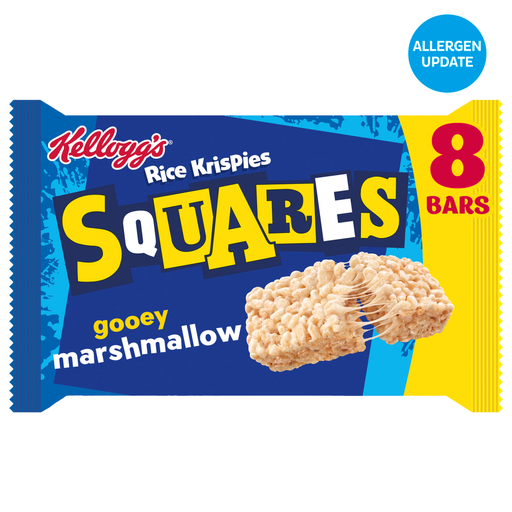
This marshmallow-flavoured cereal-bar multipack is an option if you want several stated 28 g portions; it is not a multipack of plain marshmallows. Check the packaging if carrying each bar in its own wrapper is important.
 No image available
Kellogg's Rice Krispies Squares Marshmallow Snack Bars, 8 x 28 g
Eight 28 g bars let you set aside a stated portion for a packed snack, but check the pack if you need each bar individually wrapped. The product information gives 21 g carbohydrate and 9.0 g sugars per bar. These are cereal bars with marshmallow-flavoured coating, not plain marshmallows; do not assume one bar meets the carbohydrate needs of exercise lasting more than 60 minutes.
View on Joybuy
Common questions
Is one marshmallow portion enough before a workout?
Do not assume it is enough for exercise lasting more than 60 minutes. Tesco lists 19.7 g carbohydrate per 25 g portion of its marshmallows and 21 g per 28 g Kellogg’s bar; the Gatorade Sports Science Institute recommends 1–4 g carbohydrate per kg body mass in the 1–4 hours before exercise of that duration. Consider the portion alongside the rest of your pre-exercise food and its timing.
Can schools in England provide marshmallows as a snack?
No: England’s School Food Standards classify non-chocolate confectionery and cereal bars as confectionery, and Department for Education guidance restricts confectionery across the school day. That school-provided-food rule does not establish the policy for a privately packed lunch or the rules in other UK nations.
Are plain marshmallows vegetarian or vegan?
Not necessarily. Tesco lists beef gelatine and Waitrose lists pork gelatine in the plain marshmallows discussed here. M&S describes its Vegan Marshmallows as free from animal products and lists carrageenan; check the current pack before buying.
Which allergen information matters for these snacks?
Check the label of the exact product. Tesco’s Kellogg’s Rice Krispies Squares Marshmallow listing identifies wheat gluten and milk and warns of possible other gluten-containing cereals and soya. M&S says its Vegan Marshmallows are not suitable for people with milk, nut or peanut allergies; “vegan” does not settle those separate allergy questions.


