What should you compare?
Start with when you plan to eat, then compare nutrition per bar, portion size and the total pack contents.
| Priority | What to check | Your needs |
|---|
| Workout timing |
Check the time since your last meal and the time until exercise. University College London Hospitals NHS Foundation Trust describes carbohydrate and protein with minimal fat for a snack 60–90 minutes beforehand; its advice differs for a snack just 15–30 minutes beforehand. |
If I am eating shortly before training, I want to choose for that shorter interval rather than assume any multipack bar will do. |
| Nutrition per bar |
Compare carbohydrate, protein and fat on the same per-bar basis. TREK lists 22g carbohydrate, 9g protein and 11g fat per 50g Cocoa Oat bar; Tesco lists 13g carbohydrate, 2.3g protein and 6.7g fat per 30g Graze Honey Oat Boost. |
I want the carbohydrate, protein and fat figures for the portion I would actually eat, not just a prominent figure on the front of the pack. |
| Pack and portion |
Check the number of bars, grams per bar and total pack weight. Compare like-sized portions before choosing several packs of a flavour you have not tried. |
A smaller bar may be easier for me to fit around a session; at other times I may prefer a larger portion. |
| Ingredients and allergens |
Read the current ingredients and precautionary allergen statement for the exact variant. The Food Standards Agency says ‘may contain’ labelling signals possible unintended allergen presence through cross-contamination. |
If I need to avoid an ingredient or allergen, I want to check the actual pack before buying several. |
Joybuy snack-bar multipacks
These packs include larger protein-bar and flapjack portions alongside a smaller oat-bar option. Compare each exact flavour and pack size against when you plan to eat it.
 No image available
TREK High Protein Cocoa Oat Flapjack 16 x 50g
A larger oat-flapjack portion to compare with smaller bars before training. TREK lists 22g carbohydrate, 9g protein and 11g fat per 50g Cocoa Oat bar, with a precautionary warning for peanuts, nuts and milk.
 No image available
Nature Valley Protein Peanut & Chocolate 8 x 40g
An eight-bar pack for comparing 40g protein-bar portions. Nature Valley states 10g protein and 4g fibre per bar; check the Peanut & Chocolate pack’s declaration for peanuts, soya and milk.
 No image available
Nature Valley Protein Salted Caramel Nut 4 x 40g
A four-pack of 40g bars if you prefer this flavour or want fewer portions in a pack. Check its own carbohydrate, protein and fat figures and allergen declaration before choosing it for a pre-workout snack.
 No image available
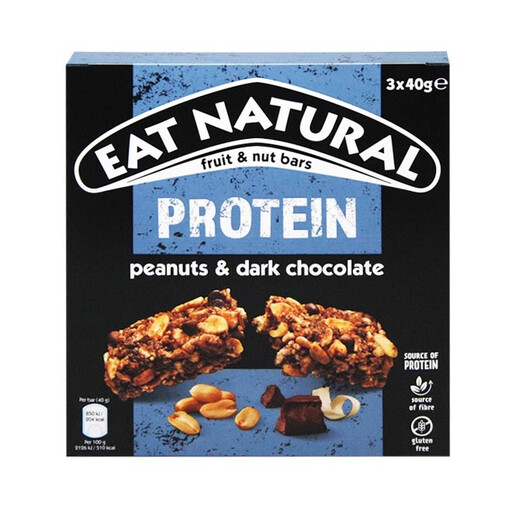
Eat Natural Peanuts & Chocolate Energy Bar 3 x 40g
A three-pack for shoppers considering a peanut-and-chocolate bar. Check this variant’s per-bar nutrition and allergen statement rather than applying figures from another Eat Natural flavour.
 No image available
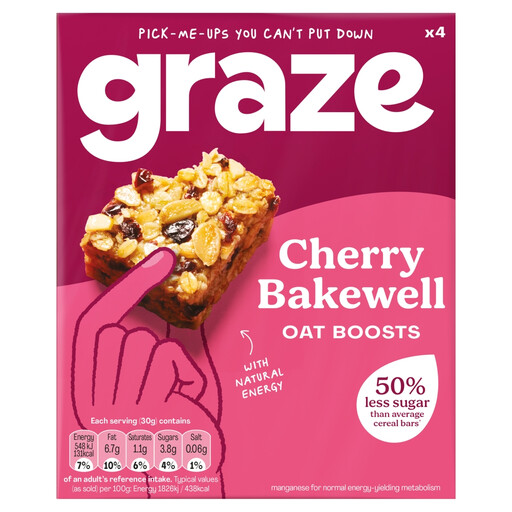
Graze Oat Boosts Cherry Bakewell 4 x 30g
Four 30g oat bars for someone comparing smaller portions. Check the Cherry Bakewell flavour’s own nutrition and allergen panel; figures for Honey Oat Boosts describe a different flavour.
Common questions
When should I eat a snack before a workout?
University College London Hospitals NHS Foundation Trust describes a carbohydrate-and-protein snack with minimal fat 60–90 minutes before exercise if you have not eaten a meal in the preceding 2–3 hours. For a snack only 15–30 minutes beforehand, its guidance instead points to faster-acting carbohydrate; check the timing before assuming a particular bar fits.
Does a bigger multipack automatically make a better pre-workout choice?
No. Compare the number and size of bars with carbohydrate, protein, fat and allergens per portion. A pack containing more bars does not change what is in the bar you eat before a session.
Which of the named bars provides more protein per bar?
For the specific products described by their makers and retailer listings, Nature Valley Protein Peanut & Chocolate has 10g per 40g bar, TREK Cocoa Oat has 9g per 50g bar, Eat Natural Maple Syrup, Pecans & Peanuts has 8g per 40g bar, and nākd Peanut Butter has 7.6g per 45g bar. These figures do not establish which is suitable for your workout timing; compare fat and carbohydrate too.
What does ‘may contain’ mean on a snack-bar pack?
The Food Standards Agency says precautionary allergen wording indicates that an allergen could be unintentionally present through cross-contamination. If an allergen matters to you, read the statement on the current physical pack as well as the ingredients list.


