
24/7 Customer Support

Free returns

Same-day & Next-day Delivery

Quality Guaranteed

Unlock Your Welcome Offers: FREE Delivery | Up to 80% OFF | Free 30-day JoyPlus trial
Download the APP
A precision screwdriver set can be a practical addition to a UK home workshop, repair bench or tool drawer. However, choosing one based only on the number of bits or an attractive case can lead to damaged screw heads, uncomfortable handling and a kit that does not suit the job.
As the Joybuy Product Recommendation Officer, I focus on separating useful specifications from marketing language. The following guide explains what to check before buying, then matches several options to different usage profiles.
A set with 50 or 60 bits may sound versatile, but the important question is whether it includes the profiles and sizes you actually need. Phones, laptops and games consoles may use small Torx, Phillips, tri-wing, pentalobe or security screws, while watches and glasses usually need finer slotted and Phillips sizes.
A smaller mini screwdriver set with the right bits can be more useful than a larger kit filled with duplicates. Check the full bit list rather than relying on the number shown in the product title.
Magnetic tips help hold a small screw during alignment, particularly when working inside a laptop or camera. However, magnets may not be suitable around certain sensitive components or magnetic storage media. Use magnetic bits carefully and keep loose screws organised.
A magnetic case is also only useful if it keeps bits secure and makes identification easy. A loose collection of bits can slow down a repair and increase the chance of using the wrong size.
A cordless screwdriver can reduce wrist movement during repeated repairs, but high torque is not automatically an advantage for delicate electronics. Excessive force can strip a small screw or damage a threaded mounting point.
For an electric precision screwdriver, look for adjustable torque settings, a low-speed motor and a manual override where available. Larger DIY screwdrivers are intended for different work and may not provide the control required for phones, watches or circuit-board enclosures.
For general electronics repair, useful profiles may include:
For frequent use, S2 steel or chrome vanadium steel bits are practical material choices. The material alone does not guarantee longevity, so also check whether the bit is precisely formed and whether the set includes a storage case to prevent damage and loss.
Manual tools provide direct feedback, which is useful when a screw begins to tighten. A rotating cap or fine-grip handle can help with one-handed operation.
Electric models should be assessed by their stated torque range. For example, the Fanttik E2 Ultra offers five settings from 0.05 to 0.6 N·m, while the Fanttik E1 Max lists electric torque settings of 0.05 and 0.2 N·m, alongside manual torque capability. These figures are more informative than descriptions such as “powerful” or “professional”.
For furniture, construction and heavier household tasks, a conventional cordless screwdriver may be more appropriate. For small electronics, choose lower torque and use the manual function when the screw is nearly seated.
A good computer repair screwdriver should allow controlled turning without excessive pressure. Rotating end caps, textured grips and slim shafts can make a noticeable difference when working with small screws.
Storage is equally important. A sliding case, magnetic tray or labelled bit holder helps prevent lost components. If you regularly work in recessed areas, consider extended bits or a detachable handle. Always use the correct size, keep the driver aligned with the screw and avoid using a precision tool as a pry bar.
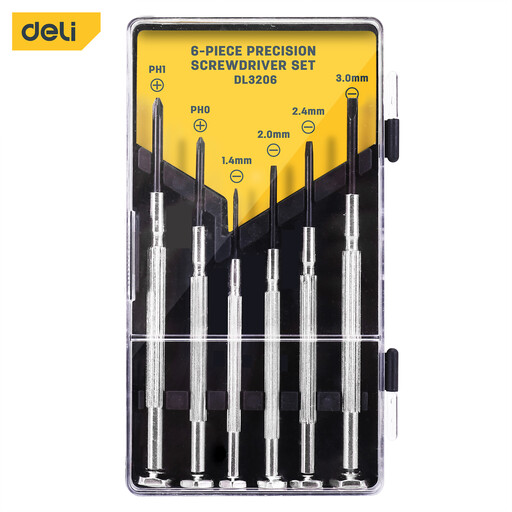
Why This Fits Their Persona: A compact starting point for occasional repairs to glasses, watches, small electronics and household items.
It focuses on six specified tools rather than overstating bit quantity, with two Phillips and four slotted screwdrivers.
Metal shafts, rotating tops and a portable design suit controlled one-handed work.
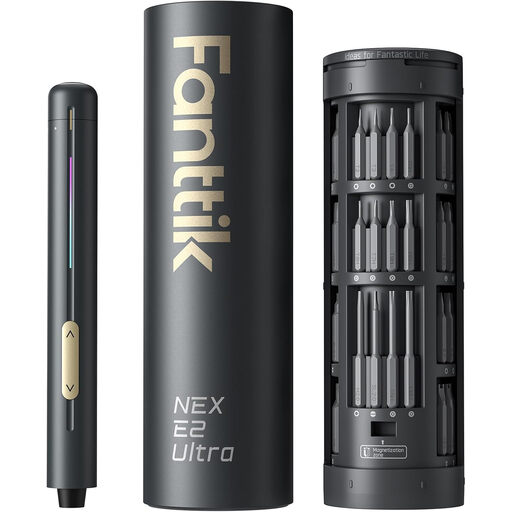
Why This Fits Their Persona: Suitable for makers and electronics hobbyists who want repeatable low-torque fastening in a compact rechargeable tool.
Five torque settings, including 0.05 N·m, provide more adjustment than a fixed-output electric driver.
Includes 50 S2 steel bits, USB-C charging, magnetic storage and a 270 RPM motor.
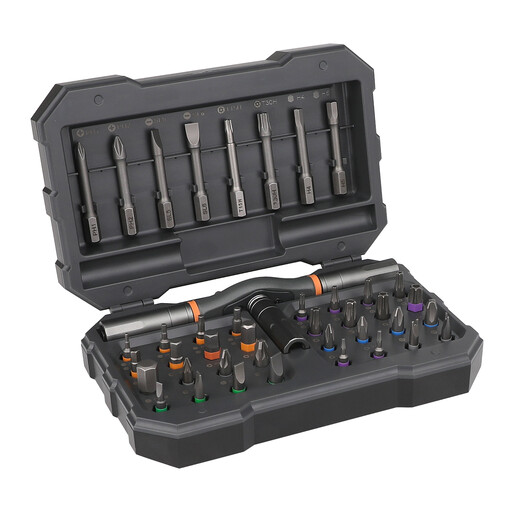
Why This Fits Their Persona: A practical choice for users moving between computer repair, bicycles, furniture, watches and deeper fasteners.
The ratchet mechanism supports repeated turning, while 45 mm extended bits address recessed access.
Includes 40 bits, eight extended bits, forward/reverse switching and magnetic bit retention.
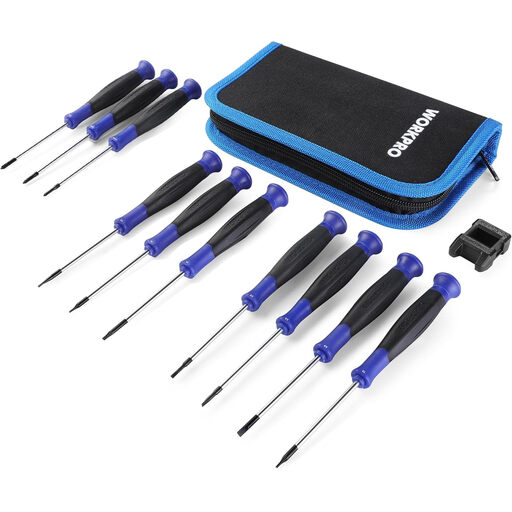
Why This Fits Their Persona: A manual set for homeowners who want common small-driver sizes without moving to a rechargeable tool.
The listed SL, PH and Torx range makes coverage clear, rather than relying on an unspecified “universal” claim.
Chrome vanadium shafts, magnetic tips, rotating caps and a nylon storage bag are specified.
We have compiled a complete, real-time list of products that fully satisfy these strict selection criteria and UK safety regulations.
Look for small Phillips, Torx, pentalobe and tri-wing bits, depending on the phone model. Check the repair guide or screw specifications before buying, as bit requirements vary. A compact phone repair tools kit with magnetic storage can help keep the screws organised.
They can be useful for repeated assembly and disassembly, particularly when they offer low torque settings and manual operation. They are less suitable for heavy fastening, furniture or large appliances. For occasional work, a manual set may be simpler and does not require charging.
Wipe bits and handles with a dry cloth after use, remove debris and store the tools in their case. Keep the set dry to reduce corrosion. Inspect tips for wear and replace damaged bits rather than forcing them into a screw head. Use safety glasses for repair work and disconnect electrical equipment before opening it.