
24/7 Customer Support

Free returns

Same-day & Next-day Delivery

Quality Guaranteed

Unlock Your Welcome Offers: FREE Delivery | Up to 80% OFF | Free 30-day JoyPlus trial
Download the APP
A precision screwdriver set can be useful for repairing laptops, glasses, game controllers, bicycles and household items. However, compact kits often look more capable than they are. A large bit count does not automatically mean better coverage, and an electric handle is not always suitable for delicate components.
As Joybuy’s Product Recommendation Officer, I focus on the specifications that affect everyday use rather than relying on promotional wording. The following guide highlights common buying traps, key measurements and suitable options for different UK households and repair tasks.
A listing may advertise 40, 52 or 60 bits, but several may be near-identical sizes. Before buying, check the actual bit chart. For electronics, useful profiles often include Phillips PH000–PH2, slotted bits, Torx and security Torx, hex, tri-point, Pentalobe and Y-shaped bits.
If you mainly repair spectacles or watches, very small Phillips, slotted and Torx sizes matter more than a large selection of standard household bits. For bicycles, larger hex and Torx bits are usually more relevant.
An electric precision screwdriver is designed to reduce repetitive turning, not replace a full-size driver or torque wrench. A stated electric torque range such as 0.1–0.35 N·m is intended for small fasteners. Manual locking torque may be several times higher, but that does not mean the tool is suitable for heavy-duty fastening.
For bicycle stems, brake components or motorcycle work, use a dedicated digital torque screwdriver or calibrated mechanical torque wrench where the manufacturer specifies a tightening value. Applying excessive force with a mini electric screwdriver can damage threads, housings or the tool itself.
Loose bits are easy to misplace, particularly when working at a kitchen table or in a small flat. A screwdriver set with storage case is generally more practical than a larger unorganised collection. Also check the charging method, stated charge time and whether the kit includes tweezers, pry tools or extension bits.
Battery figures should be read carefully. “One hour of operation” normally refers to continuous use under stated conditions, not several hours of constant screw-driving during ordinary household repairs.
Look for clearly labelled bits made from a suitable tool steel, such as S2 steel, and check whether the set uses a standard 4 mm precision-bit format or another size. A magnetic interface can help retain bits, but magnetism does not compensate for a poorly matched or worn bit.
For computer and electronics repair tools, longer bits or an extension shaft can help reach recessed screws. A bit that is too short may force you to tilt the handle, increasing the risk of slipping.
Torque is measured in newton metres (N·m). Lower values are relevant to small electronics, while bicycle and automotive fasteners usually require a wider or higher range. A digital display can make adjustments easier to read, but buyers should check whether it displays electric torque, manual torque or both.
For bicycle maintenance, a 2–26 N·m torque range covers many common bike-related fastening tasks. For larger automotive or motorcycle jobs, a tool with a range extending into tens or hundreds of N·m may be more appropriate. Always follow the vehicle or component manufacturer’s torque instructions.
An aluminium handle may provide a firm, compact grip, while a ratcheting handle can reduce repeated wrist movement. For an electric screwdriver, compare battery capacity, charging time and continuous-use information. USB charging can be convenient in a home office or workshop, but it is sensible to use the supplied cable and a compatible power adapter.
A compact case should hold the handle, bits and accessories securely. Rotating tube storage saves space, whereas a square magnetic box may make individual tools easier to identify on a workbench.
The following products are matched to different types of UK users, rather than ranked in a single order.
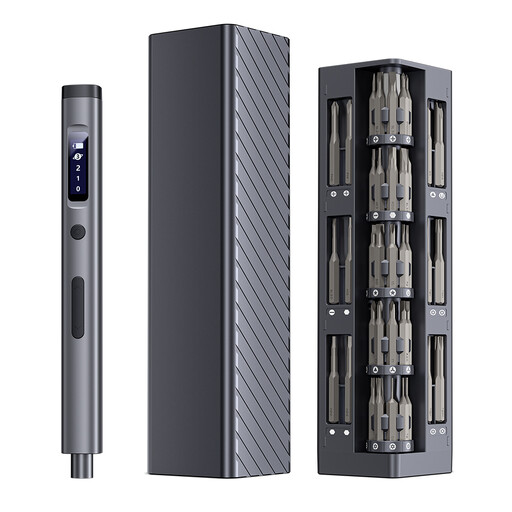
Why This Fits Their Persona: A practical starting point for occasional electronics repair, household DIY and small disassembly jobs where a broad bit selection is useful.
The listing specifies the bit profiles, electric torque range and included accessories instead of relying only on a total bit count.
52 bits, 0.1–0.35 N·m electric torque, 3 N·m manual torque, 500mAh battery and magnetic cube storage box.
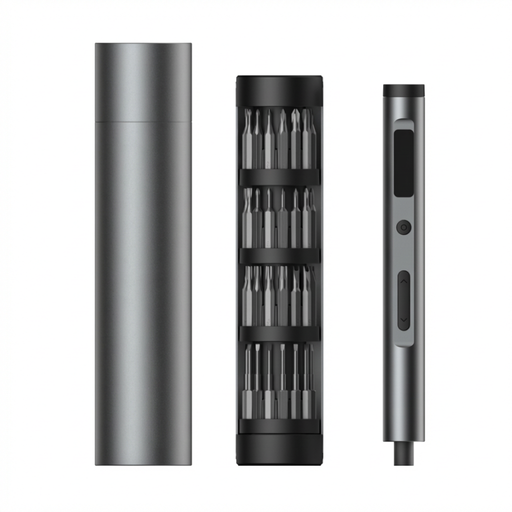
Why This Fits Their Persona: Its compact format suits computer repairs, office drawers, hobby benches and users who need many small bit profiles without a full-sized toolbox.
The included 35 mm extension bits help with recessed screws, while the specified 0.1–0.3 N·m electric range clarifies its intended light-duty use.
60 listed bits, 500mAh rechargeable battery, digital torque display and rotating tube storage.
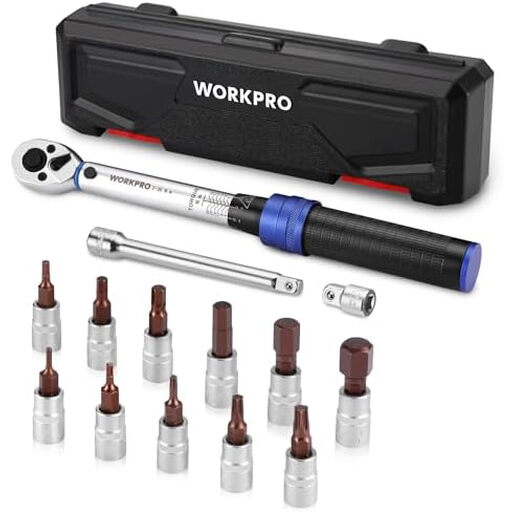
Why This Fits Their Persona: A dedicated option for cyclists and motorcycle owners who need controlled fastening rather than a low-torque electric handle.
Its 2–26 N·m range is clearly stated, avoiding the mistake of using an electronics screwdriver for bicycle components.
72-tooth reversible mechanism, ±3% stated accuracy, S2 steel bits, extension bar and socket adapter.
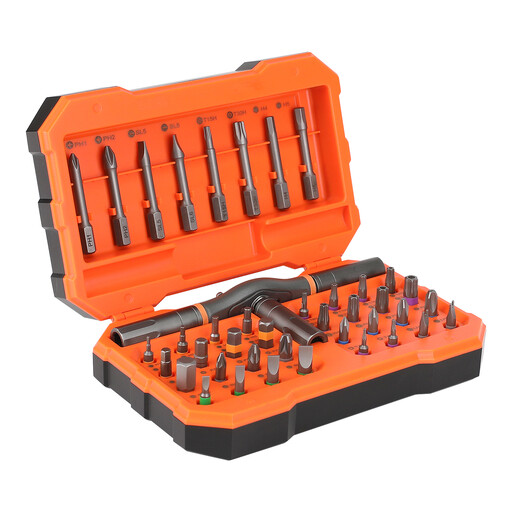
Why This Fits Their Persona: A manual DIY screwdriver kit for fathers, hobbyists and home repair users who prefer a ratcheting handle for furniture, bicycles, watches and general fixes.
The detachable T-handle, magnetic bit interface and extended bits offer practical access rather than simply increasing the advertised bit count.
40 bits plus eight 45 mm extended bits, S2 tool-steel components, ratchet function and magnetic storage case.
It can be suitable for removing and replacing small laptop screws when its torque range is appropriate. Use the correct bit, avoid forcing seized screws and check the repair guide for the device. It is not a substitute for specialist equipment used on powered or high-voltage systems.
Battery life depends on torque, load, storage and charging habits. The listed EasyWox models specify approximately one hour of continuous use, with charging times of around 90–120 minutes. Occasional home use may require charging less often, but battery capacity can reduce over time.
For components with specified tightening values, a bicycle torque wrench set is more appropriate than a low-torque electric screwdriver. A range such as 2–26 N·m covers many bicycle fastening tasks, but always follow the torque values provided by the bicycle or component manufacturer.