Solo shoppers avoiding pastry waste
Choose an individual croissant or a two-pack when you want one pastry now without leaving several to use up. A four-pack is more workable when the current label allows freezing or you can share the remainder.


For a premium-style croissant meal for one, an individual croissant or two-pack is the more practical choice when avoiding leftovers matters most. Four-packs can work when you can share them or follow the pack’s freezing and storage instructions, but check the current allergen and per-croissant nutrition information before treating an all-butter croissant as an everyday single-serving option.
Choose an individual croissant or a two-pack when you want one pastry now without leaving several to use up. A four-pack is more workable when the current label allows freezing or you can share the remainder.
Compare the stated butter content, recipe details and warming guidance rather than relying on a premium range name alone. Retailer descriptions can help shortlist products, but they are not independent taste-test results.
Check wheat or gluten, milk and egg on the exact product before buying. Prepacked and in-store bakery pastries can have different trace-allergen statements, so the current label matters.
For a single-person meal, start with the number of croissants you can realistically use, then compare recipe details, storage instructions and the information on the current pack.
| Priority | What to check | Your needs |
|---|---|---|
| Pack size and leftovers | Check the pack or serving count; review freezing instructions; read any use-within guidance after opening. | I want one croissant for this meal without having to rush through several more. If I choose a multipack, I need a realistic plan to freeze, share or use the extras. |
| Butter recipe and warming | Compare declared butter content where shown; note recipe-origin details; warm only when the product instructions allow it. | I am choosing for an all-butter style and may prefer a croissant that can be warmed. A premium label alone does not tell me how the recipe or texture will suit me. |
| Allergens and serving nutrition | Read the ingredient and allergen statement; check may-contain wording separately; compare saturated fat per croissant rather than only per 100 g. | I need the exact item to fit my dietary requirements, and I want to understand the nutrition for the pastry I am actually eating. |
A lower unit price does not make four pastries equally convenient for one person if they will not be used while at their best quality.
Choose an individual croissant or two-pack for immediate use. With a four-pack, check the best-before date, freezing instruction and any rule for using pastries after defrosting.
The practical burden can be food waste or the need for freezer space.
French butter, declared butter percentage and warming guidance are useful product details, but they do not establish an overall taste winner.
Shortlist by the recipe, portion format and storage guidance you value, then choose the format and flavour profile that suit your own meal routine.
The verified supermarket examples contain wheat or gluten, milk and egg, while trace warnings can vary by product. Several also list high saturated-fat traffic-light values per croissant.
Read the current ingredients, allergen statement and per-croissant nutrition panel instead of relying on the product title or an older listing.
A temporary member price can make a four-pack look more favourable than it will be on another shopping trip.
Compare the standard shelf price, any loyalty price, pack count and the number of pastries you expect to eat or store.
Waitrose describes its No.1 two-croissant pack as prepared in France with French-churned butter and French flour.
M&S offers all-butter, reduced-fat, filled and Made Without croissant variants; its 160 g all-butter product lists 29% butter.
Taste the Difference Butter Croissants are a four-pack made with 29% French butter and may be eaten ready to eat or warmed.
Exceptional by Asda is Asda’s indulgence-focused range; its all-butter croissants are sold ready to eat, with optional oven warming.
Tesco Finest has an All Butter Croissants four-pack in Tesco’s croissant listing.
Lidl lists an in-store All Butter Croissant, which may suit someone looking for a single bakery purchase locally.
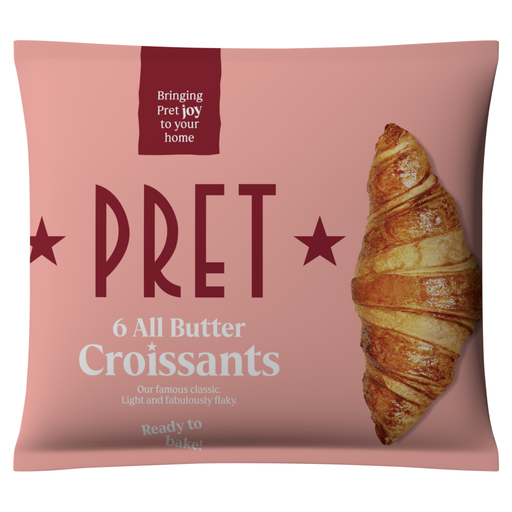
Joybuy product options for a solo shopper who has freezer and oven access and wants bake-at-home all-butter croissants.
 No image available
A bake-from-frozen option for shoppers who can keep croissants in the freezer and prefer to prepare them at home.
Made with 24% French-sourced butter and prepared from frozen in 20 minutes. Check the pack directions for portion planning, as the pack count and whether individual croissants can be baked separately should be confirmed before relying on it for a strict one-portion meal.
Contains wheat or gluten, milk and egg, and may contain nuts, sesame and soya. It requires freezer storage and oven cooking.
Yes, but check how the retailer defines the product. Waitrose lists an individual All Butter Croissant as one serving, while Waitrose No.1 is a two-pack containing two servings and is more suitable for two occasions or sharing.
Follow the exact instructions on the pack. Sainsbury’s says its Taste the Difference croissants should be frozen within the best-before date and used on the same day after defrosting, while Asda Exceptional is suitable for freezing before the date mark and should not be refrozen after defrosting.
Warming is optional only where the product guidance permits it. Waitrose No.1 gives an oven method of 2–3 minutes at 200°C conventional or 180°C fan, while Asda Exceptional is ready to eat but may be warmed for 4–5 minutes at 180°C conventional or 160°C fan.
The verified examples contain cereals containing gluten or wheat, milk and egg. GOV.UK states that food businesses must provide allergen information for prepacked and non-prepacked food, but ingredients and trace-allergen statements vary by product, so check the current label for the exact item.
No. In the verified products, saturated fat per croissant ranges from 8.3 g for Asda Exceptional to 11.8 g for the individual Waitrose croissant, and the cited retailer labels show high saturates. Compare the per-croissant values when choosing a single serving.