Hosts serving breakfast before the roast
If guests will eat croissants before dinner preparations take over the oven, compare ready-to-eat pack sizes and any optional warming time.


Premium croissants make sense as breakfast or brunch while you prepare a roast, rather than as an assumed substitute for bread with dinner. Choose a ready-to-eat pack if oven time is tight; a frozen bake-at-home pack suits a later serving if you have freezer space and can allow time to cook it. Check the number of pastries, preparation instructions and allergens on the product you choose.
If guests will eat croissants before dinner preparations take over the oven, compare ready-to-eat pack sizes and any optional warming time.
A frozen pack can be kept for a later serving. Check its storage directions and full baking instructions rather than treating it as ready to eat.
Check the exact product’s current ingredients and allergen information before serving it. For a loose bakery croissant, ask the seller for its allergen information.
Decide when the croissants will be served, then match the preparation time and pack size to that occasion. A premium-range name or butter percentage does not, by itself, establish how a croissant will taste.
| Priority | What to check | Your needs |
|---|---|---|
| Oven schedule | Check whether the pack is ready to eat or needs baking. Tesco lists 4–5 minutes for optional warming of its Finest four-pack; Waitrose lists an 18–20-minute bake for its frozen eight-pack. Follow the instructions for your chosen product. | I want to serve pastries before the roast without needing the oven for a full bake at the same time. |
| Number of pastries | Waitrose No.1 lists two croissants; Tesco Finest, Sainsbury’s Taste the Difference and Exceptional by ASDA list four each. Waitrose’s separate frozen pack contains eight and needs freezer storage. | How many people will actually have a croissant? If I am serving them another day, a larger frozen pack may fit that plan. |
| Ingredients | Read the ingredient list for the exact variant. Tesco Finest and Exceptional by ASDA list 25% butter, Sainsbury’s Taste the Difference lists 29%, and Waitrose No.1 lists 33%; those label figures are not tasting results. | I want to compare what is in the pastries, without assuming an all-butter or premium label guarantees a particular flavour. |
| Allergens | Check the current label and any may-contain statement for a prepacked product. For loose bakery food, ask for allergen information; GOV.UK says businesses must provide it for loose items containing any of the 14 regulated allergens. | Someone I am serving has an allergy, so I need information for the particular croissant before offering it to them. |
Waitrose’s frozen eight-pack needs an 18–20-minute bake, unlike the listed ready-to-eat packs that can be warmed briefly.
If the roast will occupy the oven, serve a ready-to-eat pack beforehand or schedule the frozen bake for another time.
A frozen pack also needs freezer space until you bake it.
The named retailers provide ingredients and their own product descriptions, not a like-for-like tasting comparison.
Compare the recipe, format and number of pastries you need; treat descriptions of flavour and texture as retailer claims.
The listed products identify allergens or possible traces, and loose bakery food may present that information differently from a prepacked product.
For a guest with an allergy, check the current label or ask the seller for the exact loose product’s allergen information before serving.
These retailer examples show how croissant formats differ; a range name alone does not establish a taste ranking.
Tesco lists a ready-to-eat four-pack of all-butter croissants.
Sainsbury’s lists a ready-to-eat four-pack that can also be warmed from frozen.
Waitrose lists both a No.1 two-pack and a separate frozen eight-pack.
Exceptional by ASDA is listed as a ready-to-eat four-pack of all-butter croissants.
M&S lists a 160 g all-butter croissant product for Foodhall shopping.
Lidl lists an individual all-butter croissant for in-store bakery shopping.
These Pret A Manger croissants are options for a separate breakfast or brunch, including chocolate- and almond-filled variants. Check each product’s preparation instructions before fitting it around a roast.
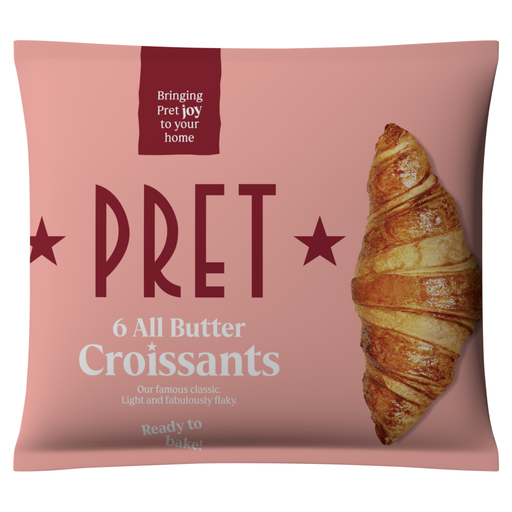 Image unavailable
For a breakfast on another day, these frozen croissants need baking rather than a brief warming step. Joybuy lists a 20-minute bake from frozen; check the pack’s instructions and allergen information before serving.
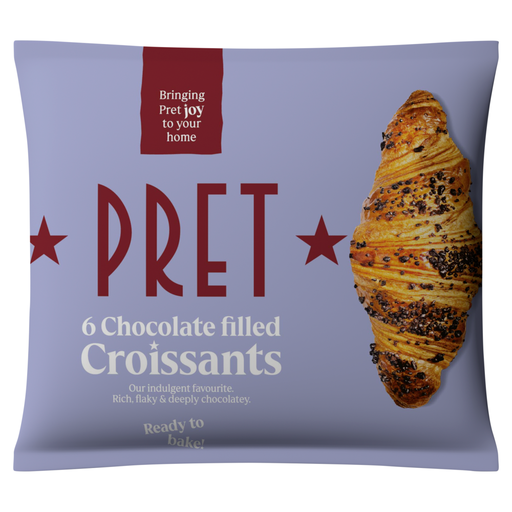 Image unavailable
This six-croissant, chocolate-filled variant is for a separate pastry serving, not a plain all-butter option. Check its preparation instructions against your oven schedule and review the allergen information for guests.
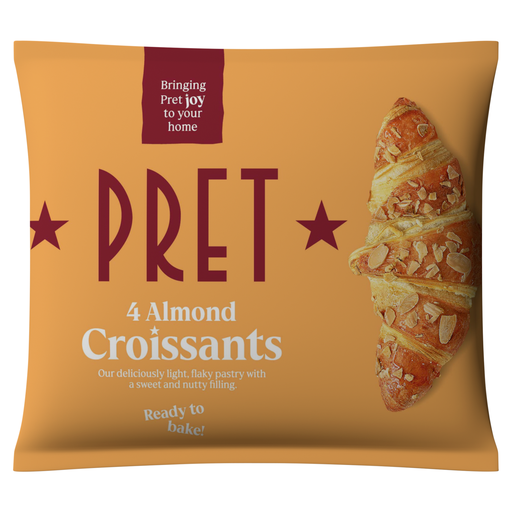 Image unavailable
Choose this almond-filled variant only if it suits the people you are serving. Check the number of pastries and baking instructions when planning breakfast, and review the ingredient and allergen information before offering it to guests.
Not by default. The croissants considered here fit a separate breakfast or brunch; decide independently whether you want bread with dinner. A premium label does not establish that a pastry suits that meal.
Yes, for Waitrose’s frozen eight-pack: its instructions specify baking from frozen for 18–20 minutes in a preheated oven at 200°C, 180°C fan or gas mark 6. This product needs cooking; follow the instructions on the pack you buy.
Follow the chosen pack’s directions. Tesco Finest gives storage and freezing instructions for its ready-to-eat croissants, while Waitrose says to keep its frozen eight-pack frozen and not to refreeze it once thawed. The directions are not interchangeable.
Ask the seller for information about the exact product before buying it for someone with an allergy. GOV.UK says food businesses must provide allergen information for loose items containing any of the 14 regulated allergens; Food Standards Scotland also says businesses must provide allergen information for non-prepacked food in Scotland.