Hosts planning a modern plated lunch
Choose this approach if you want a small warm pastry alongside cheese, ham and pickle rather than a bread-only ploughman’s lunch.


Choose a plain all-butter croissant when you want a small, richer ploughman’s-style variation that can be served warm shortly before eating. For a sturdier cheese-and-pickle lunch, a baguette, roll or loaf remains the more practical main carrier; compare butter content, pack size, allergens and heating instructions rather than relying on a premium label alone.
Choose this approach if you want a small warm pastry alongside cheese, ham and pickle rather than a bread-only ploughman’s lunch.
Look for details that can be checked on the pack, including butter percentage, pack size, French-butter wording and serving instructions.
Check the current label and sale format carefully: the products discussed contain cereals containing gluten, milk and egg, and some carry additional nut or cross-contact cautions.
Choose it when: You are serving a plated lunch at home and want buttery flakes with a modest portion of cheese, ham or pickle.
Trade-off: It is a less traditional format and can soften quickly if filled heavily with wet pickle or chutney.
Choose it when: You need a packed lunch, a sharing board or a sturdier base for generous fillings.
Trade-off: The presentation is less centred on croissants, but baguettes and rolls follow the bread-based format used in Good Food’s ploughman’s recipes.
| Priority | What to check | Your needs |
|---|---|---|
| Plain butter recipe | Choose an unfilled all-butter croissant; compare stated butter percentages where they are given. Waitrose No.1 lists 33% butter, while M&S and Sainsbury’s Taste the Difference list 29%. | I want cheese, ham and pickle to remain the main flavours, without chocolate, almond or another sweet filling competing with them. |
| Serving timing | Check whether the product can be served ready to eat or needs oven heating. M&S, Sainsbury’s and Waitrose provide warm-serving guidance for their all-butter croissants. | I can warm the pastry shortly before lunch, rather than relying on it to stay flaky during a commute or picnic. |
| Pack fit | Compare the number of croissants with the number of diners. Check the current shelf label or retailer page for the exact pack and offer conditions. | I need enough pastries for the table without treating a smaller pack as automatically more suitable for sharing. |
| Allergen information | Read the current pack for wheat or gluten, milk, egg and any nut or cross-contact statements. GOV.UK lists cereals containing gluten, eggs and milk among the regulated allergens. | I am serving guests with allergies or intolerances, so I need information for the exact product rather than a similar-looking croissant. |
Croissants are rich, flaky pastries, while ploughman’s recipes commonly use baguettes or bread rolls to hold cheese, pickle or chutney and ham.
Use bread or rolls for the main portion on a board or packed lunch, then add plain all-butter croissants as a small warm extra if that suits the meal.
A two-pack may suit two diners, while a four-pack may be more useful for a small group; pack count matters as much as the label wording.
Compare the exact pack count, serving size and current offer conditions before deciding which format fits your lunch.
The verified products contain wheat or gluten, milk and egg, and some have nut or wider trace warnings.
For an allergy-aware lunch, read the current pack and do not substitute an item based on a similar name or an earlier recipe.
Flaky pastry layers can soften quickly when heavily filled with moist ingredients.
Serve pickle or chutney on the side, or use a small amount and fill the croissant immediately before eating; use a baguette or roll for a heavily filled portable lunch.
A small-format own-label option for a plated, serve-warm croissant course. Its No.1 2 Butter Croissants are prepared in France with French-churned butter and French flour.
A four-pack all-butter option for a small group, with French butter stated on the product label and ambient or frozen heating guidance.
An all-butter croissant for shoppers who want a warm bakery-style side and the option to freeze the pack in line with the label instructions.
An in-store all-butter bakery option for shoppers able to check availability, allergen information and local store details before buying.
Joybuy product options for a home-served ploughman’s variation where a plain all-butter croissant can be baked from frozen and served warm alongside cheese, ham and pickle.
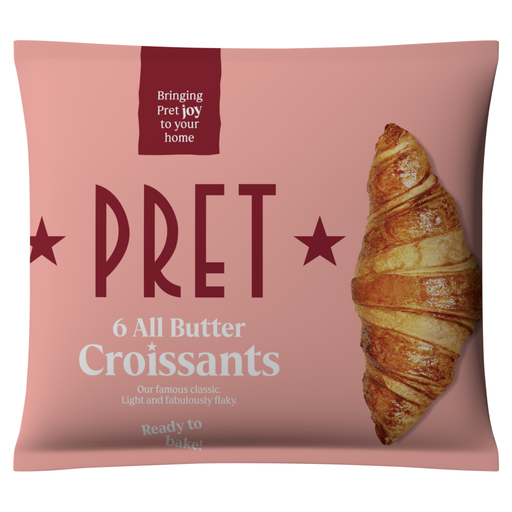 No image available
A plain butter croissant for a warm, home-served ploughman’s-style side rather than a portable no-oven lunch.
Made with 24% French-sourced butter and no sweet filling; bake from frozen for around 20 minutes.
Requires frozen storage. Contains wheat or gluten, milk and egg, and may contain nuts, sesame and soya; check the current pack for guests with allergies.
Not as the main bread format. Good Food’s ploughman’s recipes use a baguette or bread rolls with cheese, pickle or chutney and optional ham or apple. A plain all-butter croissant can work as a richer side or small filled variation, but a roll, baguette or loaf is more suitable when you need a sturdy main carrier.
Look for details on the exact product: a plain all-butter recipe, stated butter content where available, a pack size that suits the diners and instructions for serving warm. Waitrose No.1 lists 33% butter, while the M&S and Sainsbury’s products list 29%; these figures describe recipe composition rather than an independent taste ranking.
Warm them if you are eating immediately and the product instructions allow it. M&S describes its all-butter croissants as best enjoyed warm, Waitrose provides a short oven instruction, and Sainsbury’s says its product can be eaten ready to eat or heated. Avoid heating them early if the lunch needs to travel.
Do not assume that they can. The verified products contain wheat or gluten, milk and egg; Waitrose No.1 may contain nuts, Lidl lists several trace-allergen warnings, and M&S gives additional unsuitability warnings. Check the current package or retailer information for the exact item before serving.
Follow the instructions for the exact product. M&S says its all-butter croissants can be frozen by the date mark and used within three months, while Sainsbury’s gives separate freezing and defrosting instructions for its product. Check the current pack before freezing or thawing.