Buying priorities
Start with the serving routine, then compare the pack’s ingredients, allergen wording and nutrition information for the portion you expect to eat.
| Priority |
What to check |
Your needs |
| Premium pastry character |
Look for stated all-butter recipes, butter percentage where supplied, and French-butter or French-flour claims. Treat these as retailer descriptions rather than an independent taste ranking. |
I want a croissant with a richer all-butter style, but I still want to compare the current pack rather than assume a premium label guarantees a particular flavour or texture. |
| Preparation and access |
Check whether the croissants are ready to eat, can be warmed briefly, or must be baked from frozen. Confirm freezer space, oven instructions and selected-store availability. |
I need breakfast pastries that fit my shopping and cooking routine, without depending on a long oven-baking process when that would be inconvenient. |
| Allergen information |
Read the full ingredients and highlighted allergens. Check may-contain warnings where nut, sesame or other severe allergies are relevant. |
I need clear ingredient information before choosing a croissant for myself or someone else, especially where wheat, milk, egg or nut allergens matter. |
| Portion and saturated fat |
Compare saturated fat per croissant where a serving is stated, as well as the nutrition panel. A reduced-fat claim applies only to the comparison specified by the retailer. |
I want an occasional pastry while keeping track of the amount eaten in one sitting, rather than relying only on per-100 g values. |
Joybuy product options
These Joybuy options focus on frozen, oven-baked croissants for households that have freezer space and are comfortable preparing pastries at home.
 No image available
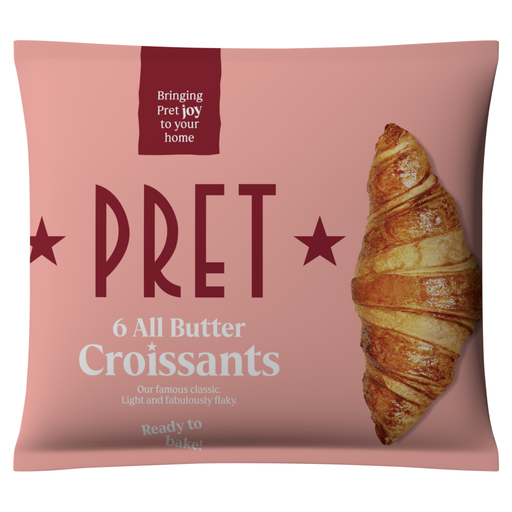
Pret A Manger Butter Croissants 330g
A frozen option for an oven-warm breakfast when freezer storage and preparation are practical.
Stated 24% French-sourced butter and slow fermentation; bake from frozen in 20 minutes.
Contains wheat/gluten, milk and egg; may contain nuts, sesame and soya. Saturates are stated per 100 g rather than per croissant.
Joybuy
 No image available
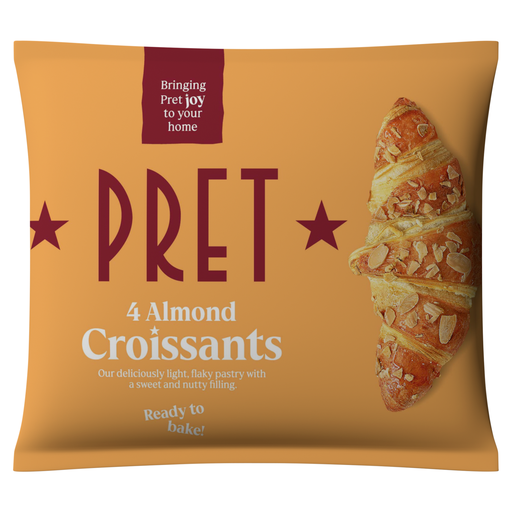
Pret A Manger Almond Croissants 280g
A specialist almond-filled option for households that want a frozen pastry for home baking.
Stated 15% butter, 14% almond filling and 3% flaked almonds. Frozen storage and baking are required.
Contains wheat/gluten, milk, egg and almonds; may contain other nuts, sesame and soya. Saturates are stated per 100 g rather than per croissant.
Joybuy
 No image available
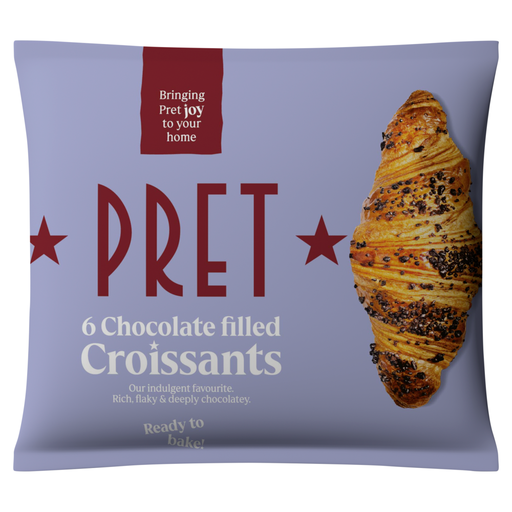
Pret A Manger 6 Chocolate Filled Croissants 420g
A chocolate-filled frozen choice for an occasional oven-warm breakfast pastry or dessert.
Stated 19% butter with chocolate filling and topping; requires 22 minutes of oven cooking from frozen.
Each baked croissant is stated to contain 9 g of saturates. Contains wheat/gluten, milk, egg and soya; it is not suitable for nut or sesame allergy sufferers.
Joybuy
Questions about buying croissants
Are premium croissants usually ready to eat, or do they need cooking?
It depends on the product. Sainsbury’s Taste the Difference croissants are ready to eat but can be warmed for five minutes. Waitrose No.1 croissants can be warmed briefly, while Waitrose Ready To Bake Almond Croissants must be cooked from frozen for 28 minutes at 170°C and allowed to cool before eating.
Can I freeze chilled croissants for a smaller household?
Follow the instructions for the exact pack. Sainsbury’s says its Taste the Difference croissants can be frozen before the best-before date and used on the day they are defrosted. M&S says its reduced-fat croissants are suitable for freezing and should be used within three months if frozen by the date shown.
Which allergens should I expect in supermarket croissants?
Wheat or gluten, milk and egg are common in the products discussed. Some packs also carry nut, sesame or cross-contact warnings: Waitrose No.1 may contain nuts, while the Waitrose frozen almond product contains almonds and may contain other nuts and sesame. Check the exact pack before purchase.
Is a reduced-fat croissant suitable when I am monitoring saturated fat?
Not automatically. M&S states that its reduced-fat croissants have 30% less fat than its own all-butter croissants, but that comparison does not replace checking the current nutrition label and serving size. Compare the portion you expect to eat with your own dietary requirements.
Do UK rules require allergen information for croissants packed on site?
Yes. GOV.UK guidance states that food businesses in retail and catering must provide allergen information for prepacked and non-prepacked food. Where food is prepacked for direct sale, the food name and full ingredients list must be provided with allergenic ingredients emphasised.


