Canteen managers serving short lunch breaks
When several lunches need heating in a limited window, the number of available microwaves, each meal’s cooking stages and its standing time all affect the service plan.


For a short lunch service built around microwaves, start with individual frozen meals whose packs give a microwave-from-frozen method, then check the wattage, heating stages and standing time against the canteen’s capacity. Larger dishes or premium retailer ranges can broaden the menu, but the exact meal still needs to fit the available equipment, portioning process, frozen storage and allergen-information arrangements.
When several lunches need heating in a limited window, the number of available microwaves, each meal’s cooking stages and its standing time all affect the service plan.
Retailer premium ranges offer dishes to consider, but a range name alone does not tell a buyer whether an individual meal fits the canteen’s equipment or intended portion size.
These operators need current ingredient and allergen details for each meal and a way to make the required information available in the form appropriate to how it is served.
Choose the service format before choosing a premium range: an individually heated pack and a larger dish place different demands on equipment and staff.
| Priority | What to check | Your needs |
|---|---|---|
| Heating method | Check whether the exact meal can be microwaved from frozen or needs an oven. Compare the stated wattage, heating stages, stirring and standing time with the equipment available. | I need lunches that can move through our available appliances during a short break, without assuming every frozen meal follows the same method. |
| Portion format | Read the intended number of servings and pack weight. Decide whether staff will serve sealed individual packs or portion a larger dish after cooking. | For individual lunches, I want a clearly identifiable serving. If staff are plating meals, I can consider larger dishes with a portioning plan. |
| Menu choice | Use retailer ranges to identify dishes, then compare the exact meal’s ingredients, cooking method and serving format. A premium label is the retailer’s positioning, not a measure of every dish’s quality. | I want a more varied lunch menu, but the dish still has to work within our service routine. |
| Allergen information | Check the current received-pack label or supplier specification and keep information accessible to staff. The Food Standards Agency and Food Standards Scotland explain that allergen information must be provided; how it is presented depends on the food’s packaging and service format. | Diners need accurate information about ingredients that are among the 14 allergens requiring declaration, including when a recipe or stocked product changes. |
| Storage and cooking | Follow the meal’s frozen-storage and packet cooking instructions. GOV.UK guidance says to check that cooked food is steaming hot, including in the middle of a larger dish such as lasagne. | I need freezer and preparation capacity that matches the number of meals being served, as well as a reliable check before service. |
Cooking steps can take longer than the headline time suggests. Iceland’s instructions for one frozen roast dinner specify a 12-minute process at 800W, followed by a one-minute stand and stirring; that timing does not apply to other meals.
Check each shortlisted pack for its frozen cooking method, appliance setting and handling steps before planning how many lunches an appliance can serve.
Extra heating stages and standing time can occupy equipment and staff during the lunch rush.
A retailer’s premium range can help identify dishes, but its name does not establish cooking compatibility, portion size or allergen suitability for a canteen.
Compare individual meals by their pack instructions, intended servings, ingredients and storage requirements before adding them to the menu.
Ingredients and published product details can change. The Food Standards Agency and Food Standards Scotland require food businesses to provide accurate allergen information in the applicable service format.
Update the canteen’s product-level information from the received label or current supplier specification, and make sure staff can access it before serving diners.
Waitrose lists both 400g individual frozen meals and an 800g dish for two. A larger pack calls for a different serving process from a sealed individual meal.
Check the stated servings and decide how staff will divide, identify and serve portions before choosing a larger dish.
These ranges offer starting points for menu planning, not a ranking of meal quality or a substitute for checking each pack.
M&S lists frozen dishes including seafood bakes, pies and salmon en croute, which may suit a canteen considering those styles of lunch.
Waitrose lists frozen individual meals as well as dishes for two, offering different formats for individual or plated service.
Tesco Finest lists individual frozen dishes including curry, moussaka, cottage pie and lasagne.
Sainsbury’s describes Taste the Difference Discovery as a premium range that includes ready meals.
Asda has a frozen-ready-meals category and separately describes Exceptional by Asda as a premium collection.
Iceland’s frozen-meal listings can provide cooking, storage, ingredient and allergen details for individual products.
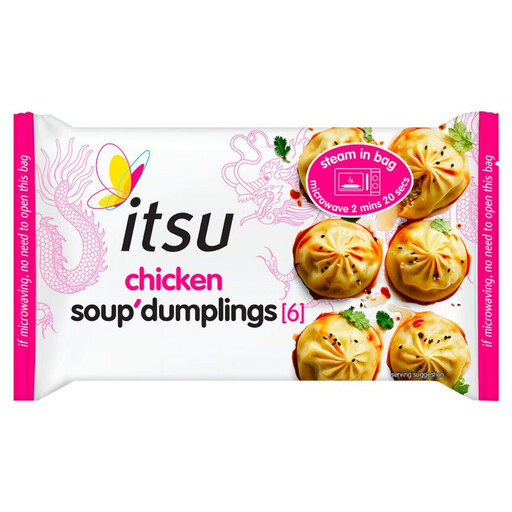
This dumpling option is worth checking for a microwave-led lunch menu; confirm its heating instructions and intended portion before treating it as an individual main meal.
 No image available
For a microwave-led lunch, check the current pack’s heating time and wattage against the canteen’s equipment. Confirm the intended serving size and use the received label for ingredient and allergen information before service.
Yes, provided its storage and preparation arrangements suit the meals being served. Follow each pack’s cooking instructions; GOV.UK guidance says to check that food is steaming hot, including in the middle of a larger dish.
Food businesses must provide information about the 14 allergens requiring declaration when they are used as ingredients. Food Standards Agency and Food Standards Scotland guidance distinguishes between prepacked and non-prepacked food; check the applicable presentation requirements for the way each meal is supplied.
No. A premium range name says nothing about the cooking method of an individual meal. Check its pack for a microwave-from-frozen method, the required wattage and any staged heating or standing steps before assigning it to microwave service.
Use the current received-pack label or supplier specification when maintaining information for service. Iceland notes that online product details can change as products are updated and recommends checking the actual label.
The freezer, heating equipment and temperature-monitoring arrangements need to suit the number and type of meals served. Food Standards Agency MyHACCP guidance calls for adequate facilities for storing frozen food, cooking and monitoring temperatures; calculate service capacity using the chosen meals’ actual instructions.