Care-home menu planners
For teams considering an occasional frozen choice alongside the rest of the menu. The meal still needs to fit residents’ preferences and individual plans, regardless of how the range is labelled.


Premium frozen meals can provide individual choices for care-home residents when the exact meal fits their assessed needs; a premium label does not establish nutritional, allergen or texture suitability. Check the current pack and the food as prepared against each resident’s plan, and use a specialist texture-modified option where an ordinary meal cannot meet a prescribed IDDSI level.
For teams considering an occasional frozen choice alongside the rest of the menu. The meal still needs to fit residents’ preferences and individual plans, regardless of how the range is labelled.
For kitchens allocating meals around individual nutrition needs, allergies and cultural or religious preferences, while keeping storage and preparation procedures workable.
For teams checking a prescribed IDDSI texture. An ordinary frozen meal is not a substitute for an assessed texture-modified option simply because it looks soft after cooking.
Start with the resident’s plan, then check the exact meal and whether the kitchen can prepare and serve it as required.
| Priority | What to check | Your needs |
|---|---|---|
| Nutrition and choice | Review the exact pack’s ingredients, nutrition information and portion size against the resident’s plan. Check that the dish fits their preferences, including relevant cultural or religious requirements. | I want a meal the resident would choose that also fits their assessed needs, rather than relying on its premium label. For services regulated in England, the Care Quality Commission’s Regulation 14 requires providers to meet nutritional and hydration needs and take account of these preferences. |
| Prepared texture | For a prescribed texture-modified diet, check the required IDDSI level and assess the food after preparation under the home’s agreed process. Pay attention to separate liquids and hard, chewy or fibrous components. | If a resident has a prescribed IDDSI level, I need a meal that meets it as served. An ordinary pie or rice dish cannot be assumed suitable from its name or appearance. |
| Ingredients and allergens | Check the current pack for the exact product and maintain controls against allergen cross-contact during storage, preparation and service. Recheck when a product or supplier changes. | For a resident with an allergy, I need current information about the meal they will actually receive—not the label of a similar dish. |
| Kitchen process | Check frozen-storage directions, the product’s cooking instructions and whether the kitchen can follow its temperature-monitoring and service procedures. Plan how individual portions will be handled. | I need a frozen option that fits our freezer space and preparation routine without transferring cooking instructions from another meal. |
A range name does not establish whether a portion, ingredients or prepared texture fit a particular resident’s plan.
Use the range to find dishes to consider, then make the serving decision from the current pack and the resident’s requirements.
Regular meals can still contain components or mixed consistencies unsuitable for a prescribed texture. St George’s University Hospitals NHS Foundation Trust distinguishes these features in its IDDSI level guidance.
Follow the resident’s assessed plan and the home’s agreed preparation and checking process before serving.
Different dishes can have different ingredients, and an online listing may not reflect the pack being served. Allergen cross-contact also matters during preparation.
Check the current pack for the exact product and update kitchen records when the product, packaging or supplier changes.
Storage and heating directions can differ by product. The Food Standards Agency’s food-safety guidance identifies suitable temperature control and monitoring as part of food handling.
Follow each pack’s directions within the home’s documented storage, cooking and service procedures.
These retailer ranges offer starting points for finding dishes; assess a current pack before allocating any meal to a resident.
Marks & Spencer lists frozen ready meals including M&S Collection and Plant Kitchen products.
Waitrose lists frozen own-brand meals in single-portion and larger formats.
Tesco has a Finest frozen ready-meal range with familiar main-course formats.
Sainsbury’s lists frozen Taste the Difference meals, including a 400g Coq Au Vin for one.
Asda has a frozen premium ready-meal category.
Iceland has a Luxury Frozen Ready Meals category alongside its broader frozen ready-meal range.
These frozen savoury options offer dishes to consider for a varied menu. Neither product name establishes a premium tier or suitability for a prescribed texture; check the current pack and each resident’s plan before service.
 No image available
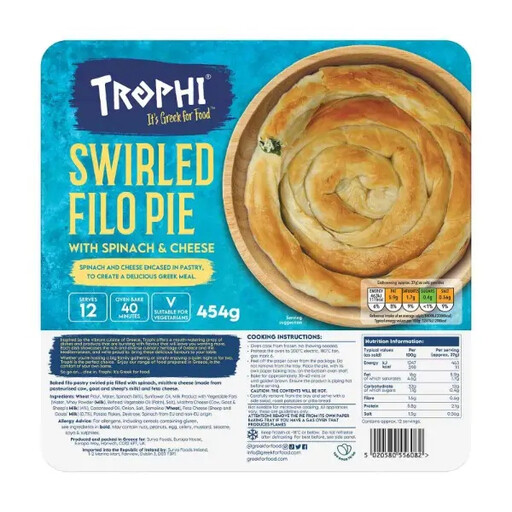
For a menu that can accommodate oven preparation, this spinach-and-cheese pie is another savoury option to assess. Check the current pack for ingredients and cooking directions, plan portions, and assess the prepared pastry against any prescribed texture requirements. The product information identifies wheat, milk and sulphites and warns of possible traces of sesame and nuts; it also says not to reheat once cooked.
 No image available
This mushroom-and-japchae rice roll offers a plant-based dish to consider for menu variety. Follow the current pack’s cooking directions and check its ingredients against resident allergy records; the product information identifies soybeans, wheat and sesame. Its described chewy noodles and rice need assessment against any prescribed texture requirements before service.
Yes, where the meal fits the resident’s assessed needs and the home’s menu and food-handling procedures. For services regulated by the Care Quality Commission in England, Regulation 14 requires providers to meet nutritional and hydration needs and take account of preferences and religious or cultural backgrounds; a premium label does not establish that a particular meal does so.
Not by default: the food as served must meet the resident’s assessed IDDSI level. The International Dysphagia Diet Standardisation Initiative identifies IDDSI as the UK’s adopted terminology, while St George’s University Hospitals NHS Foundation Trust’s level guidance shows why hard, chewy or mixed-consistency components need careful assessment.
Check the current pack’s ingredients and allergen information for the exact meal, then follow the home’s controls against cross-contact during storage, preparation and service. The Food Standards Agency’s guidance covers allergen information and control for food businesses.
No. Follow each product’s current cooking instructions and the home’s food-safety procedure, including any stirring, standing or heating checks specified for that meal. Do not transfer timings from another dish.