Premium frozen-meal shoppers comparing fat
If the recipe or retailer range appeals to you, compare its fat and saturated fat with another meal of a similar size. Premium branding describes the range, not the meal’s nutrition.


When choosing a premium frozen meal with less fat in mind, compare fat and saturated fat on the individual pack, using both per-100g and per-serving figures. A calorie-controlled section or protein-focused range can help narrow the choices, but neither establishes the fat content of a particular meal; check salt, portion size, allergens and cooking directions as well.
If the recipe or retailer range appeals to you, compare its fat and saturated fat with another meal of a similar size. Premium branding describes the range, not the meal’s nutrition.
A single-serve meal or calorie-controlled browsing section can make the search more manageable. Check how much of the pack counts as a serving before comparing its fat, saturates and salt.
If protein is another factor in your choice, read the figures for the individual frozen meal. A range name does not tell you its saturated fat, salt or allergen content.
Start with meals you would actually want to eat, then compare similar portions. GOV.UK’s Check the label guidance explains how traffic-light labels show whether fat, saturated fat, sugars and salt are high, medium or low.
| Priority | What to check | Your needs |
|---|---|---|
| Fat and saturates | Read total fat and saturated fat separately. Compare per 100g for like-for-like products, then check the figures for the serving you will eat. | I want a premium-style meal, but I do not want its range name to stand in for the fat figures on the pack. |
| Salt | Check the salt value or traffic-light colour alongside fat and saturates. Compare the stated serving sizes before choosing between meals. | Reducing fat is my starting point, but salt still matters when I choose the whole meal. |
| Portion and calories | Check whether the nutrition figures cover one serving or the whole pack. A calorie-controlled category does not establish a meal’s fat or saturated-fat content. | For a quick meal for one, I would use a portion-focused section to shortlist dishes, then read each label. |
| Ingredients and preparation | Read the current pack for ingredients and allergens. Follow that product’s frozen-storage and cooking directions. | I need to know that the ingredients suit me and that I can prepare the particular meal using its stated method. |
Premium positioning is not a nutrition classification. Action on Salt & Sugar reported that 42% of the 1,511 chilled and frozen ready meals it reviewed across 11 retailers in May 2025 were high in saturated fat; that figure is not specific to premium frozen meals.
Use a premium range to find recipes you like, then compare fat, saturates and salt on the individual packs.
An under-500-calorie or calorie-controlled section can narrow a search, but its category name does not tell you a meal’s saturated-fat or salt value.
After shortlisting a dish, read the nutrition information for the amount you expect to eat.
Two packs can have different serving sizes, so their per-100g figures alone do not describe what you will eat from each pack.
Compare similar types of meal per 100g, then look at the stated serving or whole-pack figures.
Iceland notes that online ingredients, nutrition and allergy information can change. Storage and cooking directions also belong to the particular product.
Read the physical pack for allergens, storage and preparation instructions before using the meal.
These ranges offer ways to find meals with different recipes or portion cues. Compare the exact frozen product’s label rather than assuming its retailer or range name describes its fat content.
M&S describes its Count On Us dishes as calorie controlled and portion focused.
Waitrose has a Love Life Calorie Controlled ready-meal category alongside its frozen ready-meal selection.
Tesco lists an Under 500cal Meals section within frozen ready meals and Tesco Finest dishes in its frozen selection.
Sainsbury's lists individual Taste the Difference dishes in its frozen ready-meal selection.
Iceland describes its MyProtein range using protein and fat claims alongside its wider frozen-meal offer.
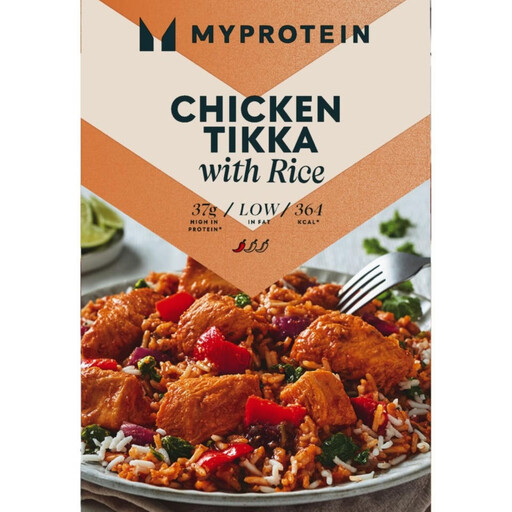
This frozen Myprotein meal has pack-level nutrition figures to compare with similar meals. Treat its individual label, rather than its range name, as the basis for a fat comparison.
 No image available
This frozen chicken-and-rice meal is described as microwaveable from frozen. Its listed per-pack figures are 8.9g fat, 2.2g saturates, 1.7g salt and 37.4g protein. Compare those figures with a similar meal, and check the current pack for allergens, including milk and barley, and cooking directions.
No. Check saturated fat and salt as well as total fat, and compare the portion you will eat. GOV.UK’s traffic-light labelling guidance covers fat, saturated fat, sugars and salt separately, so one indicator does not describe the whole meal.
Use per-100g figures to compare similar products, then check the stated serving or whole-pack figures for the amount you expect to eat. A difference in pack or serving size can change the practical comparison.
Use the listing to shortlist meals, then read the physical pack before using one. Iceland cautions that its online ingredients, nutrition and allergy information can change.
Follow the storage and cooking instructions on that meal’s pack. Oven and microwave methods are product-specific; do not transfer the directions from another frozen meal.