Who is this choice for?
The useful question is not whether a pizza looks premium, but whether its ingredients, label and portion work for the lunch you are planning.
Shoppers drawn to premium-style pizzas
If a wood-fired base or distinctive toppings catch your eye, compare the nutrition panel before deciding how much to serve. Sainsbury’s lists its Taste the Difference mozzarella-and-cherry-tomato frozen pizza at 6.9g saturates per cooked half pizza, labelled high.
People putting together a convenient lunch
A freezer pizza can be one part of lunch rather than the entire meal. If you want vegetables alongside it, allow for them when deciding your pizza portion; the NHS Eatwell Guide considers food-group balance across a day or week.
Shoppers checking nutrients or allergens
If salt, saturated fat or an allergen affects your choice, read the declaration for the exact pizza and the amount you intend to eat. Recipes and stated serving sizes differ, so a similar-looking pizza is not a substitute for checking the pack.
What should you compare?
Start with per-100g figures when comparing pizzas, then use the serving information to work out what your own lunch portion represents. The NHS advises using food labels to check fat, salt and sugars rather than relying on packaging cues.
| Priority |
What to check |
Your needs |
| Salt and saturates |
Compare both values per 100g, then read the figures for the portion you plan to serve. Use traffic-light labels where shown alongside the full nutrition panel. |
I want to know what the pizza contributes before choosing between a Margherita, a meat-topped pizza or another recipe. A premium-style name does not answer that question. |
| Portion and energy |
Check the pizza’s weight, its stated number of servings and energy per serving. Work from the amount you expect to eat, not an assumed half or quarter. |
A large sharing pizza and a smaller pizza may call for different lunch portions. I need the label figures to correspond to the slices I will actually have. |
| The rest of lunch |
Look at the toppings, but continue to check the nutrition panel. Decide whether you want vegetables or salad alongside the pizza. |
I would like vegetables with lunch without assuming that tomato or vegetable toppings alone settle the choice. The NHS Eatwell Guide says balance can be achieved over a day or week. |
| Allergens and preparation |
Read the exact product’s ingredients and allergen statement. Check its frozen-storage and cooking directions rather than using instructions from another pizza. |
An ingredient or preparation requirement could rule out a pizza for me, even when its format and portion otherwise suit my plans. |
Brands and ranges to recognise
These are examples of formats shown in the cited retailer listings, not a ranking of brands or a substitute for checking the pizza you buy.
Goodfella's
Tesco and Sainsbury’s frozen-pizza listings include Goodfella’s stonebaked thin pizzas and a New York Style Fully Loaded Pepperoni pizza.
- The listed thin and loaded formats give shoppers different crust and topping styles to consider.
- Neither a thin base nor a loaded description establishes the salt or saturated fat in the portion you choose.
Dr. Oetker
Ristorante pizzas appear in Tesco’s frozen-pizza results, while Asda lists a Speciale Ristorante pizza.
- The Ristorante format offers another style to compare with stonebaked and takeaway-style pizzas.
- Asda labels the 7g saturates and 2.3g salt in half a Speciale Ristorante pizza as high; check the exact variety rather than generalising across the range.
Chicago Town
Tesco lists Chicago Town thin sausage-and-pepperoni and large takeaway pepperoni pizzas.
- The listings provide distinct thin and larger takeaway-style formats for different portion plans.
- Tesco lists 8.1g saturates and 1.7g salt per quarter of the Large Takeaway Pepperoni pizza; relate that declared quarter to the amount you intend to eat.
Tesco
Tesco’s frozen-pizza results include an own-brand Stonebaked Vegetable Pizza alongside branded products.
- A vegetable-topped own-brand option is among the listed formats.
- A vegetable or stonebaked product name does not replace the exact pizza’s nutrition and portion information.
Sainsbury's
Sainsbury’s lists a 400g Taste the Difference Mozzarella & Marinated Cherry Tomato Wood Fired frozen pizza.
- Its listing gives figures for a cooked half pizza: 423kcal, 6.9g saturates and 1.58g salt.
- Sainsbury’s labels the saturates in that half pizza as high and the salt as medium, so the planned portion still matters.
Asda
Asda organises its frozen-pizza category by formats including thin crust, deep pan, sourdough, snacking and vegan, and lists branded pizzas such as Dr. Oetker Speciale Ristorante.
- The format categories can help narrow down the type of pizza you want to compare.
- Format categories alone do not describe the ingredients or nutrition of an individual pizza.
Frozen pizza options on Joybuy
These options cover a stonebaked thin Margherita, two pepperoni pizzas and a Ristorante Hawaii pizza. Use the exact pack label and your planned portion to compare them for lunch; their names alone do not establish a nutritional advantage.
 No image available
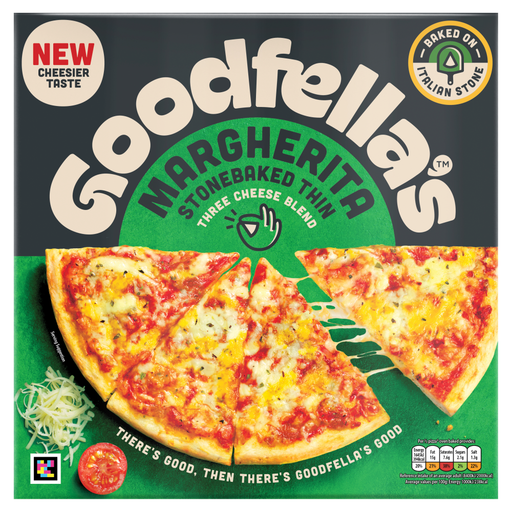
Goodfella's Margherita Stonebaked Thin 334g
For a Margherita lunch, compare this 334g stonebaked thin pizza with the portion you plan to serve. Check saturated fat, salt, allergens and cooking directions on the exact pack.
View on Joybuy
 No image available
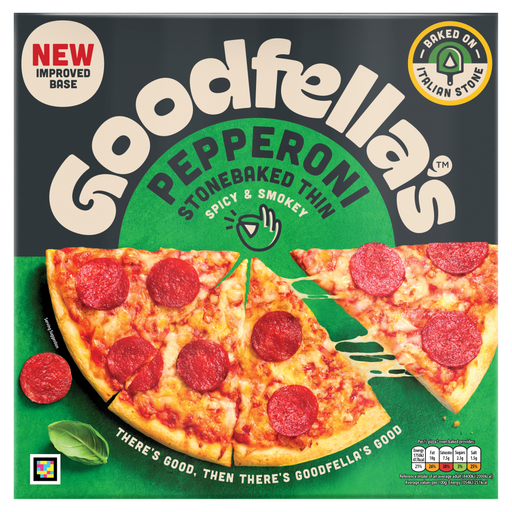
Goodfella's Pepperoni Stonebaked Thin 332g
If you prefer pepperoni, this is a 332g stonebaked thin option. Compare its label with the Margherita rather than assuming the shared crust style means similar salt or saturated-fat figures, and follow the pack’s cooking directions.
View on Joybuy
 No image available
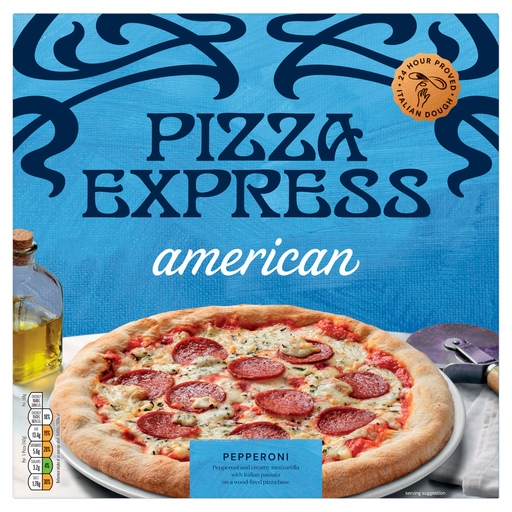
Pizza Express American 320g
For another pepperoni-style lunch option, use this 320g pizza’s pack information to compare your intended portion with other recipes. Check its allergens, salt, saturated fat and exact cooking instructions before serving.
View on Joybuy
 No image available
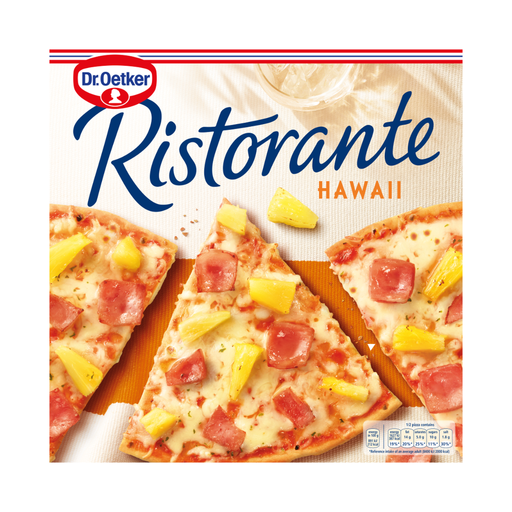
Dr. Oetker Ristorante Hawaii Pizza 355g
If pineapple-and-ham toppings appeal, this 355g Ristorante pizza offers a different recipe to consider. Read the pack’s per-100g and serving figures when comparing it with another pizza, and check its allergen and cooking information.
View on Joybuy
Frequently asked questions
Does wood-fired or sourdough mean a frozen pizza is a better lunch choice?
Not on its own: those words describe style, not the nutrition in your portion. Sainsbury’s lists 6.9g saturates per cooked half of its Taste the Difference mozzarella-and-cherry-tomato wood-fired frozen pizza, labelled high. Check the exact product’s salt, saturated fat and energy alongside its serving size.
Should I compare pizzas per 100g or per serving?
Use per 100g to compare products on the same weight basis, then use each pizza’s serving figures to assess the amount you expect to eat. A declared half or quarter pizza is useful only if it resembles your planned portion.
Can I have vegetables alongside frozen pizza at lunch?
Yes, vegetables or salad can be another component of the meal, but they do not change the pizza’s listed nutrients. The NHS Eatwell Guide says dietary balance can be considered over a day or week rather than achieved in every individual meal.
Can I use the same cooking instructions for different frozen pizzas?
Use the instructions on the exact pack instead. Check its storage directions and stated oven method, temperature and time before cooking rather than transferring directions from another brand or size.
Is a frozen pizza suitable if I need to avoid milk or wheat?
Do not decide from the pizza style or brand alone. Check the ingredient list and allergen statement for the exact product, including any relevant precautionary wording, before choosing it.


