Couples or flatmates planning a first freezer meal
A wood-fired sourdough pizza may appeal if you want named toppings and a meal for one or two. Check the stated portions, oven space and frozen storage instructions before choosing.


For a first food shop, consider a wood-fired sourdough pizza if its base and toppings appeal, a thin pizza if you prefer a crisp base, or a stuffed-crust format when sharing matters. Check that the pizza is frozen, fits your oven and freezer, and has suitable allergens and cooking instructions; compare nutrition per 100g and for the portion you expect to eat rather than relying on a premium label.
Start with the number of people eating and the kind of crust you want, then check whether the pack works for your kitchen.
A wood-fired sourdough pizza may appeal if you want named toppings and a meal for one or two. Check the stated portions, oven space and frozen storage instructions before choosing.
A thin or stonebaked base suits a preference for a crisp-style pizza rather than a deep or stuffed crust. Compare cooking directions and nutrition for the exact flavour; crust thickness alone does not establish either.
A larger stuffed-crust pizza offers a takeaway-style format. Check that it will fit in your freezer and oven, and follow any product-specific handling instructions.
Choose the crust and portion first, then use the individual pack to check preparation, storage and labelling.
| Priority | What to check | Your needs |
|---|---|---|
| Crust and toppings | Look for the stated base style and named toppings. Wood-fired, sourdough, thin and stuffed-crust descriptions identify different formats, not proven differences in taste. | I would choose sourdough for its stated base and toppings, a thin pizza for a crisp-style crust, or stuffed crust for a takeaway-style meal. |
| Portions and size | Compare pack weight, stated servings and the amount each person is likely to eat. Check the pizza’s dimensions against your oven shelf and freezer space. | For one person, I do not want to assume that a sharing pizza is practical. For a group meal, I need enough pizza for the people eating. |
| Nutrition labels | Compare energy, salt and saturated fat per 100g and per stated serving. NHS food-label guidance describes more than 1.5g salt or 5g saturated fat per 100g as high for solid foods. | The serving printed on the pack might not be the portion I eat, so I want to check both sets of figures. |
| Allergens | Read the current ingredients, emphasised allergens and any cross-contact statement for the exact pizza. Product formulations and warnings can differ. | If anyone eating has an allergy or intolerance, I need the current pack information, not an assumption based on the brand or an earlier purchase. |
| Cooking | Check the specified appliance, temperature, cooking time and handling directions. Do not assume that instructions for one pizza apply to another in the same range. | I need a pizza I can cook using my available oven, with enough time to follow its own directions. |
| Storage | Confirm that the product is frozen rather than chilled and read its storage statement. Morrisons lists Goodfella’s Stonebaked Thin Pepperoni for storage at −18°C or cooler, without refreezing after defrosting; other packs need their own checks. | On a first food shop, I need freezer space ready and storage instructions I can follow once I get home. |
A wood-fired, sourdough or thin base describes the pizza’s format, not its salt or saturated-fat content.
Compare the label per 100g and for the portion you expect to eat.
A large stuffed-crust pizza may be awkward for a small freezer or oven, or more than you intend to serve at one meal.
Check its dimensions, stated servings and storage space before buying.
Cooking and handling instructions can differ between products. Tesco’s listing for Chicago Town Takeaway Stuffed Crust BBQ Chicken describes dough that rises in the oven.
Follow the temperature, time and handling directions on the exact pack.
Ingredients and cross-contact statements can differ between pizzas and may change.
Read the current pack for everyone who will eat the pizza, particularly where an allergy or intolerance matters.
These ranges illustrate different pizza formats; check each product’s category and pack rather than treating a range name as a specification.
An own-label route to wood-fired, sourdough-base pizzas with named toppings.
An own-label sourdough range to consider only after checking the product’s storage category.
A thin-and-crispy frozen-pizza format for shoppers who prefer that style of base.
A stonebaked thin-base option illustrated by its Pepperoni pizza.
A takeaway-style stuffed-crust route to consider for a sharing meal.
An own-label frozen-pizza range to check when shopping at Tesco.
These options cover stuffed-crust sharing pizzas, pepperoni pizzas and a stonebaked thin pizza. Compare their individual packs against the crust, portion and cooking needs above; the selection is not a comparison of every frozen-pizza format.
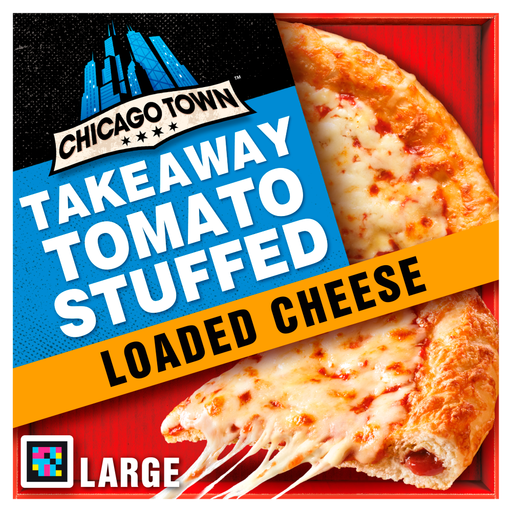 No image available
Consider this 630g stuffed-crust cheese pizza for a sharing meal. Check the pack’s stated portions, allergens and oven directions, as well as whether it fits your freezer.
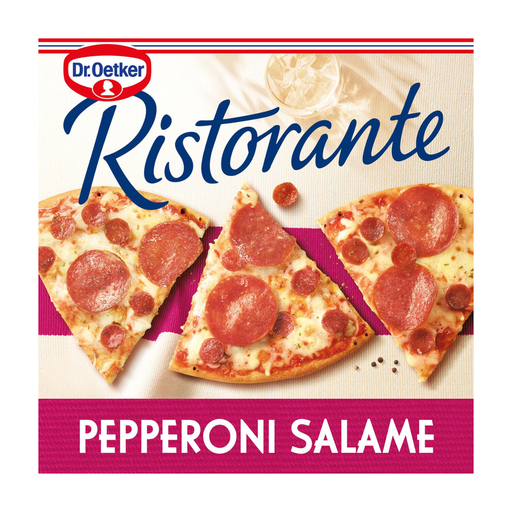 No image available
This 320g pepperoni salame pizza is an option if you want that topping. Check its own pack for the base style, stated portions, allergens and oven instructions rather than applying details from another Ristorante flavour.
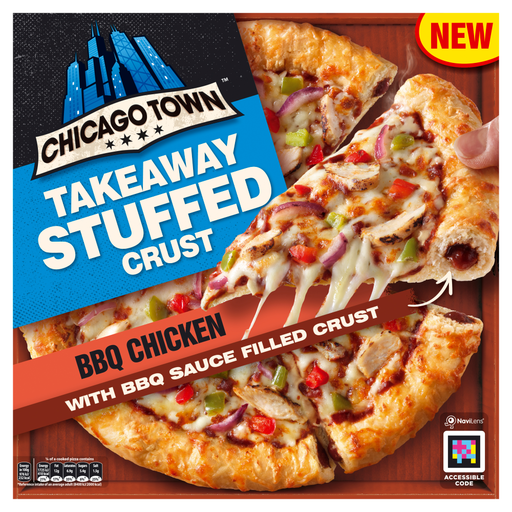 No image available
This 668g BBQ chicken pizza has a BBQ-sauce-filled stuffed crust for a sharing-style meal. Tesco’s listing describes dough that rises in the oven; follow the current pack’s cooking and handling directions, and check its allergens.
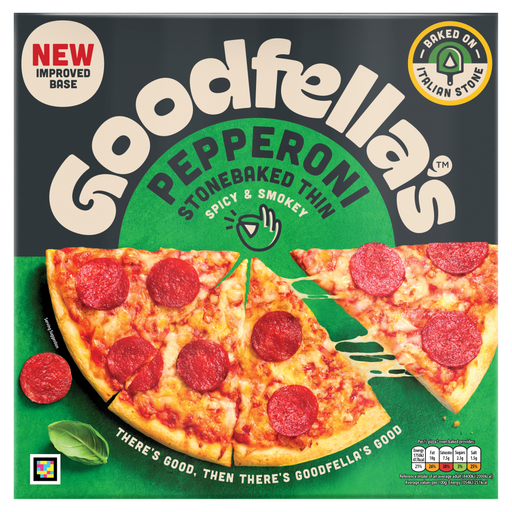 No image available
Choose this 332g pepperoni pizza if a stonebaked thin base matches the texture you want. Compare the pack’s nutrition with the portion you plan to eat, and follow its allergen, cooking and frozen-storage instructions.
 No image available
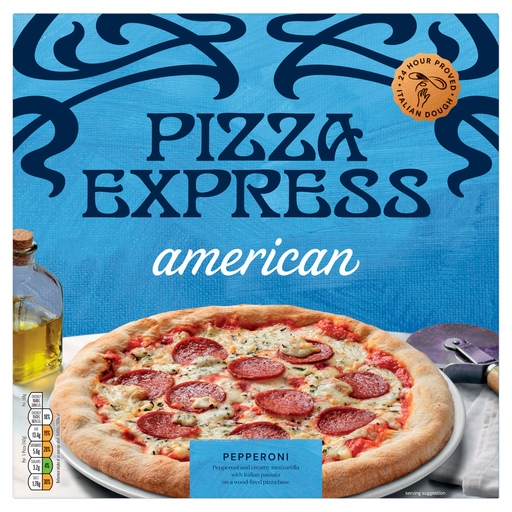
This 320g pizza is another option to assess for a smaller meal. Check the current pack for its base, toppings, stated servings, allergens, storage and cooking directions before deciding whether it fits your first shop.
Choose the format you actually want, then check the individual product: a stated sourdough or wood-fired base, a thin-and-crispy base, and a stuffed crust offer different starting points. Those descriptions do not prove that one pizza will taste better than another, and a chilled pizza is not interchangeable with a frozen one.
Use both figures. Per 100g helps you compare differently sized pizzas, while the serving declaration is useful only when you relate it to the amount you expect to eat. NHS food-label guidance identifies more than 1.5g salt or 5g saturated fat per 100g as high for solid foods.
Read the current pack’s ingredients, emphasised allergens and any cross-contact warning for the exact pizza. Do not assume that another flavour or an older listing has the same information.
Only use a microwave if the exact product’s instructions permit it. Otherwise, follow its stated oven method, temperature, time and handling directions rather than instructions for another pizza in the range.
Check that the product is frozen, that it fits your freezer and that you can follow its storage statement. For example, Morrisons’ listing for Goodfella’s Stonebaked Thin Pepperoni specifies −18°C or cooler and says not to refreeze it after defrosting; read the instructions for the pizza you buy.