Choose a premium instant coffee jar by the cup you want, rather than by the word ‘premium’: compare stated dark-roast notes, a smoother profile or an origin-labelled coffee. If you are considering a blend containing ground coffee, check whether you would mind residue in the cup. Decaf is a route for reducing caffeine, but it is not caffeine-free.
Who might prefer a different jar?
A more distinctive instant coffee need not mean a darker one; the useful distinction is which description matches the cup you want.
Shoppers moving beyond an everyday blend
If you still want instant preparation but would like more direction from the label, look for a stated roast, origin, intensity or set of tasting notes. Those descriptions give you a starting point, not a guarantee that you will prefer the cup.
Drinkers choosing by flavour strength
A dark, pronounced profile and a smoother one serve different preferences. Compare descriptions of the specific jars rather than assuming premium packaging means a strong or bitter-tasting coffee.
Shoppers looking to reduce caffeine
A decaf jar offers a different choice from changing roast or flavour. Check the exact product if caffeine content matters to you: decaffeinated coffee still contains some caffeine.
What should you check before choosing?
Begin with the stated flavour direction, then check the coffee format and any practical requirement that could rule out a jar.
| Priority | What to check | Your needs |
|---|
| Roast and intensity |
Read the roast and tasting notes on the exact jar. Kenco GB labels Smooth intensity 7 and Rich intensity 9; compare those figures within Kenco’s range, not across brands. |
I want a pronounced cup with dark-roast notes, or I would rather choose a smoother description without an overly strong profile. |
| Origin and flavour notes |
Check whether the label names an origin and describes the coffee. Sainsbury’s labels its Taste the Difference Colombian and Costa Rican 100g jars as freeze-dried Arabica, with different stated notes and strengths. |
An identified origin appeals to me, and I want to choose between the stated flavour directions rather than assume all Arabica jars taste alike. |
| Coffee format |
Check the ingredients for roast-and-ground coffee alongside instant coffee. Tesco lists Finest Intenso as 95% instant and 5% roast-and-ground coffee; Sainsbury’s lists 5% finely ground roast coffee in its Americano Microground jar. |
I like the idea of an instant blend containing ground coffee, but I would choose soluble coffee instead if possible residue would bother me. |
| Caffeine |
Look for a decaf label and check the exact product and serving information. NESCAFÉ says its Original Decaf has most caffeine removed using water, while decaf still contains a small amount. |
Reducing caffeine matters more to me than choosing a particular roast; I would not treat ‘decaf’ as meaning none at all. |
| Packaging |
Read the recycling instructions for each jar component, then check local collection guidance. WRAP notes that collection specifics can vary. |
I want to know what to do with the jar, lid and any foil where I live, rather than assume every component goes in household recycling. |
Which buying mistakes are easy to make?
-
Assuming ‘premium’ means one kind of flavour
Product descriptions cover dark and intense cups as well as smoother and origin-led options. A dark-roast description may be a poor match if you dislike pronounced toasted notes.
Start with the stated roast and tasting notes. Use an intensity figure to compare products within the same brand’s range, not as a standard measure of caffeine or quality.
-
Overlooking ground coffee in an instant blend
A product containing roast-and-ground coffee is not the same format as soluble coffee alone. Tesco warns that grounds from Finest Intenso may be visible on the cup when it is empty.
Check the ingredients and any preparation notes. If residue would put you off, consider a conventional soluble jar instead.
-
Reading ‘decaf’ as ‘caffeine-free’
NESCAFÉ says decaffeinated coffee retains a small amount of caffeine. A change to decaf therefore does not establish a zero-caffeine cup.
Check the label and serving information for the product you choose if you need to keep track of caffeine.
Which brands offer relevant styles?
These brand examples illustrate differences between named instant-coffee products and ranges; they are not a ranking of the brands.
NESCAFÉ
Its named products provide dark-roast and decaf directions as well as regular instant coffee.
- NESCAFÉ describes Gold Roastery Dark with dark-chocolate and roasted-nut notes, and says Original Decaf has most caffeine removed using water.
- Those flavour notes describe the named dark-roast product; decaf does not mean caffeine-free.
Kenco
Smooth and Rich offer two stated flavour-strength directions within Kenco’s jar range.
- Kenco GB labels Smooth intensity 7 and describes it as avoiding an overly strong or bitter taste; it labels Rich intensity 9 for a more robust cup.
- Kenco’s intensity figures help distinguish its own products, but are not a universal scale for other brands.
Douwe Egberts
Its Pure range gives shoppers several named instant-coffee variants to distinguish.
- Tesco lists Pure Gold, Pure Indulgence and Pure Decaffeinated as separate 190g jars.
- Choose by the exact variant’s label rather than assuming those jars share a flavour profile.
Carte Noire
A freeze-dried option for shoppers interested in its stated Arabica-rich profile.
- Tesco describes its 200g instant coffee as Arabica-rich, with a rich and velvety stated body.
- Treat the body description as product wording, not a direct taste comparison with another jar.
Tesco Finest
Intenso is a named own-label example of instant coffee blended with roast-and-ground coffee.
- Tesco lists the Intenso ingredients as 95% instant coffee and 5% roast-and-ground coffee.
- Tesco warns that grounds may remain visible in the cup, which matters if you prefer no residue.
Sainsbury’s Taste the Difference
Named jars offer origin-labelled freeze-dried coffee alongside an Americano Microground format.
- Sainsbury’s labels its Colombian and Costa Rican 100g jars as freeze-dried Arabica with different stated notes; Americano Microground lists 5% finely ground roast coffee.
- The origin descriptions and ground-coffee content apply to their respective products, not to every jar in the range.
Instant coffee jars on Joybuy
These jars offer named dark-roast, origin-led and smooth directions for choosing an instant coffee. Check each product’s ingredients where the distinction between soluble coffee and a ground-coffee blend matters to you.
 No image available
Costa Instant Intense Dark Roast 100g
A 100g instant-coffee option for shoppers considering a dark-roast direction. If a ground-coffee element or a cup without residue matters to you, check the ingredients and preparation information on the jar.
View on Joybuy
 No image available
NESCAFÉ Gold Cap Colombia 95g
The Colombia-named 95g jar is an option if origin is part of how you choose. Read its own tasting notes and preparation directions rather than assuming it matches another Colombian-labelled coffee.
View on Joybuy
 No image available
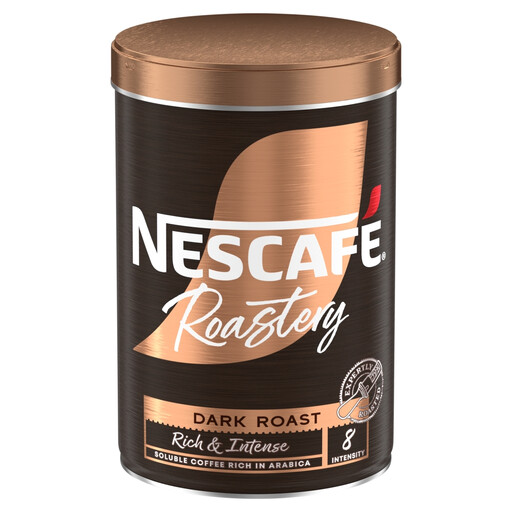
NESCAFÉ Gold Blend Roastery Dark 95g
A 95g instant-coffee choice for a pronounced dark-roast direction. NESCAFÉ describes Roastery Dark with dark-chocolate and roasted-nut notes. If the proportion of roast-and-ground coffee matters to you, check the ingredients on the pack before choosing.
View on Joybuy
 No image available
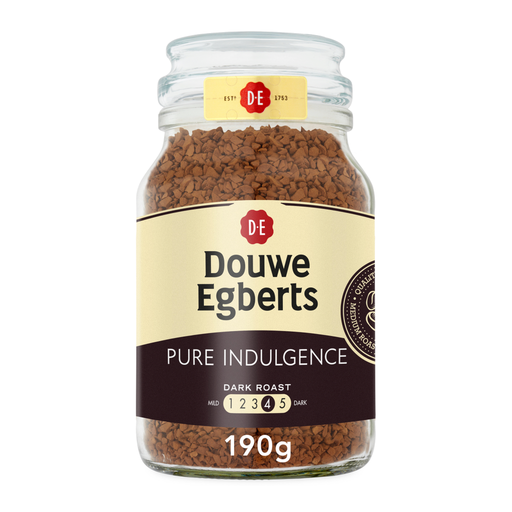
Douwe Egberts Pure Indulgence 190g
The 190g Pure Indulgence variant gives you a different named jar to compare with the brand’s Pure Gold and Pure Decaffeinated options. Check this variant’s own roast and flavour description when deciding whether it suits your cup.
View on Joybuy
 No image available
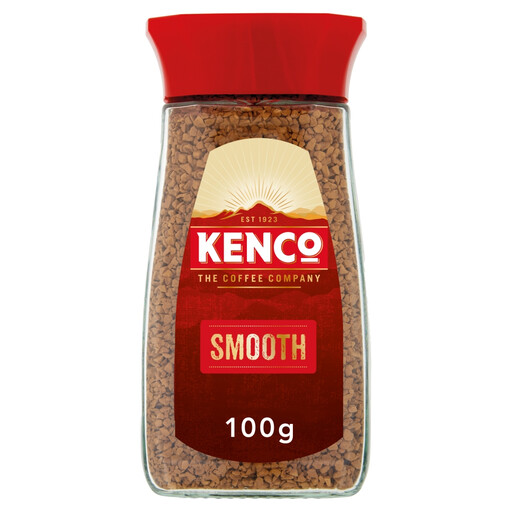
Kenco Smooth 100g
A 100g option if Kenco’s smoother stated flavour direction appeals more than a robust one. Kenco GB labels Smooth intensity 7, a figure for comparison within its range rather than a measure of caffeine or a cross-brand strength scale.
View on Joybuy
Questions about choosing and using a jar
How should I prepare a premium instant coffee?
Follow the directions on the exact jar, including its suggested amount of coffee and water. Preparation guidance for one product should not be assumed to apply to every instant coffee.
Will instant coffee containing ground coffee leave residue?
It can: Tesco says grounds from Finest Intenso may be visible on the base or sides of an empty cup. Check the product’s ingredients and guidance if residue matters to you; a conventional soluble coffee avoids choosing that format.
Is decaf instant coffee caffeine-free?
No. NESCAFÉ says decaffeinated coffee still contains a small amount of caffeine. If you need to track your intake, check the information for the particular jar and serving you use.
Can the jar and lid go in household recycling?
Check both the product’s component labels and your local collection rules. Some named coffee products label their jars and lids for recycling, but WRAP notes that collection specifics vary, so one jar’s instructions do not establish what is accepted everywhere.


