Students pressing presentation wear
If you wear cotton ties for interviews, placements or formal events, you may want control around narrow edges and the knot area. Steam irons with precision tips are relevant to that detail work.


For a sharply pressed cotton tie, favour a conventional steam iron with a precision tip and a suitable flat pressing surface. A handheld steamer is a more relevant choice for quick touch-ups when a crisp finish matters less. Check the tie’s care label and your accommodation rules before buying: some residences restrict where irons can be used.
If you wear cotton ties for interviews, placements or formal events, you may want control around narrow edges and the knot area. Steam irons with precision tips are relevant to that detail work.
If you press only a few items at a time, a compact iron may be easier to store. A foldable handheld steamer is another option when a quick touch-up matters more than a sharply pressed tie.
If you live in halls or managed accommodation, check where an iron may be used before choosing one. The University of St Andrews, for example, prohibits irons in study bedrooms.
Choose it when: A controlled, crisp finish on a cotton tie matters most.
Allow for: A safe, stable pressing surface, storage space and upkeep if you use steam.
Choose it when: Quick crease refreshing without an ironing board is the priority.
Accept: The available manufacturer descriptions do not establish the same sharply pressed tie finish as ironing on a flat surface.
| Concern | What to check | Who this matters to |
|---|---|---|
| Controlled tie pressing | Check for a pointed tip and suitable temperature and steam controls; follow the tie’s care label. | If I want neat edges and control around seams, I would put the pressed finish ahead of portability. Around 44% of consumers put that finish first. |
| Storage and quick use | Consider the appliance’s storage size and whether you have room for a pressing surface. | With little cupboard space and only occasional pressing to do, I would favour something easy to put away; around 33% of consumers chiefly prioritise space and convenience. |
| Permission and safe use | Check your accommodation’s appliance rules and permitted use location; avoid damaged leads and overloaded sockets. | Before bringing an iron into managed accommodation, I would need to know where I may use it safely. Permission and safe use come first for around 23% of consumers. |
Rules vary by property. The University of St Andrews prohibits irons in study bedrooms, so an otherwise suitable iron might not be usable where you planned to press your tie.
Read your tenancy or residence handbook before buying. If ironing is allowed only in a shared area, check that you have access to a safe, stable pressing surface there.
Manufacturers position handheld steamers for quick garment touch-ups; that does not establish the same controlled finish as pressing a tie flat with an iron.
Prioritise an iron with a pointed tip if crisp edges are your main aim. Consider a steamer if compact storage and light refreshing matter more.
Electrical Safety First warns that overloaded socket-outlets and extension leads can be dangerous.
Follow the appliance instructions, check the plug and cable, avoid overloaded sockets, and unplug the iron when it is not in use.
Scale maintenance matters if you use steam regularly; an anti-calc or cleaning feature does not replace the model’s care instructions.
Check how the exact iron is cleaned and follow its instructions, particularly if scale is a concern where you live.
Its Virtuo 30 and Express Steam lines offer different conventional steam-iron configurations relevant to occasional pressing.
The 3000 Series DST3041/89R1 is relevant if a conventional iron with a precision tip and cleaning provision appeals to you.
The Mineral Glide 26261 is worth considering if you expect to iron other garments as well as ties.
These conventional steam irons are choices to consider when pressing a cotton tie is the priority. Compare their exact variants and confirm that your accommodation permits use in the location you have in mind.
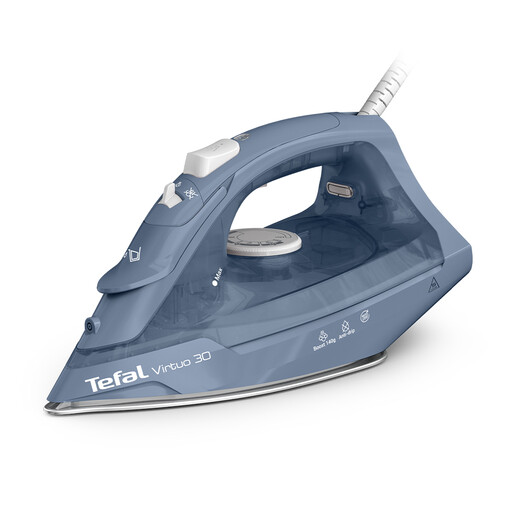 No image available
Consider this model if you want a conventional iron for occasional tie pressing and limited storage.
The product title specifies 2200 W power, a 240 ml water tank and 30 g/min continuous steam. Confirm the FV2C64G0 steam-boost specification before comparing it with other models.
Use a stable, heat-resistant pressing surface and follow the tie’s care label.
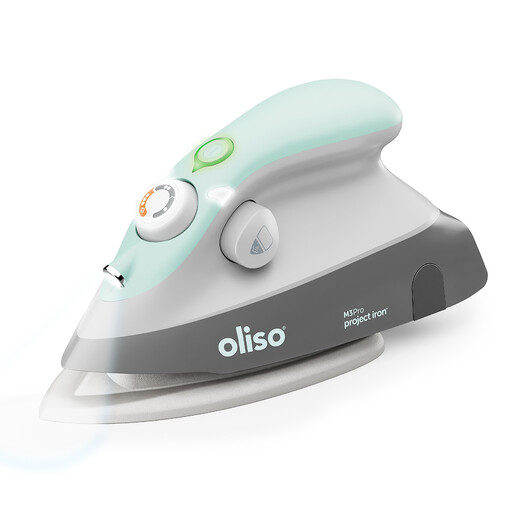 No image available
This mini steam iron is a choice to assess if storage space is tight and you want an iron rather than a handheld steamer for tie pressing.
Check its temperature controls and instructions against your tie’s care label, and make sure you have a stable, heat-resistant pressing surface.
No image available
Consider this conventional iron if a precision tip is important for working around narrow tie edges.
Its product title identifies a FreeGlide 3D EloxalPlus soleplate and precision tip. Confirm the exact SI7160BL power rating before comparing specifications, and follow the tie’s care label when pressing.
Check your accommodation’s rules before using one in a bedroom. The University of St Andrews prohibits irons in study bedrooms; your tenancy, residence handbook or accommodation office can tell you what applies to your room and whether appliance checks are required.
Choose a steamer for quick refreshing rather than assuming it will produce a sharply pressed finish. If controlled edges are the priority and the care label permits ironing, a conventional iron with a precision tip is the more relevant choice.
Check the plug and cable, avoid overloaded sockets or extension leads, and never leave an iron unattended. Electrical Safety First also advises unplugging irons when they are not in use.
Follow the exact model’s cleaning instructions and use its anti-scale or cleaning feature if it has one. Tefal identifies scale maintenance as a consideration when choosing a steam iron; the required routine depends on the appliance.