Frequent vegetable batch cooks
You regularly prepare beetroot and other vegetables for salads, sides, soups or meal prep, and want room for more than one small meal’s worth at a time.


For regular, moderate batches of beetroot, start with a 4.8–6L electric pressure cooker; if you routinely prepare larger batches, compare 7.6–8L models. Nominal bowl size is not the permitted pressure-cooking load, so check the exact model’s fill limit, liquid instructions and room for the beetroot you usually cook. Extra crisping functions matter only if you will use them for other foods.
You regularly prepare beetroot and other vegetables for salads, sides, soups or meal prep, and want room for more than one small meal’s worth at a time.
You want a moderate beetroot batch and would also use functions such as steaming, sautéing or slow cooking, rather than keeping a separate appliance for each task.
You value clear controls, manageable steam release and practical cleaning, while being prepared to follow the liquid, filling and electrical instructions for your particular cooker.
Choose a bowl size for your usual batch, then check the model’s pressure-cooking limits and the features you would use between batches.
| Concern | What to check | Who this matters to |
|---|---|---|
| Usable batch capacity | Compare bowl size with the exact model’s pressure-cooking fill mark and the space needed for your usual whole beetroots. | If I prepare several meals’ worth at once, I want enough permitted space to avoid another cooking cycle; around 40% of consumers would put batch capacity first. |
| Pressure-cooking routine | Check the manual’s liquid, sealing and steam-release instructions, and whether the controls suit you. | When I cook vegetables repeatedly, I want a routine I can follow confidently, especially when releasing steam; around 30% of consumers would prioritise ease of operation. |
| Other cooking functions | Compare the modes and supplied lids with the cooking tasks you actually intend to use them for. | If this appliance will also handle my other regular meals, those functions matter more to me than maximising the beetroot batch; around 20% of consumers would make versatility their primary concern. |
| Cleaning and storage | Check which removable parts can go in a dishwasher and where the cooker and any extra lid will fit. | With frequent batches, I want clean-up and storage to remain manageable; around 10% of consumers would place those practicalities ahead of the other factors. |
The advertised bowl capacity is not necessarily the amount you can pressure-cook. Instant Pot UK instructs users of its Classic 5.7L cooker to keep contents below the PC Max – 2/3 line.
Check the fill marking in the manual for the exact model, then consider whether your usual beetroot batch will fit beneath it.
Pressure-cooking instructions differ by model. Instant Pot UK specifies water-based liquid for its Classic 5.7L cooker, while steam-release controls also vary between cookers.
Before cooking, follow your model’s instructions for liquid, the supplied lid, sealing and steam release.
A crisping lid adds another cooking option, but pressure-cooking beetroot does not require one.
Consider that configuration if you will also use its other modes; account for the extra lid when planning storage and cleaning.
Instant Pot UK says not to immerse or rinse its appliance, power cord or plug, and advises against adapters and extension cords for its UK models.
Follow the electrical and cleaning instructions for your exact cooker, checking which removable parts the manufacturer permits you to wash separately.
Instant Pot UK lists compact and larger multi-cookers, including 3.8L and 5.7L models and an 8L Duo, for different batch sizes.
Tefal UK lists 4.8L Turbo Cuisine, 6L All-in-One and 7.6L Turbo Cuisine & Fry models, spanning moderate and larger nominal bowl sizes.
Ninja UK describes the Foodi MAX OP500UK as a 7.5L multi-cooker with pressure cooking and other modes, including crisping and dehydrating.
These 5.7L electric pressure multi-cookers are options for comparing moderate beetroot batches and other one-pot cooking. Check each model’s permitted fill and included accessories against the whole beetroots you usually prepare.
 No image available
Consider this 5.7L model for a moderate batch if you would also use its other cooking modes. Its name identifies a ceramic non-stick pot and recipe book; check the exact model’s pressure-cooking fill and liquid instructions, and whether the supplied accessories suit your beetroot size.
 No image available
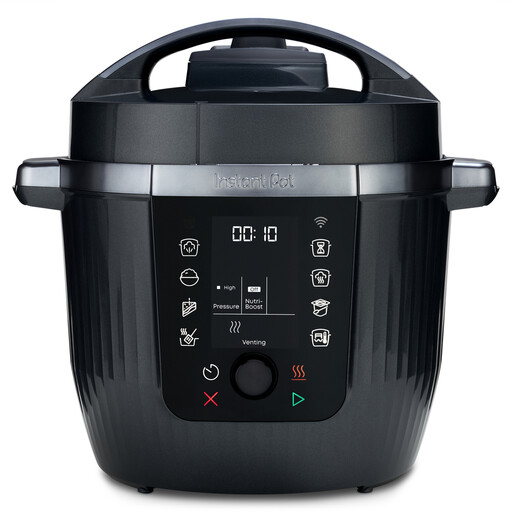
Consider this 5.7L model for moderate batches if you also want other cooking functions. Instant Pot UK describes automatic steam release for the Pro 5.7L; consult the exact model instructions for permitted fill, liquid and cleaning requirements, and check which accessories are included.
A 4.8–6L cooker is a starting point for moderate batches, while 7.6–8L models are worth comparing if you regularly prepare more at once. Check the exact model’s pressure-cooking fill mark: Instant Pot UK, for example, requires contents in its Classic 5.7L cooker to remain below the PC Max – 2/3 line.
A dedicated beetroot programme is not necessary to make a useful comparison. Look for a pressure-cook setting, follow the model’s liquid and fill instructions, and check whether its supplied rack or basket accommodates the beetroot you plan to cook.
Instant Pot UK says its models sold for UK use are designed for 220–240V outlets and should not be used with an adapter or extension cord. Follow the instructions for your exact model; do not assume another brand has identical requirements.
Let the cooker cool and clean it as its manual directs, checking exactly which removable parts may go in a dishwasher. Instant Pot UK says not to immerse its appliance, power cord or plug in water; dishwasher guidance for pots, lids and accessories varies by model.
Check the exact model and version before choosing a seal, inner pot or lid, and confirm which accessories come with the cooker. The fit of a supplied rack or basket matters particularly if you intend to pressure-cook whole beetroots.