Weeknight soup cooks
If you want to sauté ingredients and pressure-cook soup in one appliance without tending a hob, a manageable family-sized cooker may suit you better than a larger multi-function format.


A 5.7L–6L electric pressure cooker is a practical starting point for family-sized chicken and barley soup if you want to sauté ingredients and cook in one pot. Choose guided controls if setting and releasing pressure is your main concern; consider a 7.5L pressure-and-crisp model if you regularly make larger batches and will use its other functions. Whichever route you take, follow the model’s fill and pressure-release instructions and check that the chicken is thoroughly cooked.
If you want to sauté ingredients and pressure-cook soup in one appliance without tending a hob, a manageable family-sized cooker may suit you better than a larger multi-function format.
On-screen steps and an automatic pressure-release feature may matter more to you than a long list of cooking modes. You will still need to follow the model’s instructions for hot soup and steam.
A larger cooker is worth considering if you make bigger quantities and also expect to use functions such as crisping, grilling, roasting or dehydrating. Check its pressure-cooking fill limit before deciding how much soup to make.
Start with your usual soup quantity and how much guidance you want during cooking. Then decide whether functions beyond pressure cooking and sautéing will earn their place in your kitchen.
| Concern | What to check | Who this matters to |
|---|---|---|
| One-pot weekday cooking | Check for both pressure-cook and sauté or browning functions, plus instructions for choosing cooking time and releasing pressure. | If I want to prepare the soup base and cook the chicken and barley in one vessel, I need controls I can manage on a busy evening. Around 40% of consumers put this one-pot need first. |
| Guidance and handling | Compare on-screen prompts and release methods; read the instructions for handling a hot, full inner pot. | When pressure cooking is unfamiliar, I would rather have clear prompts and know how steam is released than choose a cooker for its extra modes. For around 30% of consumers, that guidance is the primary concern. |
| Batch capacity | Compare vessel capacity with the model’s pressure-cooking fill markings, and consider whether you will use its other functions. | If I regularly make soup for later meals, the amount I can safely cook in one batch matters more than a compact format. Larger-batch use comes first for around 30% of consumers. |
A 5.7L, 6L or 7.5L label describes the vessel, not how much chicken, barley and liquid you can pressure-cook in it. A full pot of hot soup can also be heavy to handle.
Choose a size for your usual portions, then check the exact model’s fill markings and manual before planning larger batches.
Crisping and connected features serve different cooking preferences; they do not, by themselves, establish better results for chicken and barley soup.
Decide whether you need straightforward pressure-and-sauté cooking, on-screen guidance or a larger appliance whose other functions you will use regularly.
Ingredients, quantity and starting temperature can affect cooking. GOV.UK guidance says poultry should be thoroughly cooked, with no pink meat in the thickest part and clear-running juices.
Follow the recipe and cooker instructions, then check the chicken before serving rather than relying on a preset name or timer alone.
Making extra soup also means planning how to cool, store and reheat it. GOV.UK food-hygiene guidance says reheated food should be steaming hot throughout and reheated only once.
Portion and cool leftovers promptly, then reheat each portion thoroughly rather than repeatedly warming the same batch.
Its 5.7L Duo and Pro lines offer two approaches to a family-sized multi-cooker, according to Instant Pot UK.
The Cook4me range is relevant if you prefer cooking guidance on the appliance screen; features differ by model, according to Tefal UK.
Ninja’s Foodi MAX OP500UK is relevant to batch cooks who also want functions beyond pressure cooking, according to Ninja UK.
These choices cover a 5.7L multi-cooker for one-pot soup preparation and a smaller 1.8L pressure cooker for modest quantities. Match either appliance to your usual portion size and check its pressure-cooking fill instructions.
 No image available
Consider this model if you want to sauté ingredients and pressure-cook a family-sized soup in one appliance.
The product name specifies a 5.7L capacity, a 9-in-1 format and a ceramic non-stick coating.
Before planning a batch, check the model’s pressure-cooking fill limit; confirm plug and voltage compatibility for your kitchen before buying.
 No image available
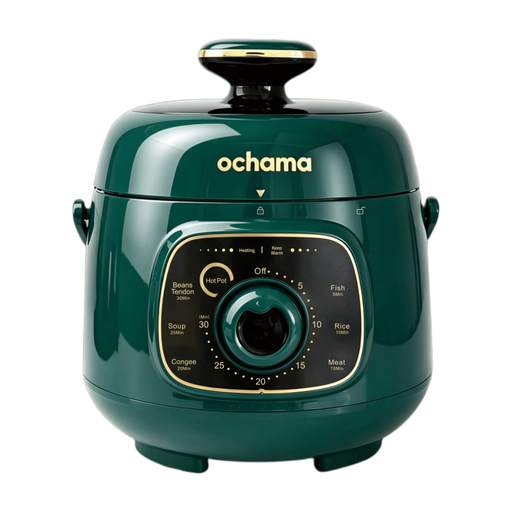
Consider its smaller format if you usually make modest portions rather than a family-sized batch of chicken and barley soup.
The product name specifies a 1.8L capacity. Check the pressure-cooking fill limit and whether the model’s cooking modes suit the way you prepare your soup.
A 5.7L–6L model is a practical starting point for family batches, while a smaller vessel may suit modest portions. Instant Pot UK describes its Duo 5.7L as holding up to six portions, and Tefal UK describes its Cook4me+ 6L as suitable for family cooking; neither stated capacity replaces the exact model’s pressure-cooking fill markings.
No, but it lets you soften aromatics in the cooker before adding the soup ingredients and pressure cooking. Instant Pot UK lists sautéing on the Duo 5.7L, while Tefal UK lists a browning mode on the Cook4me+.
Check the chicken itself rather than treating the end of a pressure-cooking cycle as proof. GOV.UK guidance says poultry should be thoroughly cooked: check the thickest part for pink meat and make sure the juices run clear.
Yes, provided it has been stored appropriately and is reheated until steaming hot throughout. GOV.UK food-hygiene guidance also advises reheating leftovers only once, so portioning a batch can help you avoid repeatedly reheating the same soup.