Solo stock makers with limited space
You usually make stock and everyday meals for one, and want pressure cooking without automatically giving worktop and cupboard space to a family-capacity pot.


For modest batches of chicken stock for one, compare compact electric pressure cookers before choosing a family-sized multi-cooker: Instant Pot describes its Mini size as suitable for one or two people. A larger 5.6L–6L model makes more sense if you plan to freeze several portions or regularly cook other meals in it. Whichever size you choose, check the exact model’s pressure-cooking fill limit against your usual ingredients.
You usually make stock and everyday meals for one, and want pressure cooking without automatically giving worktop and cupboard space to a family-capacity pot.
You cook for one but deliberately make enough stock for later soups, sauces or meals. Vessel size matters alongside the containers and freezer space needed for the finished stock.
You want to understand the controls, lid, valve and pressure-release instructions before handling hot stock. The exact model’s manual matters more than a long list of programmes.
Start with the stock batch you actually intend to make, then decide whether larger batches and other cooking functions justify a bigger appliance. In either case, leave room for the model’s pressure-cooking fill limit rather than treating its stated capacity as usable cooking volume.
| Concern | What to check | Who this matters to |
|---|---|---|
| Capacity for a small batch | Compare the inner-pot capacity and external dimensions with your usual bones, vegetables and liquid; check the exact model’s pressure-cooking fill limit. | I usually make just enough stock for myself and need the cooker to fit my kitchen as well as my ingredients. Around 42% of consumers put right-sized capacity first. |
| Freezer batches and other meals | Decide whether you will regularly freeze divided portions or use slow-cook, sauté or steam functions; check that you have suitable storage. | If I make extra stock, I need somewhere to cool and store the portions rather than leaving a large pot out. For around 33% of consumers, batch cooking and wider use are the primary concern. |
| Handling and cleaning | Read the exact model’s lid and pressure-release instructions, cleaning guidance and electrical specification before buying. | I would rather understand how to release pressure and clean the cooker than choose by its programme count. Safe, manageable use comes first for around 25% of consumers. |
Crock-Pot positions its 5.6L Express for families and entertaining. That size can serve a solo cook making freezer batches, but extra capacity does not by itself make modest stock portions easier to manage.
Choose a larger cooker if you expect to use the volume or its other functions regularly; otherwise compare compact models first.
Pressure-cooking limits leave less room for ingredients and liquid than the pot’s rated capacity suggests. The two-thirds limit cited in the Instant Pot Duo instructions applies to that manual, not automatically to another model.
Find the manual for the cooker you intend to buy and check its fill and liquid instructions against your normal stock batch.
A larger batch is useful only if you can divide and chill the finished stock promptly. GOV.UK advises dividing cooked food into smaller portions to help it cool quickly.
Check that you have portion containers and enough fridge or freezer space before scaling up.
Stock involves hot liquid and steam, while the appliance also needs a sound electrical lead. Instant Pot’s Duo instructions warn against forcing the lid open before pressure has fully dropped, and Electrical Safety First advises checking appliance and lead condition.
Use a dry, clear worktop, inspect the cooker before use and follow your own model’s instructions for pressure release and cleaning.
These particular product lines illustrate different capacities and functions; check the exact model rather than assuming the same features apply across a brand.
Instant Pot UK describes its Mini size as suitable for one or two people. Its listed Classic Mini 3.8L offers a compact pressure-cooker option for small-batch comparisons.
The Crock-Pot Express CSC051 is a 5.6L pressure multi-cooker to consider when stock making is part of a larger batch-cooking routine.
The Ninja Foodi OL550UK is a 6L SmartLid multi-cooker for buyers considering pressure cooking alongside other cooking methods.
This compact electric pressure cooker is a choice to consider for modest, one-person stock batches. Check whether your usual ingredients fit within its model-specific pressure-cooking limit before ordering.
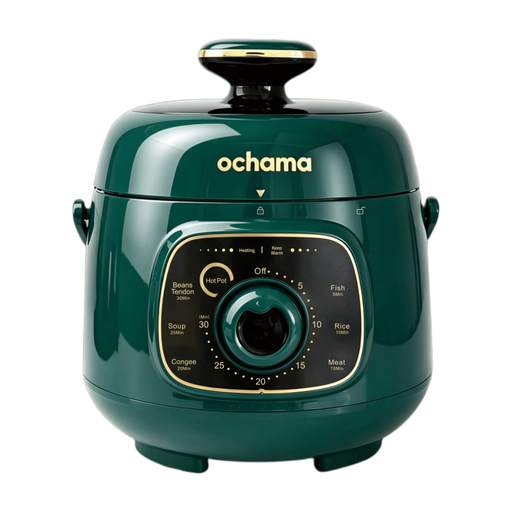 Image unavailable
Consider its compact format if you normally make stock for one. Its stated capacity is 1.8L, not a measure of how much chicken, vegetables and liquid you may pressure cook together; check the model’s fill limit, electrical specification and pressure-release instructions.
Compare compact models first if you usually make modest batches: Instant Pot UK describes its Mini size as suitable for one or two people. Consider a 5.6L–6L cooker when you deliberately make portions to freeze or will use its capacity for other meals, and check the chosen model’s fill instructions before deciding.
Do not assume the stated capacity is the permitted pressure-cooking fill. The Instant Pot Duo manual, for example, specifies a two-thirds maximum; use the instructions for your own model to determine its limit and required liquid level.
Divide the finished stock into smaller portions so it can cool quickly before refrigeration or freezing. GOV.UK’s food-chilling guidance recommends portioning cooked food rather than leaving a large volume together to cool.
Follow the pressure-release procedure in your exact model’s manual and do not force the lid open while the cooker remains pressurised. Instant Pot’s Duo manual specifically warns against opening it before internal pressure has fully dropped; handle the pot and hot stock carefully afterwards.
Check the exact cooker’s voltage, plug and instructions for where you will use it, as well as the condition of its lead. GOV.UK’s guidance to the Electrical Equipment (Safety) Regulations 2016 covers equipment placed on the Great Britain market and notes different applicability in Northern Ireland; do not assume one marking route applies in both places.