Solo soup-first cooks
You mainly want to pressure-cook split pea soup for one. A manageable cooker with sautéing may matter more to you than air frying or room for large batches.


For split pea soup for one, choose a compact electric pressure cooker only if your usual recipe meets that model’s minimum-liquid and maximum-fill instructions. A larger multi-cooker makes more sense when you deliberately cook several portions or will use its additional modes; capacity alone does not tell you whether a small batch will work.
You mainly want to pressure-cook split pea soup for one. A manageable cooker with sautéing may matter more to you than air frying or room for large batches.
You eat alone but intentionally make several portions. The usable pressure-cooking fill limit matters when deciding how much soup you can prepare at once.
Soup is one use among others, so you may value slow cooking, sautéing or air frying enough to give the appliance more storage space.
Check whether your usual recipe fits the cooker’s liquid and fill instructions before deciding how much capacity or how many additional modes you need.
| Concern | What to check | Who this matters to |
|---|---|---|
| Small batches and storage | Compare your recipe quantity with the exact model’s minimum liquid requirement; check its dimensions against your storage space. | If I usually cook one portion, I need a pot that can pressure-cook that quantity without taking up more space than I can spare. Around 50% of consumers would put this small-batch fit first. |
| Room for leftovers | Check the pressure-cooking maximum-fill instructions against the number of portions you plan to make. | When I make soup, I want enough for later meals rather than just tonight’s bowl. Planned leftovers would be the main concern for roughly 30% of consumers. |
| Additional cooking modes | Look for pressure cooking and sautéing for your soup workflow; consider other modes only if you will use them. | If one appliance needs to handle meals beyond soup, I care about the functions I will actually use. For around 20% of consumers, those additional modes would take priority. |
Nominal capacity does not establish whether a small soup recipe contains enough liquid for pressure cooking. Instant Pot UK’s Duo guidance, for example, specifies different minimum liquid amounts for its 3L and 5.7L models.
Write down your usual quantities of peas, vegetables and water-based liquid, then compare them with the instructions for the exact cooker you intend to buy.
Instant Pot UK’s Duo manual limits general pressure-cooking fills to two-thirds of capacity and foods that expand during cooking to half capacity. The pot’s stated volume is therefore not its usable soup-batch volume.
Follow your model’s fill marks and its instructions for dried ingredients, thick soups and pressure release before setting a batch size.
Air frying is an additional mode on models such as the Ninja Foodi Mini OP100UK; it is not needed to pressure-cook split pea soup.
Prioritise a suitable recipe quantity and the cooking modes you expect to use regularly.
Instant Pot UK lists compact 3.8L cookers alongside 5.7L models, offering different capacities for a single meal or planned batches.
Ninja UK describes its 4.7L Foodi Mini OP100UK as a multi-cooker for up to two people.
Tefal UK lists the Turbo Cuisine CY756140 as a 4.8L electric multi-pressure cooker.
These electric pressure cookers represent two different plans: making a small portion and deliberately cooking several portions to keep. Check each model’s instructions against your split pea soup recipe before choosing between them.
 No image available
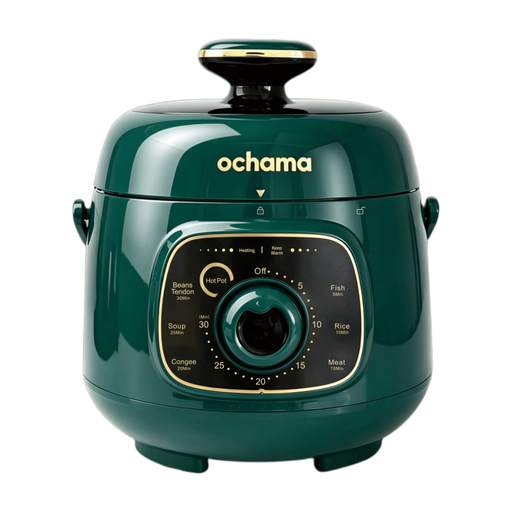
If you usually make one portion, this 1.8L cooker is the smaller-capacity choice here. Confirm that your recipe meets this model’s minimum-liquid and maximum-fill instructions, including any guidance for dried pulses.
 No image available
Consider the 5.7L capacity if you intend to store several portions or use the listed sauté and slow-cook modes for other meals. Before making a small batch or a thick split pea soup, check this model’s liquid and fill instructions.
Yes, if your recipe meets the exact cooker’s liquid and fill instructions. Lakeland identifies dried peas among the pulses suited to pressure cooking; for a small or thick batch, also follow the model’s instructions for dried ingredients and pressure release.
A compact cooker is worth considering when you usually make one portion and your recipe meets its operating requirements. Choose more capacity when you deliberately prepare leftovers or cook for others, and check the usable fill limit rather than relying on the stated pot volume.
Use the minimum stated for your exact model. Instant Pot UK’s Duo guidance specifies at least 350ml of water-based liquid for its 3L model and 375ml for its 5.7L model; those figures should not be applied to other cookers without checking their manuals.
Only up to the limit permitted by your cooker’s instructions for those ingredients. Instant Pot UK’s Duo manual sets a general two-thirds maximum and a half-capacity maximum for foods that expand during cooking, such as dehydrated vegetables; check how your own model treats dried pulses and thick soups.