
24/7 Customer Support

Free returns

Same-day & Next-day Delivery

Quality Guaranteed

Unlock Your Welcome Offers: FREE Delivery | Up to 80% OFF | Free 30-day JoyPlus trial
Download the APP
A pressure washer can make short work of muddy cars, green patios and dusty garden furniture. However, choosing one by the largest number on the box can lead to unnecessary expense, surface damage or a machine that is awkward to store.
This guide compares practical options for UK homeowners, renters, car owners and gardeners. It explains which specifications matter, highlights common buying traps and matches different pressure washers to realistic household needs.
A 150 bar pressure washer may sound more capable than a 105 bar model, but maximum pressure is only part of the cleaning picture. Water flow rate, nozzle design and the distance between the nozzle and surface also affect performance.
Too much concentrated pressure can damage paintwork, loosen pointing or mark softer materials. For cars, fences and garden furniture, a wider spray pattern and sensible technique are often more useful than the highest advertised figure.
Some listings show patio cleaners, foam bottles or extension lances in prominent images without making the included accessories clear. Check the product specification carefully before buying.
A pressure washer with patio cleaner can save time on larger paved areas, while a pressure washer with foam bottle is convenient for pre-treating cars and plastic furniture. If these accessories are not supplied, adding them later can alter the overall cost.
A short hose can mean repeatedly moving the machine around a vehicle or patio. Check the high-pressure hose length, power cable length and whether the unit has wheels, a carry handle or onboard storage.
For smaller UK gardens, compact storage may matter more than extra power. A lightweight pressure washer that can be carried into a shed is more practical than a larger model that remains in the corner of the garage.
Pressure is measured in bar, while flow rate is usually shown in litres per hour (L/h). A higher bar figure indicates greater water pressure at the stated maximum, but it does not automatically mean faster cleaning.
For occasional tasks such as cars, steps and garden tools, a compact electric pressure washer can be sufficient. For patios, driveways and walls, look for a suitable combination of pressure, flow rate and nozzle control.
Remember that the listed maximum pressure may not be maintained continuously during normal use. Treat it as a comparison figure rather than a guarantee of cleaning speed.
A narrow jet concentrates water on a small area and is useful for stubborn dirt, but it requires care. A wider fan spray is more suitable for rinsing cars, windows, painted fences and plastic furniture.
Useful features include:
Always follow the surface manufacturer’s guidance and begin with a wider spray from a greater distance.
For regular movement around a garden or driveway, wheels and a stable handle make a noticeable difference. A 4m hose may suit small jobs, while 5m or 6m hoses provide more flexibility around vehicles and outdoor areas.
After use, switch off the water supply, release remaining pressure, drain residual water and store the machine somewhere dry and protected from frost. This is particularly important in the UK, where freezing water can damage pumps and hoses.
For a cordless pressure washer, also check battery capacity, stated operating time and charging arrangements. Cordless models offer greater freedom from mains sockets, but their operating duration may be more limited than that of a corded unit.
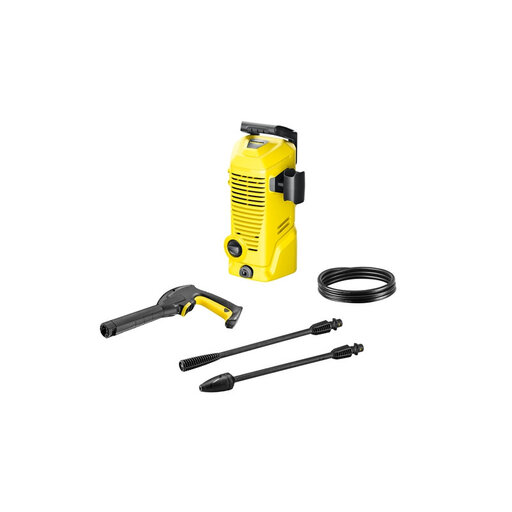
Why This Fits Their Persona: Its compact 3.49kg body is suited to occasional cleaning of cars, steps, garden tools and outdoor furniture, particularly where storage space is limited.
The included single spray lance offers targeted control, while the Dirt Blaster lance is intended for suitable stubborn dirt rather than every surface.
Lightweight integrated handle, 4m high-pressure hose and Quick Connect fittings with onboard accessory storage.
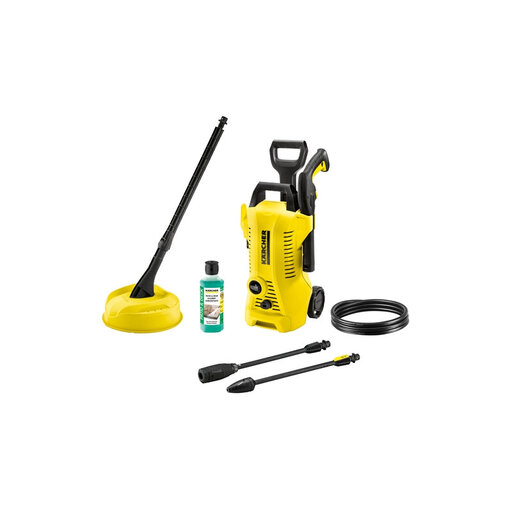
Why This Fits Their Persona: It is aimed at householders who want guided pressure adjustment and dedicated patio-cleaning equipment in one package.
The twist-and-click Power Control accessories and three-setting Vario Power lance make it easier to select a gentler setting where appropriate.
Includes a T 150 patio cleaner, 500ml patio and deck detergent, 5m hose, wheels, telescopic handle and a stated 2-year warranty.
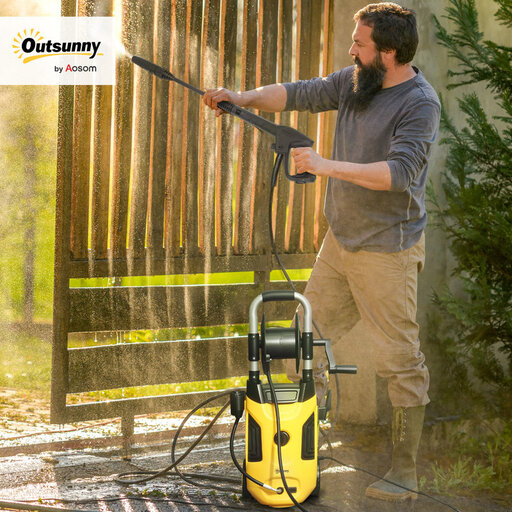
Why This Fits Their Persona: Its stated 150 bar maximum pressure and 420 L/h flow rate suit buyers tackling patios, terraces, walls, fences and vehicles around a larger property.
The adjustable nozzle covers spray angles from 0° to 75°, allowing the user to move from a focused jet to a wider pattern rather than relying on one setting.
1800W motor, 6m hose, snow foam bottle, wheels, integrated hose reel and automatic pump shut-off when the trigger is released.
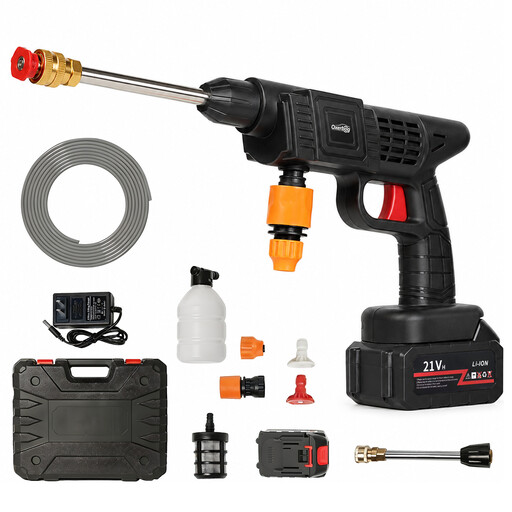
Why This Fits Their Persona: This portable pressure washer is suitable for roadside car cleaning, small garden jobs and locations without convenient access to a mains socket.
The stated 15-minute operating time sets a practical expectation for cordless use, so it is more appropriate for targeted jobs than prolonged driveway cleaning.
Includes a 5m hose, battery, charger, filter, bottle connector, small foam bottle and two nozzles; the listed weight is 2kg.
Before connecting an electric model, inspect the cable, hose and fittings. Keep electrical connections away from standing water, use the equipment according to its instructions and never aim the spray at people, animals, electrical devices or fragile surfaces.
We have compiled a complete, real-time list of products that fully satisfy these strict selection criteria and UK safety regulations.
Running cost depends mainly on motor power, usage time and your electricity tariff. An electric model with a 1,500W motor uses approximately 1.5kWh if operated continuously for one hour, although many cleaning jobs take considerably less time and automatic shut-off can reduce idle operation. Water use also varies according to flow rate and cleaning duration.
Yes, provided the model and detergent are suitable and you use an appropriate technique. Start with a wide spray, keep the nozzle at a sensible distance and avoid directing concentrated pressure at seals, chips, badges and vulnerable trim. A foam bottle can help loosen surface dirt before rinsing.
Lifespan depends on frequency of use, storage and maintenance. Drain residual water after every session, protect the pump and hose from frost, keep nozzles clear and avoid running the machine without an adequate water supply. Checking warranty details and replacement accessory availability before purchase can also help with long-term ownership.