
24/7 Customer Support

Free returns

Same-day & Next-day Delivery

Quality Guaranteed

Unlock Your Welcome Offers: FREE Delivery | Up to 80% OFF | Free 30-day JoyPlus trial
Download the APP
A pressure washer can make short work of muddy paving, algae-stained garden furniture and road film on a car. However, choosing by the highest advertised bar rating alone can lead to wasted money, damaged surfaces or a machine that is awkward to store.
This guide from the Joybuy Product Recommendation Officer focuses on the practical details that matter for UK homes, driveways, gardens and vehicles.
A high bar figure may look impressive, but cleaning performance also depends on water flow rate, nozzle design and how easily you can control the spray. A narrow rotating jet can remove stubborn dirt, while a wide fan spray is more appropriate for rinsing a car or cleaning painted fencing.
For domestic use, adjustable pressure and suitable accessories may be more useful than simply choosing the highest available specification.
A pressure washer with a short hose or cable may require repeated repositioning around a vehicle or patio. Check the high-pressure hose length, mains cable reach and whether the unit has wheels or a carrying handle.
Storage is another frequent issue. Hose reels, onboard lance holders and accessory compartments help prevent hoses and fittings being left outside, where frost and moisture can shorten their usable life.
A dirt blaster or rotating point jet is designed for concentrated cleaning and can be too aggressive for car paint, softwood, rendered walls or loose pointing. A pressure washer with a foam bottle can help loosen dirt before rinsing, but detergent must still be suitable for the surface and used according to its instructions.
Before buying, consider whether you need a car wash pressure washer, a patio pressure washer or a general-purpose jet washer with several spray options.
Pressure is measured in bar, while flow is normally shown in litres per hour (L/h). Bar indicates the force of the water; flow indicates how much water is delivered over time. A machine with adjustable pressure is easier to adapt to different jobs:
Do not aim a high-pressure cleaner at people, animals, electrical equipment or fragile surfaces.
An electric pressure washer generally suits regular home use where a mains socket and suitable outdoor electrical protection are available. Keep connections dry, use the appliance with an appropriate RCD-protected supply where required and follow the manufacturer’s instructions.
A cordless pressure washer is useful for car cleaning at the roadside, allotments or locations without a convenient mains supply. Battery runtime and charging time are important: the Oxerbog model listed below specifies a 1200mAh battery and an operating time of approximately 15 minutes. That may suit spot cleaning, but it is less convenient for a large driveway.
A portable pressure washer should also be judged by its total weight, handle design and hose storage. Compact models are easier to carry upstairs or store in a shed.
Look for accessories that match your routine rather than paying for unused attachments. A pressure washer with patio cleaner can make cleaning larger paved areas more consistent, while a pressure washer with foam bottle is convenient for pre-treating vehicles and plastic furniture.
Always check that connectors, lances and detergent bottles are compatible with the machine. After use, drain residual water and store the unit somewhere dry and protected from frost.
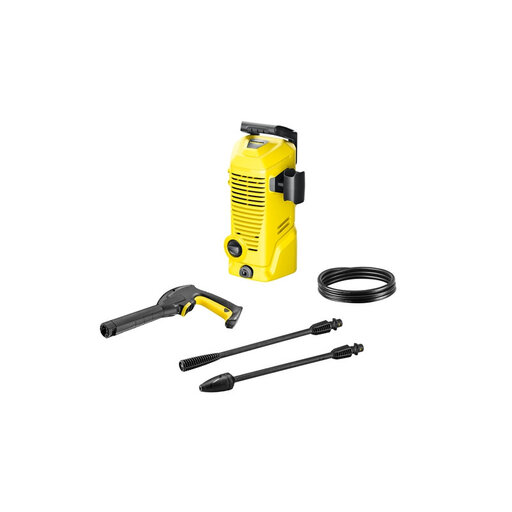
Why This Fits Their Persona: Its compact 3.49kg body is suitable for occasional jobs such as cleaning cars, steps, garden tools and outdoor furniture, particularly where shed space is limited.
The Single Spray Lance supports more controlled cleaning, while the Dirt Blaster Lance is reserved for stubborn dirt rather than every surface.
Lightweight carrying handle, 4m high-pressure hose, Quick Connect fittings and integrated accessory storage.
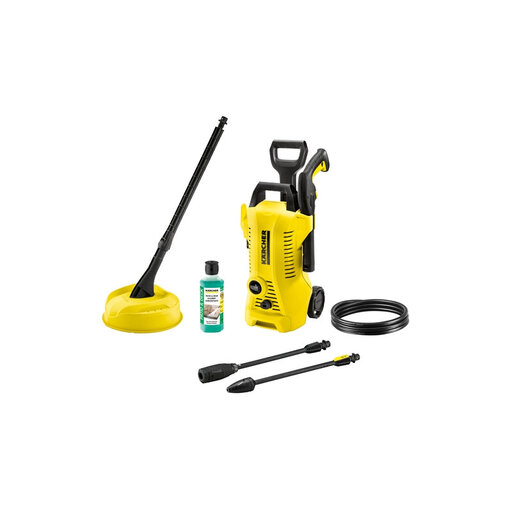
Why This Fits Their Persona: This home-focused kit suits households that want one machine for patios, decking, steps, garden furniture and vehicle cleaning, with accessories for different tasks.
The twist-and-click Power Control system and three Vario Power settings make it easier to select a more appropriate spray level.
Includes a T 150 Patio Cleaner, 500ml patio detergent, 5m hose, wheels, telescopic handle and a 2-year warranty.
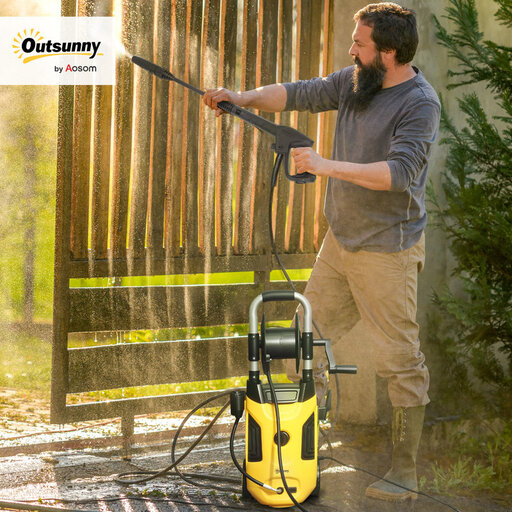
Why This Fits Their Persona: Its 150 bar maximum pressure and 420 L/h flow rate are suited to users regularly cleaning larger patios, terrace floors, fences, walls and driveways.
The adjustable nozzle covers spray angles from 0° to 75°, allowing a wider setting for less aggressive rinsing and a focused setting for tougher grime.
1800W motor, 6m hose, snow foam bottle, wheels, hose reel, automatic shut-off and onboard storage.
For a lighter electric pressure washer with a foam bottle and up to 10 metres of combined hose and cable reach, the VonHaus 1500W Pressure Washer offers 105 bar maximum pressure, a rotatable nozzle and a 2-year warranty. For locations without convenient mains power, the Oxerbog cordless pressure washer includes a 5m hose, foam bottle and rechargeable battery. Its stated 15-minute operating time makes it more appropriate for smaller jobs than extended driveway cleaning.
We have compiled a complete, real-time list of products that fully satisfy these strict selection criteria and UK safety regulations.
Running cost depends mainly on the motor’s wattage, operating time and local electricity tariff. A 1500W machine uses 1.5kWh if operated continuously for one hour, although domestic cleaning is usually performed in shorter intervals. Water consumption also varies according to the stated flow rate and how long the trigger is engaged.
There is no single suitable choice for every car owner. Look for adjustable pressure, a wide spray option and a foam bottle rather than choosing solely by maximum bar. A longer hose can make it easier to move around the vehicle, while a cordless pressure washer may help when cleaning away from a mains socket. Avoid concentrated jets close to paint, tyres, trim and seals.
Yes, many models are suitable for patio cleaning when used with the correct nozzle or patio attachment. A patio cleaner can distribute water more evenly and help reduce splashing. Start with a moderate setting, check the surface condition and avoid directing concentrated pressure at loose joints or damaged paving.