
24/7 Customer Support

Free returns

Same-day & Next-day Delivery

Quality Guaranteed

Unlock Your Welcome Offers: FREE Delivery | Up to 80% OFF | Free 30-day JoyPlus trial
Download the APP
Children’s pretend play toys can turn an ordinary afternoon into a shop, café, kitchen, cleaning day or storybook adventure. However, attractive packaging and long feature lists do not always mean a toy will suit your child, your home or your budget.
Parents and gift-buyers commonly encounter three purchasing traps:
The right choice balances the child’s interests with age guidance, storage, durability and the type of play they naturally enjoy.
Always check the manufacturer’s recommended age, choking warnings and supervision guidance. Toys marked as unsuitable for children under 36 months may contain small components, even if the main item is large.
Look for clear safety information and appropriate conformity marking, such as CE or UKCA, where applicable. The EN 71 toy safety standards cover areas including mechanical and physical properties, flammability and migration of certain elements. Markings are not a substitute for supervision, but missing or unclear safety details are a reason to reconsider a purchase.
For dress-up items, check warnings about fire, cords and strangulation hazards. A wand, wig, belt or detachable accessory should be stored safely after play.
Pretend kitchen toys and toy vacuum cleaners can occupy more space than expected. Check both the packaged and assembled dimensions, particularly if the toy will be used in a flat, bedroom or shared playroom.
For smaller children, lightweight accessories with rounded edges are easier to carry and organise. A set with a dedicated drawer, compact case or simple storage system may be more useful than one with dozens of loose pieces.
Electronic role play toys may need AA, AAA or larger C/LR14 batteries. Check whether batteries are included, how many are required and whether the battery compartment is secured for children.
A battery-free play food set or tea set can be ready immediately and is often easier to use in quiet indoor play. For washable costumes and children’s make-up sets, read the care instructions carefully. “Surface washable” does not mean machine washable, while cosmetic-style products should be used only at the stated age and according to their instructions.
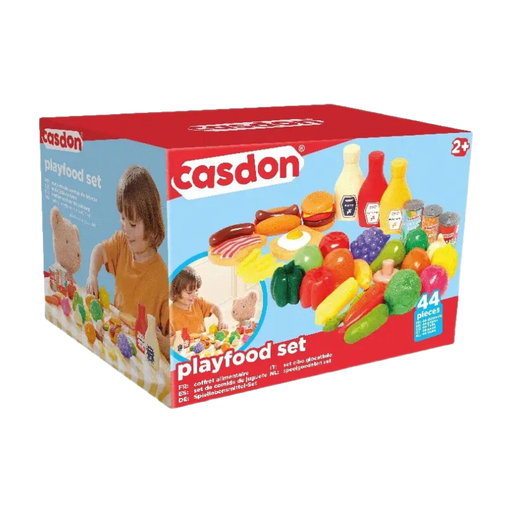
Why This Fits Their Persona: A battery-free starter set for children aged 2–7 who already enjoy toy kitchens, pretend cafés or serving meals to dolls and teddies. It offers variety without requiring a large electronic toy.
The set’s contents are clearly listed: 44 pieces including fruit, vegetables, toast, burgers, chips and labelled tins. There are no batteries to replace or sounds to become irritating.
44-piece assortment; includes labelled play tins; suitable for pairing with a toy kitchen.
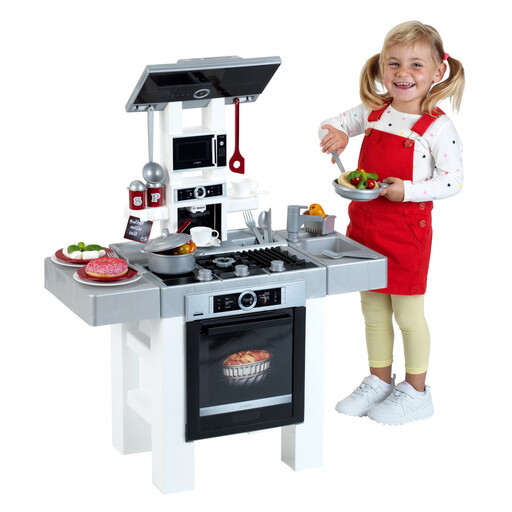
Why This Fits Their Persona: A substantial option for families with space for a dedicated play area and children aged 3 and over who enjoy longer cooking, serving and shared role-play sessions.
The design is double-sided for multi-child play, while the accessories and storage options are specified rather than implied. The hob produces light and sound, but the product information states it does not produce heat.
Double-sided layout; includes cookware, crockery, cutlery and espresso accessories; pump-action sink.
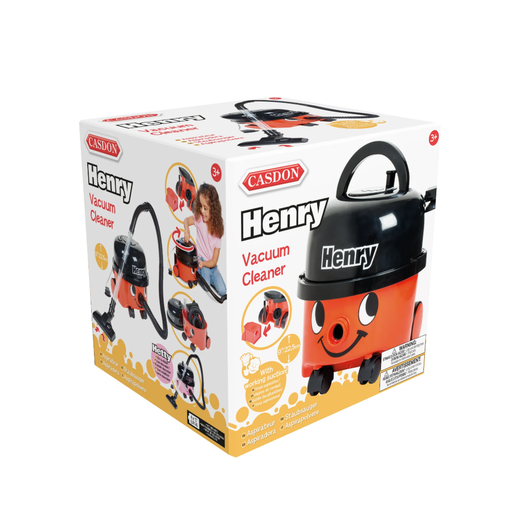
Why This Fits Their Persona: Suitable for children aged 3 and over who prefer active household role play to tabletop activities, especially in homes where children like copying everyday routines.
Its function is clearly defined as light suction for small, lightweight debris such as paper bits. This helps avoid expecting a toy appliance to replace a household vacuum.
Detachable hose and nozzle; removable debris drawer; rolling wheels and hand-operated cord reel.
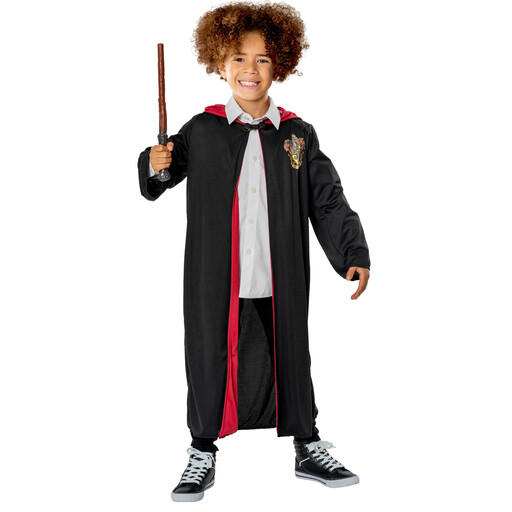
Why This Fits Their Persona: A focused gift for children aged 3 and over who enjoy character costumes, book-week events, Halloween or imaginative wizard-themed play.
The listing identifies exactly what is included: a hooded robe, wand, glasses and scar. Buyers can check the age, surface-cleaning instructions and fire warnings before ordering.
Complete themed accessory set; no batteries required; polyester robe with sponge-clean care instructions.
A single toy can become more versatile when paired with complementary accessories. A toy cash register works with play food sets and pretend cash, creating opportunities for counting, taking turns and practising simple exchanges. The Casdon Pretend Play Cash Register includes a working calculator, scanner, microphone, pretend cash and card-payment accessories.
For quieter group activities, a toy tea set can support serving, planning and storytelling. The Casdon Pretend Play Tea Set contains 36 pieces, including cups, saucers, plates, cutlery and a cake that divides into quarters.
Dress-up choices should reflect the child’s interests and practical use. Character costumes such as a Bluey onesie, a Rumi costume or a Wednesday-style wig may be suitable for parties and everyday imaginative play, but check the size, care instructions and whether accessories are sold separately.
Lightsabres for children and light-up character accessories can encourage active storytelling, though buyers should check flashing-light warnings, battery safety and instructions not to aim toys at faces. Children’s make-up sets require extra care: the Shimmer 'n' Sparkle Shimmering Makeover Studio is listed for children aged 8 and over, so it is not an appropriate choice for younger children aged 2–8 simply because it looks like a dress-up accessory.
We have compiled a complete, real-time list of products that fully satisfy these strict selection criteria and UK safety regulations.
Choose age-labelled items with larger, easy-to-hold components and no detachable small parts. Battery-free play food, simple toy tea accessories and soft dress-up clothing may be suitable when the product guidance allows it. Direct adult supervision remains important.
Store loose pieces in a labelled box or the original case, keep battery-operated toys dry and remove batteries if the toy will not be used for an extended period. Follow surface-cleaning instructions for costumes and avoid using play food outdoors where it may become difficult to clean.
They can suit children who enjoy buttons, sounds and interactive features, but they are not essential for imaginative play. Compare the battery requirements, noise level, durability and whether the toy can still be used when switched off. For many families, combining one electronic item with open-ended play food, costumes or tea accessories offers greater variety.